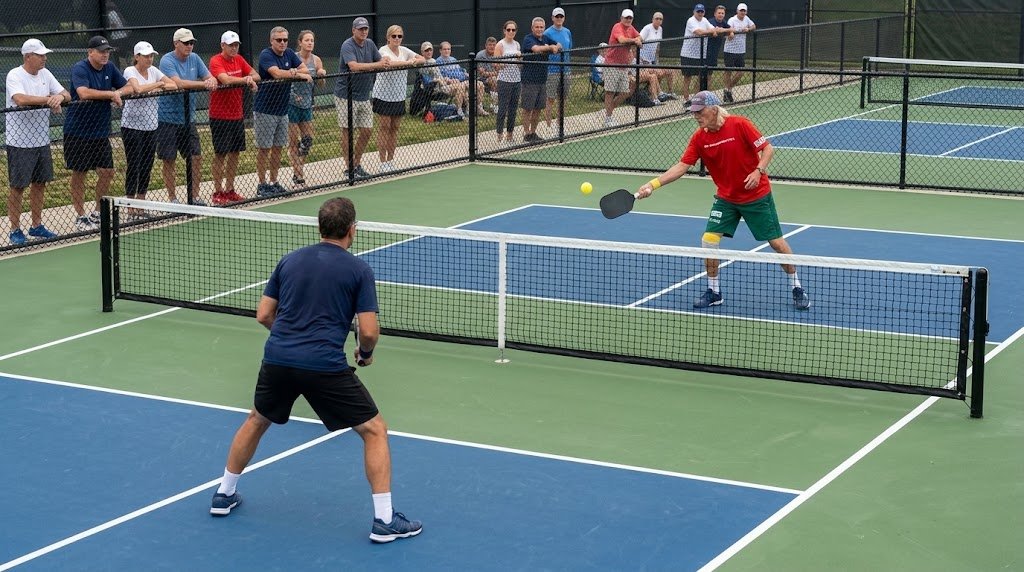

Mattias Johansson left Dana Treister with an increasingly difficult equation at the NP California Open Classic Powered by Onix: win the second game to stay in the match, then find a way through a deciding third. Johansson allowed neither. His 11–6, 11–4 victory delivered a clear straight-games result in the event’s Sunday senior pro men’s singles competition on September 20.
Treister put more points on the board than Fabian Grassini managed in another recorded meeting with Johansson at the same event. But the outcome was the same: Johansson finished with two games won and no need for a decider. Against Treister, the second-game margin was wider than the first, giving the scoreline an emphatic finish.
An opening game that put Treister on the brink
The 11–6 opener gave Johansson the first game and a five-point winning margin. Treister’s six points made this a more competitive opening score than Johansson’s 11–2 first game against Grassini. That comparison matters: these were different opponents producing different challenges on the scoreboard, even though both matches ultimately ended in straight games.
For Treister, losing the opener made the next game decisive to his chances of extending the contest. There was no room for another game to slip away. For Johansson, the task was simpler in its arithmetic: one more game would complete the win. The opening result established that contrast without requiring a third-game showdown to settle it.
Six points also deserve a fair reading. They show Treister contributing substantially to the opening score, but they do not make an 11–6 finish a last-point thriller. Johansson still held a clear margin when that game was complete. The result gave him an advantage to carry into the second game, with the match still available to close in two.
Johansson makes the second game more decisive
The second game finished 11–4. Treister’s total fell by two points from the opener, while Johansson again reached eleven. The winning margin expanded from five points to seven, a shift that makes this result feel more conclusive at the finish rather than more precarious.
That is the strongest story in the numbers: the player needing a game to keep the match alive finished further from the winning score. Treister could not produce the reversal he needed, and Johansson completed the job without surrendering a game. Across the two games, Johansson recorded 22 points to Treister’s 10, more than twice his opponent’s total.
Those totals describe the scoring, not the number of rallies or the length of the contest. The meaningful distinction is how the games fit together. This was not a split decision rescued in a third game. Johansson won the opening exchange on the scorecard, then secured the second by an even larger margin.
Two opponents, the same straight-games message
Johansson’s separately recorded 11–2, 11–4 win over Grassini adds context to the Treister result. Both appear under the same September 20 senior pro men’s singles competition in DUPR. Treister accumulated ten points across his two games; Grassini accumulated six. Each opponent finished with four points in the second game against Johansson.
The records do not establish which of those matches came first, so they should not be presented as a chronological run through the bracket. What they do offer is a useful comparison: two named opponents, four recorded games, and four games won by Johansson. The Treister match forms part of that picture while retaining its own distinction — a more competitive opener followed by a wider second-game gap.
For Treister, the result ends with the missed opportunity to force a decider. For Johansson, it is another clear entry on the winning side of the event’s singles scorecards. Eleven–six, eleven–four: the first game created the opening, and the second shut the door.