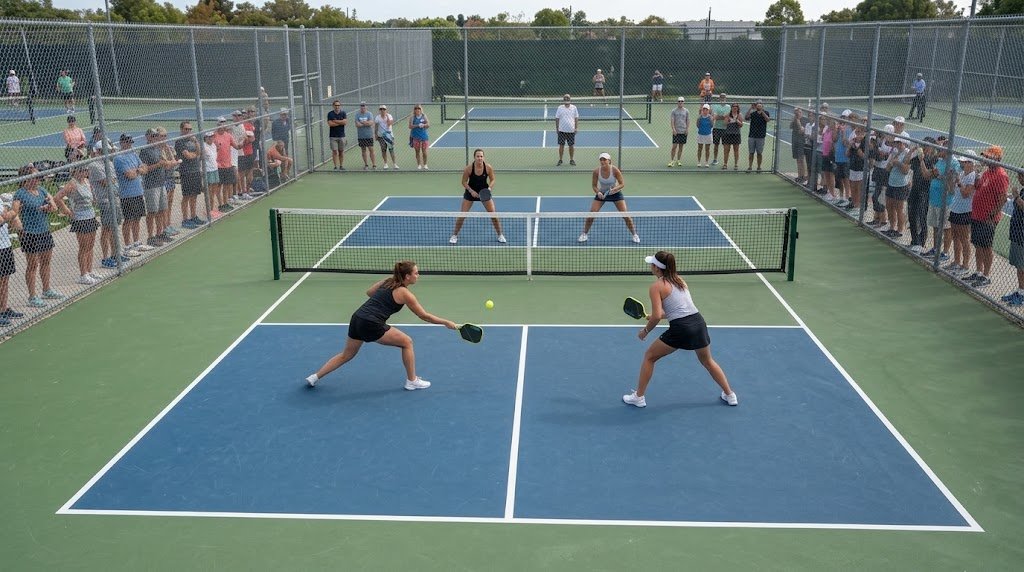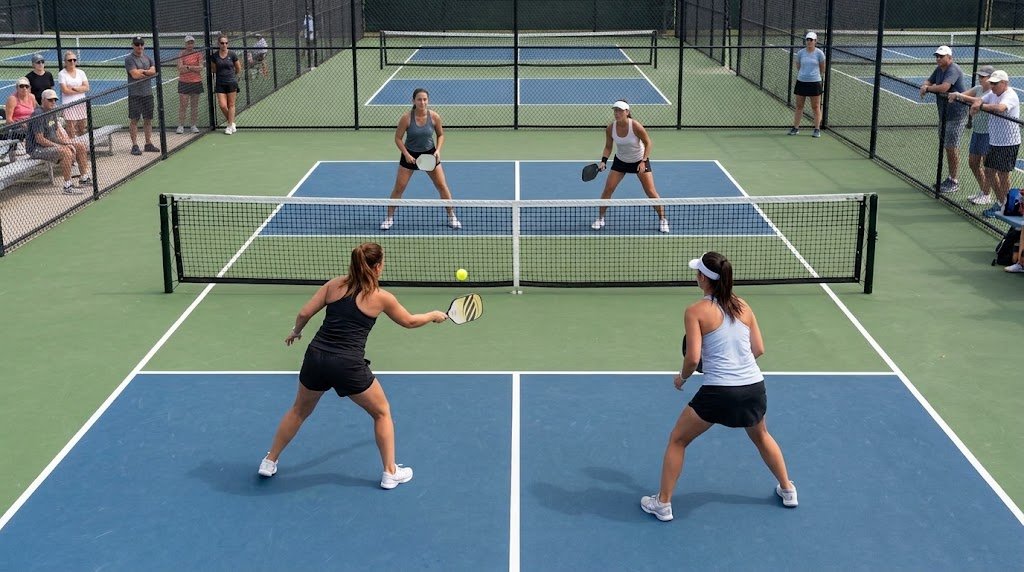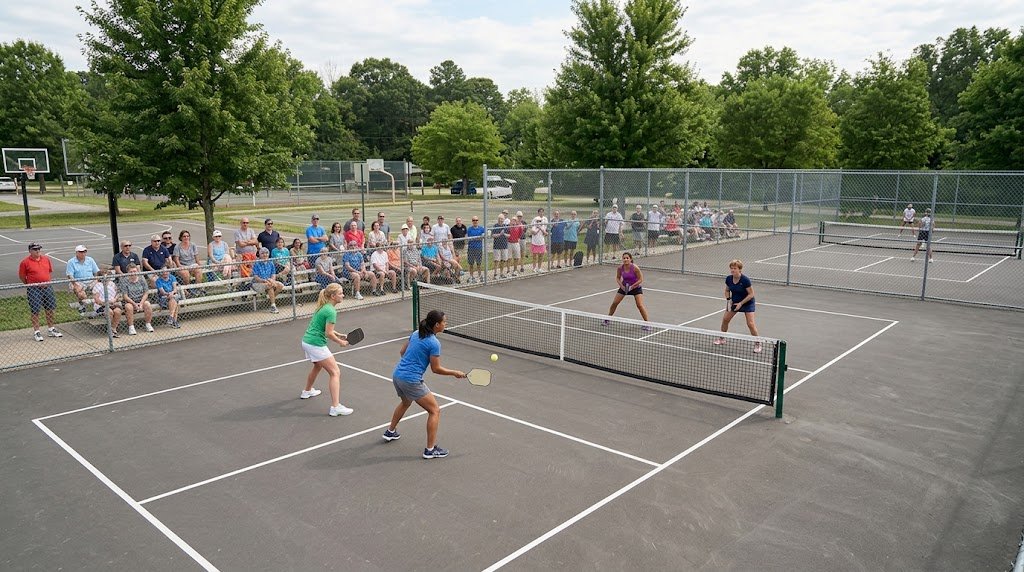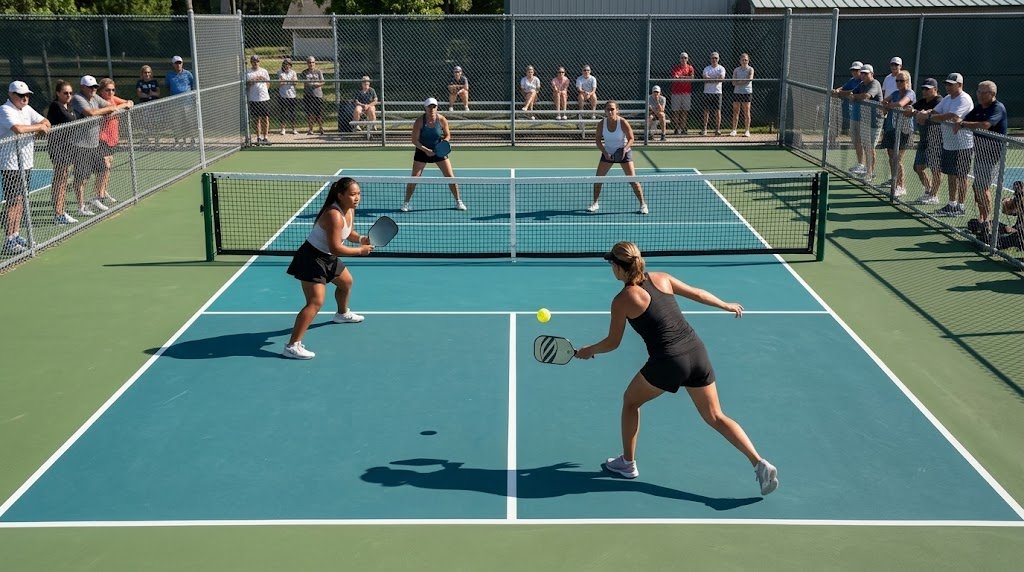

The scoreboard did not blink on September 20, 2026. In the Women’s 3.50-3.99 Doubles event, Lindsie McBratney and Stephanie Fairbanks secured a commanding 11–0 victory over Mary Navalta and Iris Pagarigan. It was a straight-game sweep that left little room for interpretation: one pair took control from the opening service and held that grip firmly through every point. The result stands as a definitive marker of dominance within this specific bracket, highlighting a performance where consistency outweighed complexity.
A Score That Speaks Volumes
An 11–0 margin is rarely about drama; it is about efficiency. In pickleball, scoring to eleven without conceding a single point represents a total net-zero effort by the opposing team. This outcome suggests that McBratney and Fairbanks found a rhythm early and maintained it without interruption. When a team leads by such a wide margin in a singles game format (played as doubles here, but scored to 11), it often reflects superior ball placement or a significant shift in momentum that occurred almost immediately. The victory was not a close call; it was a statement of authority on the court.
Contextualizing the pre-match ratings offers a glimpse into the landscape before the first serve. McBratney entered the match with a rating of 3.452, while her partner Fairbanks sat at 3.137. Their opponents, Navalta and Pagarigan, carried ratings of 3.296 and 3.357, respectively. These figures are snapshots, not predictions, yet they place the teams in the upper echelons of the 3.50-3.99 classification. The fact that McBratney and Fairbanks emerged victorious despite the competitive proximity of their partners' ratings underscores the volatility inherent in doubles play. One pair simply clicked, while the other struggled to find their footing.
Mastering the Kitchen Zone
Analyzing such a decisive win often leads players back to the non-volley line, colloquially known as the kitchen. The kitchen is the most contested area in pickleball, a ten-foot zone where the rules shift from dynamic movement to strategic restraint. Understanding the difference between controlling this space and violating it is crucial for any aspiring competitive team.
Controlling the non-volley line does not mean standing inside it. It means positioning oneself just behind the line to anticipate the opponent’s dinks. A dink is a soft, underhand shot intended to stay low over the net, forcing the receiving side to return it with similar precision. If a player steps into the kitchen and volleys a ball that is still airborne, it is an immediate fault. This rule is designed to prevent players from gaining an unfair advantage by ambushing opponents at the net.
In a high-pressure match, the risk of an out-of-bounds error increases when players are forced to reach for wide balls or high shots. However, in a dominant 11–0 performance, the winning team likely minimized these risks by keeping shots tight and central. By avoiding the edges of the court, they reduced the chance of self-inflicted faults. Conversely, the opposing team may have found themselves reacting rather than placing, a common struggle when facing opponents who control the pace. The key takeaway for general analysis is that safety at the net comes from judgment, not speed. Waiting for the right moment to volley is often more valuable than rushing forward.
The Dynamics of Doubles Alignment
Doubles pickleball is a partnership sport, and alignment matters. McBratney and Fairbanks demonstrated that a cohesive unit can outperform a collection of high-rated individuals if they play in sync. The exact scoring margin of eleven points to zero indicates that the winning pair likely established their roles—such as who handles the net and who covers the baseline—very clearly. There was no hesitation in their transitions, and no confusion over who had possession of the ball.
For the losing pair, the 0-11 result is a stark reminder that even a one-point deficit can feel like a canyon when the opponent is playing flawlessly. The path forward for Navalta and Pagarigan involves reviewing their approach to the dink game and their reaction time at the net. They will likely analyze their footwork and their communication cues, looking for small adjustments that could prevent such a shutout in the future.
This match serves as a benchmark for the Women’s 3.50-3.99 Doubles division. It shows that while ratings provide a baseline for expectation, the actual play on the court is where the true hierarchy is revealed. McBratney and Fairbanks didn’t just win; they controlled the narrative of the game from the first point to the last. As the season progresses, we can expect other teams in this bracket to study this match, seeking to replicate that level of consistency. For now, the 11–0 scoreline remains a testament to what is possible when two players find their flow and refuse to let go.