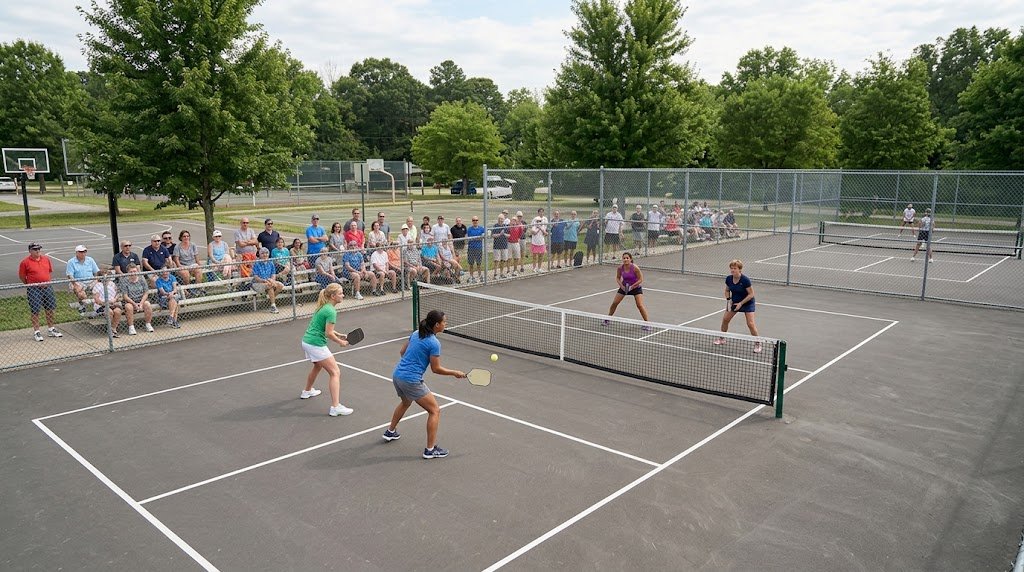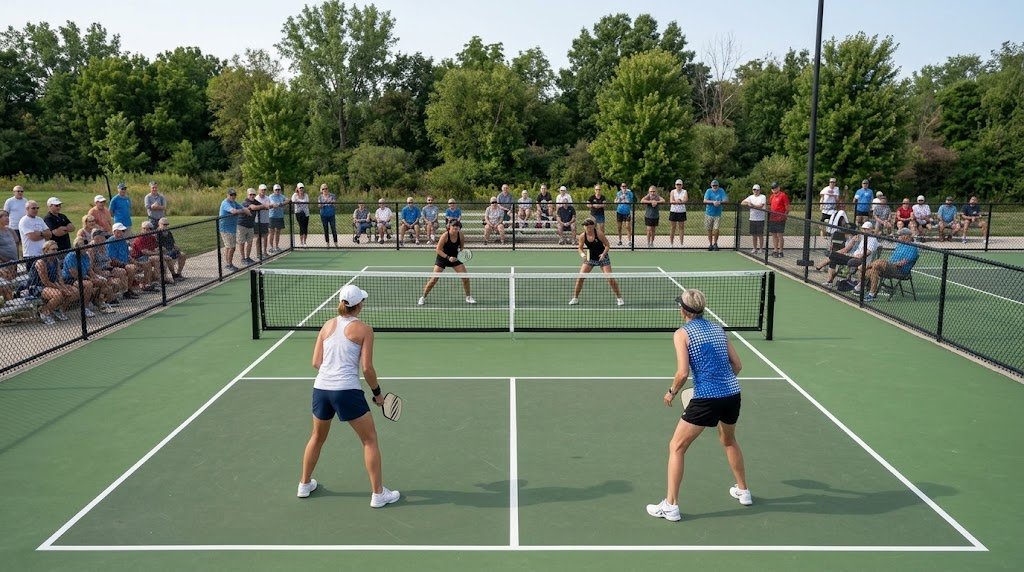
Sayo Mizutani and Machiko Yoshida posted an 11–5 victory over Manami Akiyama and Rika Numata in Women's 2.49-2.99 Doubles on September 20, 2026, and the scoreline captured the rhythm of a controlled, commanding performance. The winners' combined pre-match ratings of 5.578 edged the losers' 5.546, so expectations leaned toward competitive parity, yet the run differential widened quickly and never truly narrowed. Recorded as an 11–5 result, the match showed how a doubles team can convert rating proximity into clear board control. Each game served a purpose here: the early games established pace, the middle games tested consistency, and the closing frames confirmed who held the line. Treat the outcome as a statement, not a surprise. Mizutani–Yoshida converted their slight rating edge into steady pressure, while Akiyama–Numata fought but could not turn the margin. The numbers tell the story straight: one team led from start to finish, and the closing 11–5 score reflects that dominance without exaggerating it into a blowout.
Reading the Scoreboard
An 11–5 frame signals control, not chaos. The winners held the trigger, moved the court, and kept the returners reacting. That margin suggests repeated service pressure and clean third-shot execution, but it does not document specific rallies or faults, so treat it as a general measure of tempo. From a rating perspective, the 0.032 combined difference was real but slim; the execution gap that produced 11–5 came from how each team managed transitions and space. Think of the score as a progress report, not a psychological autopsy. Mizutani–Yoshida set the tone, and the scoreboard rewarded them. Akiyama–Numata stayed in the match but could not force the evenness that might have flipped momentum. The lesson is not about individual mistakes but about how a small rating difference can explode into a double-digit spread when one pair owns the middle of the court.
Kitchen Positioning, Dinks, and Risk
Open pickleball lives or dies at the non-volley line, so understanding kitchen geometry matters more than any single point. Controlling the line means standing close enough to cut off soft returns, yet staying legally behind the plane until the ball bounces. Volleying illegally inside the kitchen without a prior bounce is a fault, but no violation is claimed here; the point is simply that position dictates options. Dinks become dangerous when a player reaches across the line or leans forward too early, inviting a blocker's put-away. Out-of-bounds risk climbs when attackers aim for the sideline at sharp angles, because even a clean hit can leave the court if the margin is thin. Good doubles pairs talk constantly, shift together, and respect the line as both a weapon and a boundary. The 11–5 result hints that Mizutani–Yoshida may have held that line longer, but no specific rally or fault is recorded, so the analysis stays conditional, not observational.
Closing Perspective
Mizutani–Yoshida walked off with an 11–5 result, and that number means more than points on a board. It tells you that a 0.032 combined rating gap can be flattened by discipline, movement, and smart kitchen work. Akiyama–Numata left room for growth, but they faced a team that converted pre-match expectation into measured execution. The match was not a nail-biter, nor should it be recast as one; it was a clear win where the better-prepared pair imposed its rhythm from the first serve. For OpenPB readers, the takeaway is simple: in a sport where inches and milliseconds decide points, controlling the non-volley zone is the closest thing to a cheat code. Mizutani–Yoshida proved that on September 20, 2026, and the scoreboard gave them full credit.