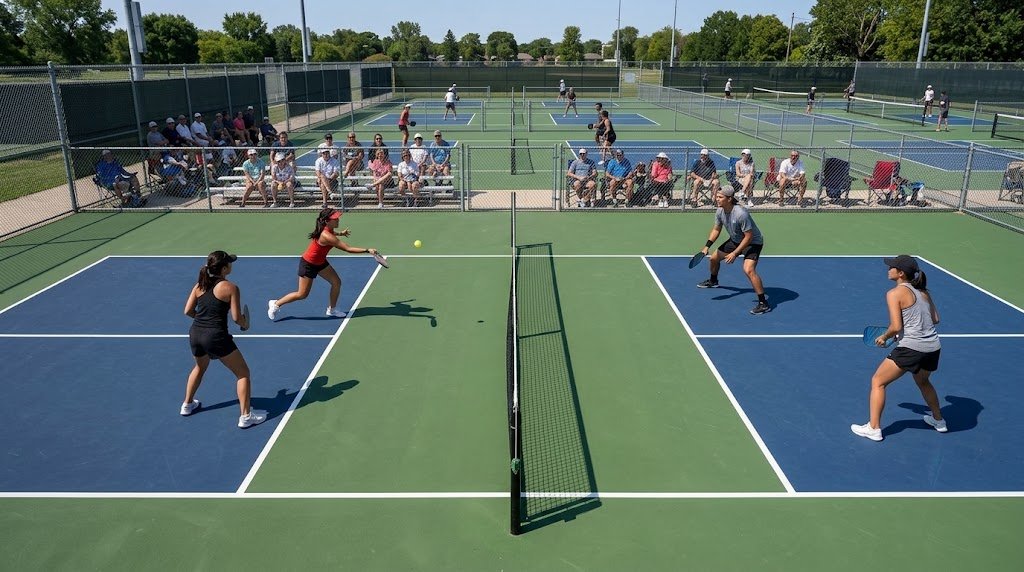

Tiffany La and Phi Trinh delivered a statement performance on September 20 at the $30,000 Proton National Tour event in Corona, securing a commanding 15-9 victory over Madyson Peav and Imone Mohanta in mixed doubles play. From the opening serve, the winning pair dictated tempo with consistent depth and smart shot selection, building an early lead that never relinquished. Their 15-point effort reflected not just scoring efficiency but sustained pressure, as they converted key opportunities and minimized unforced errors to seal the match in straight games.
The pre-match ratings told a story of near parity—Tiffany La at 4.478 and Phi Trinh at 4.363 versus Madyson Peav’s 4.494 and Imone Mohanta’s 4.55—yet the scoreboard revealed a clear gap in execution. La and Trinh translated their combined experience into tactical discipline, particularly in transition zones and net approaches, turning borderline points into winners. Peav and Mohanta, despite strong individual ratings, struggled to find rhythm against the winners’ varied pace and placement.
Kitchen Command and Dink Dynamics
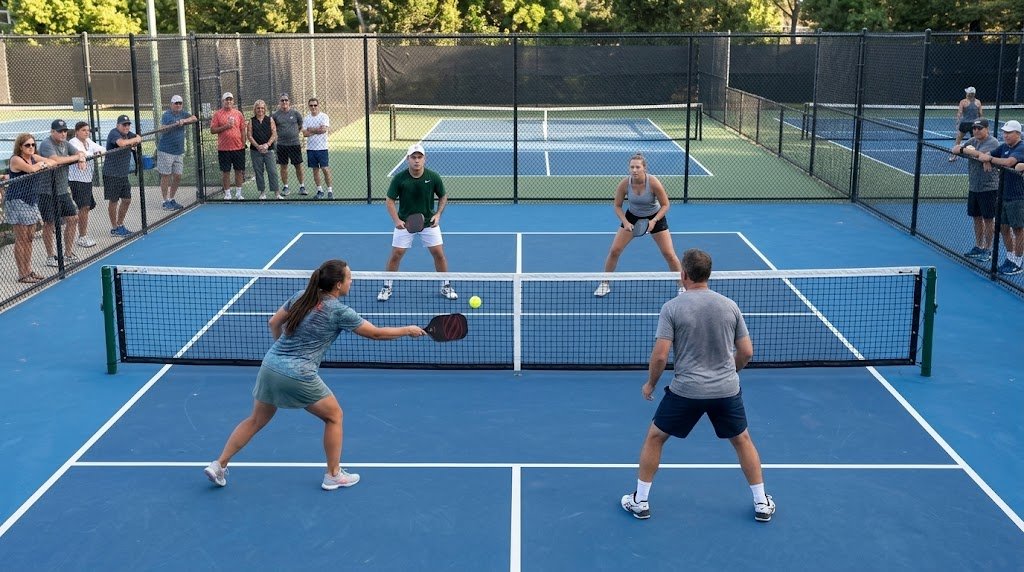
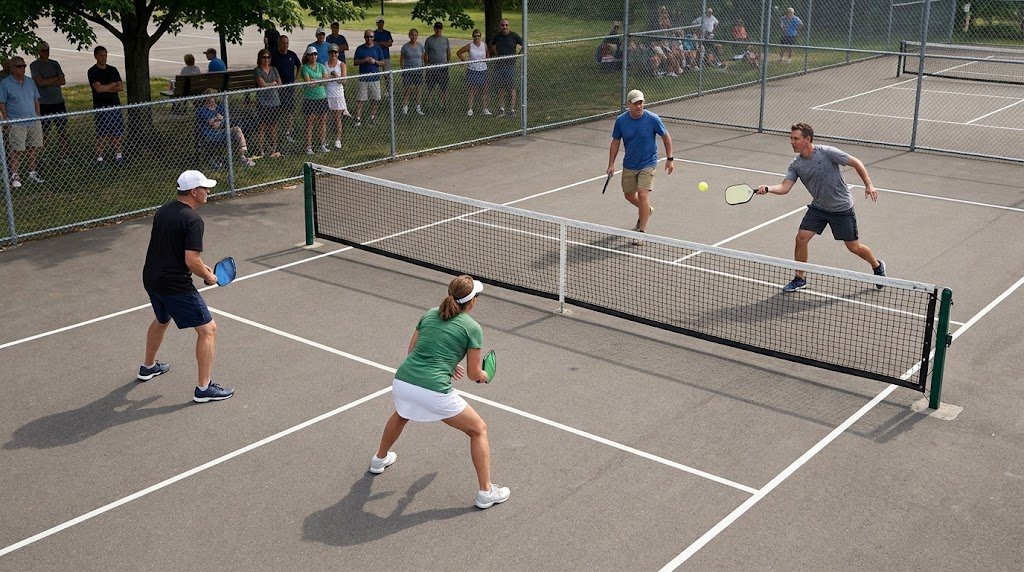
Controlling the non-volley line remains a cornerstone of elite doubles play, and La and Trinh demonstrated why. By maintaining balanced positioning just behind the kitchen line, they pressured opponents into lifting dinks or attempting risky drives—both high-percentage opportunities for putaways or reset shots. Their ability to mix soft, angled dinks with occasional punch volleys kept Peav and Mohanta guessing, disrupting any attempt to establish a rhythm at the net.
Meanwhile, understanding the line between legal volleying and kitchen faults is essential. A player may volley the ball only when both feet are completely outside the non-volley zone; stepping on or over the line during the volley motion constitutes a fault. La and Trinh avoided such risks through disciplined footwork, while their opponents occasionally appeared to stretch for balls near the line—increasing the chance of unforced errors or pop-ups that invited counterattacks.
Turning Points and Tactical Edge
The first game set the tone, with La and Trinh jumping ahead early and never looking back. A series of deep returns and well-placed third-shot drops forced Peav and Mohanta into defensive lifts, which the winners punished with crisp volleys or angled drives. By mid-game, the margin had stretched to a comfortable lead, and despite a brief rally by the challengers, La and Trinh regained control with a string of unreturned serves and sharp crosscourt dinks.
Game two followed a similar arc. Though Peav and Mohanta showed flashes of resilience—particularly on extended rallies where they managed to reset the point—they could not sustain the consistency needed to challenge La and Trinh’s serve-and-volley rhythm. The winners’ ability to shift from defense to offense in a single exchange proved decisive, especially when Trinh’s forehand drives or La’s backhand blocks neutralized attacking attempts.
Why This Win Matters
This 15-9 triumph was more than a score—it was a validation of preparation and partnership. For La and Trinh, the win underscored how pre-match ratings, while informative, don’t always reflect in-match execution under pressure. Their ability to outplay higher-rated opponents speaks to adaptability, communication, and a shared understanding of court geometry.
For Peav and Mohanta, the loss offers a clear takeaway: even strong individual ratings must translate into synchronized team play, especially in the fast-exchange environment of mixed doubles. Tighter kitchen coordination and fewer unforced errors on dink exchanges could narrow such gaps in future meetings.
In the end, La and Trinh didn’t just win a match—they illustrated how smart net play, disciplined positioning, and mental steadiness can overcome ratings on paper. As the Proton Tour circuit continues, this performance marks them as a team to watch—not for flash, but for fundamentals executed with purpose.