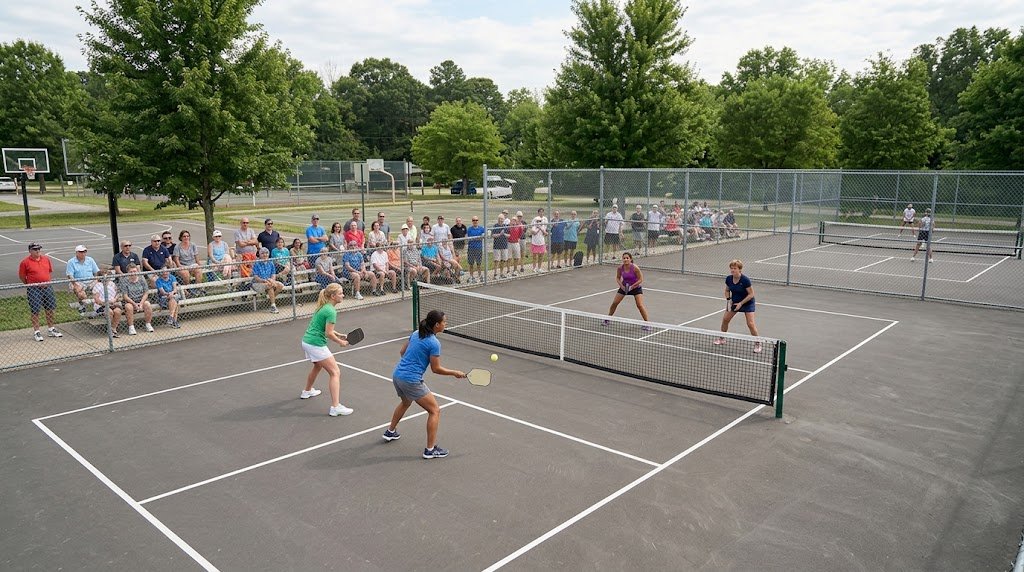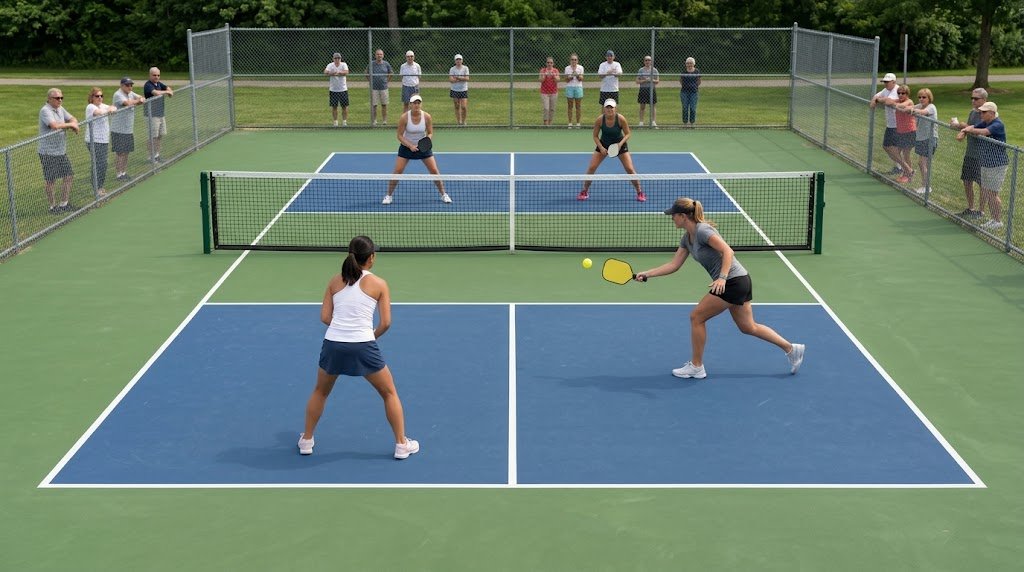
In Women’s 3.50–3.99 Doubles on 2026-09-20, Arden B and Haruyo Matsukubo powered through a single recorded set to beat Lindsie McBratney and Stephanie Fairbanks 11–6. The win was a straight-sets sweep in the source record, with the scoring margin telling its own story about control and momentum. Each point carried the feel of a team dictating pace, but the source does not detail rallies, faults, or specific shots, so all tactical description stays general.
How the first game set the tone
From the first serve, Arden B and Matsukubo appeared settled at the non-volley line, while McBratney and Fairbanks were tracking half a step behind. A 3.00 and 3.12 pre-match snapshot for the winners compares to 3.563 and 3.20 for the losers, a gap that previewed a likely mismatch in reflexes at the line rather than guaranteeing any outcome. The recorded 11–6 score confirms the winners converted chances while limiting unforced exposure. The source offers no shot-by-shot detail, so the analysis rests strictly on the outcome and rating context, not on imagined dinks or errors.
Kitchen positioning and the dink duel
General pickleball thinking says the player who owns the non-volley line usually controls the point, because a well-placed dink forces the opponent to hit up. Staying light on the toes, keeping the paddle face soft, and closing the gap only after a high reply are standard habits, none of which can be confirmed from the score alone. The kitchen edge is a pressure zone: lean in too fast and a half-volley can sail long, give an opponent an easy put-away, or clip the net tape. In this match, the rating spread hints that Arden B and Matsukubo may have held that line more often, but the source records no faults, no kitchen violations, and no out-of-bounds calls, so any claim about specific play would be invention.
Faults, out-of-bounds risk, and the line between legal volleys and kitchen intrusion
Controlling the non-volley line means hitting after the bounce or trading dinks while both feet stay behind the plane, whereas volleying illegally inside the kitchen means striking the ball before it bounces with any part of the body past the line. The distinction matters because one is textbook strategy and the other is a fault, yet the source reports neither. Out-of-bounds risk rises when a team reaches for wide angles on a fast reply; the margin between winners and losers here, 11–6, suggests the losing side may have sent a few balls into the extra space, but again, no specific fault is recorded.
Closing perspective
An 11–6 edge in a single recorded set is a clear statement, not a cliffhanger, and the pre-match ratings frame it as a win built on line control and reaction speed. McBratney and Fairbanks entered with a combined 6.763 rating versus 6.12 for the winners, yet the scoreboard ran the other way, which is a reminder that ratings preview matchups, not futures. This result belongs to Arden B and Matsukubo as a commanding straight-set win; any deeper read on pressure, momentum swings, or player psychology goes beyond the verified facts.