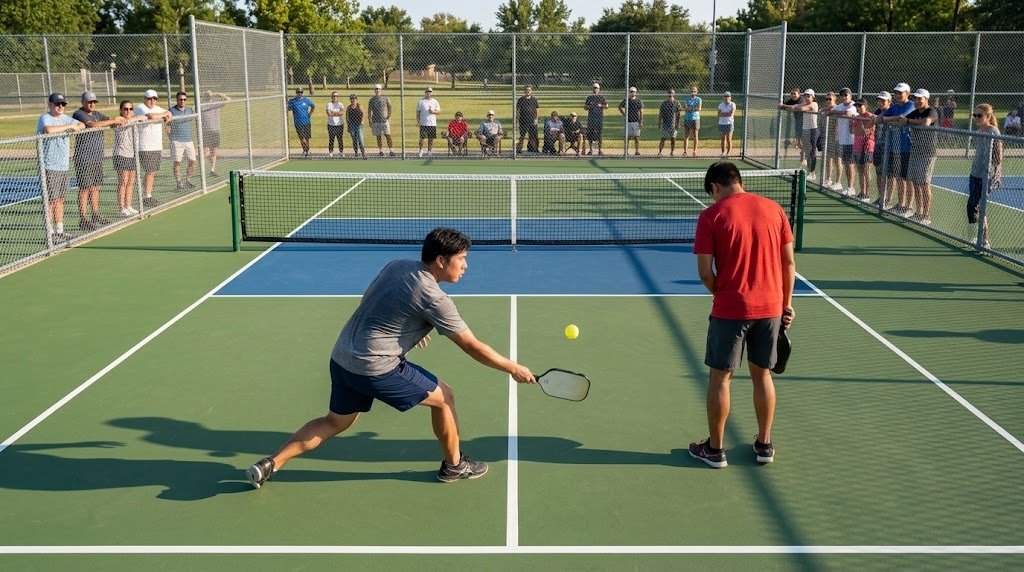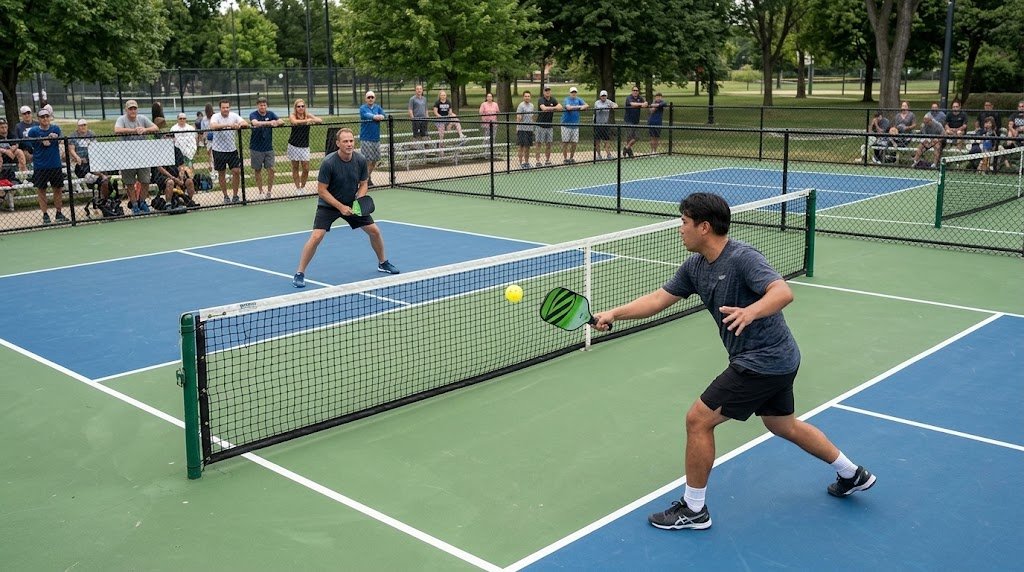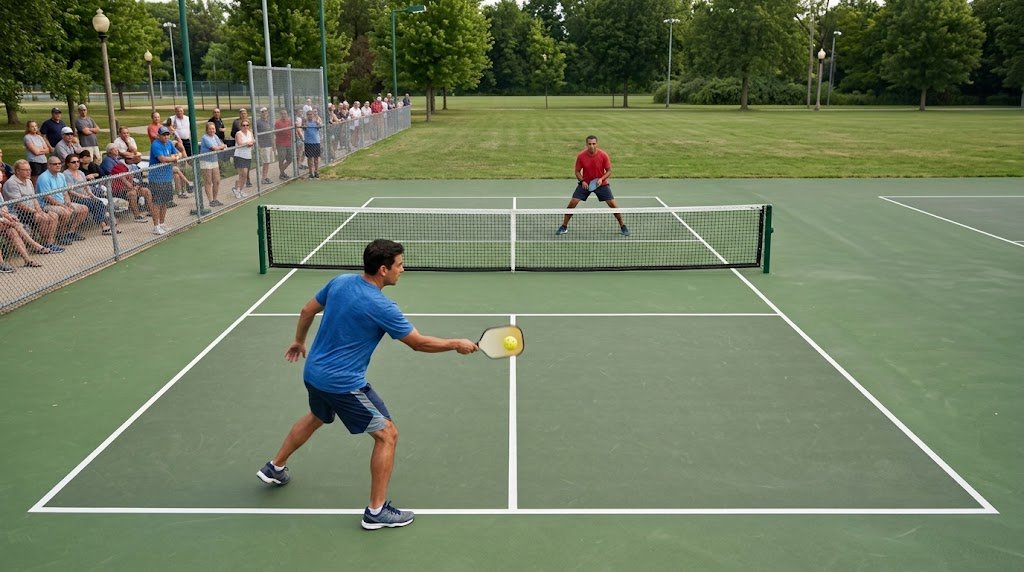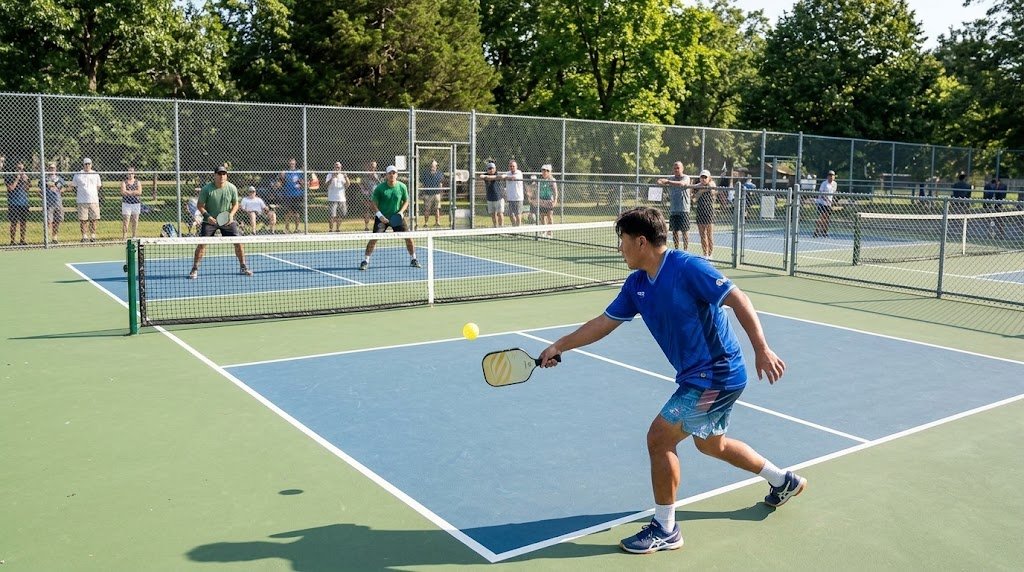

Andy Hernandez authored a masterclass in efficiency on Saturday, steamrolling John Timothy Estrada 15–6 in a Men’s Singles Challenger match at the $30,000 Proton National Tour stop in Corona. The scoreline reads like a statement: one player operating at peak rhythm, the other never finding a foothold. Hernandez entered with a 4.353 pre-match rating, Estrada at 4.263—a slender gap on paper that evaporated the moment the first serve landed.
Command From the First Exchange
Hernandez wasted no time imposing his geometry. In singles, the court shrinks and the margin for error vanishes; every shot must serve a purpose. The higher-rated competitor moved with the economy of a player who knows exactly where the ball needs to be and when. Estrada, credited with a respectable 4.263 rating, found himself chasing shadows. The six points he collected were hard-earned, but they arrived in isolation, never strung together into a sustained challenge. A 15–6 result in a single game to 15 is not a competitive match so much as a clinic.
The Mathematics of a Shutout
Singles pickleball rewards the player who controls the middle and dictates pace. Hernandez’s pre-match edge of .09 in rating terms translated into a nine-point differential on the scoreboard—a near-perfect conversion of perceived advantage into realized dominance. There is no second game to analyze, no momentum swing to dissect. The match began and ended in the same breath: Hernandez serving, returning, attacking and defending with a cohesion that left Estrada scrambling. When a contest concludes this decisively, the post-mortem is simple. One athlete executed; the other survived.
Kitchen Command Without Crossing the Line
In singles, the non-volley zone becomes a strategic frontier. Controlling the kitchen line means planting yourself a paddle’s length behind it, ready to volley anything that floats and to dink anything that drops. The rule is absolute: a volley struck while any part of the body touches the kitchen is a fault. Smart players hover, toes grazing the imaginary plane, inviting the opponent to hit up. A well-placed dink forces a low contact point, buying time to reset or attack. But the risk is real—lean too far forward on a volley, or let momentum carry you across the line after a put-away, and the rally vanishes. The best singles players treat the kitchen like a high-wire act: maximum pressure, zero violations.
Dinks, Drives and the Out-of-Bounds Trap
The dink game is singles’ chess match. Short, angled, unattackable—each one a probe for weakness. Push it too wide and the sideline swallows it; leave it high and the opponent punishes. Drives change the geometry entirely: flat, fast, aimed at feet or the open court. But power without placement is a gift to the defense. Out-of-bounds risk spikes when players chase winners from the baseline or redirect sharp angles under pressure. The discipline to reset, to choose a third-shot drop over a speculative drive, separates contenders from pretenders. Faults pile up when ambition outpaces control.
A Result That Speaks Volumes
Hernandez’s 15–6 victory will not rattle the sport’s foundations, but it sharpens his profile. A nine-point margin in a game-to-15 format signals readiness for stiffer tests. Estrada walks away with data, not scars—a 4.263 rating remains intact, the loss a single data point in a longer season. For the winner, the message is clear: when the rating gap is this narrow and the scoreboard gap this wide, the game plan was flawless. The next opponent will study this tape. They’ll see a player who refused to blink, who turned a theoretical edge into a clinical result. In singles, that’s the only language that matters.