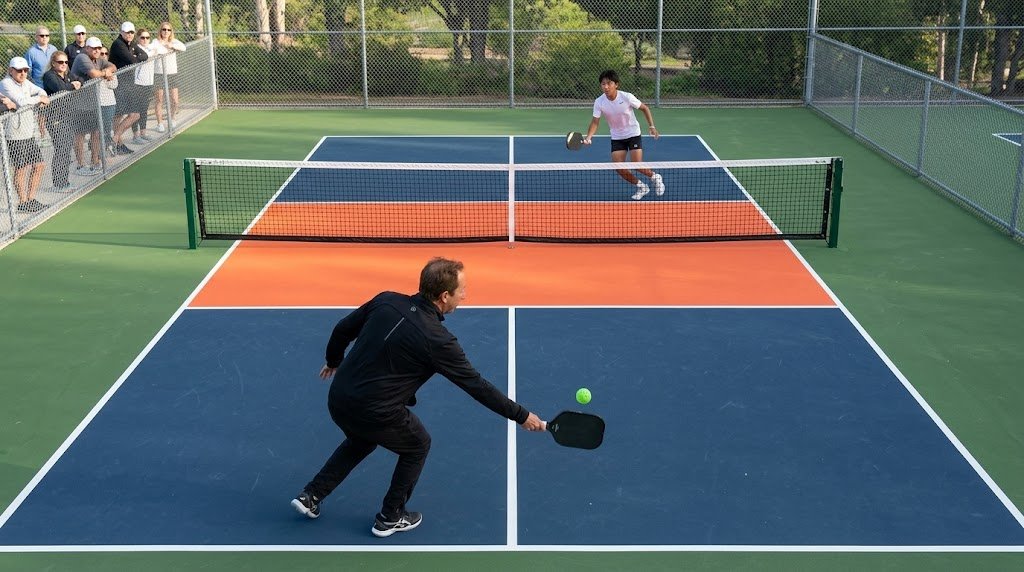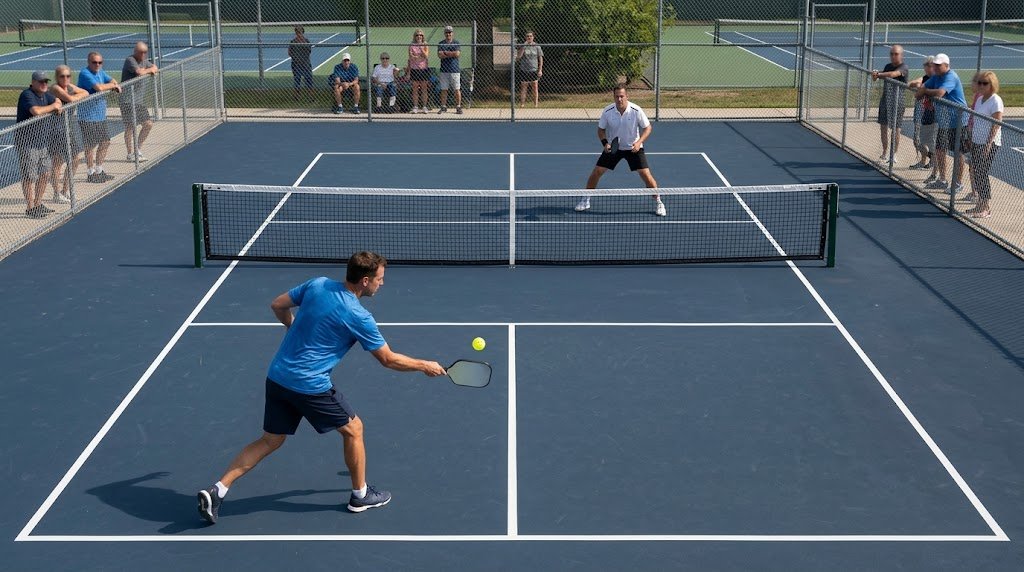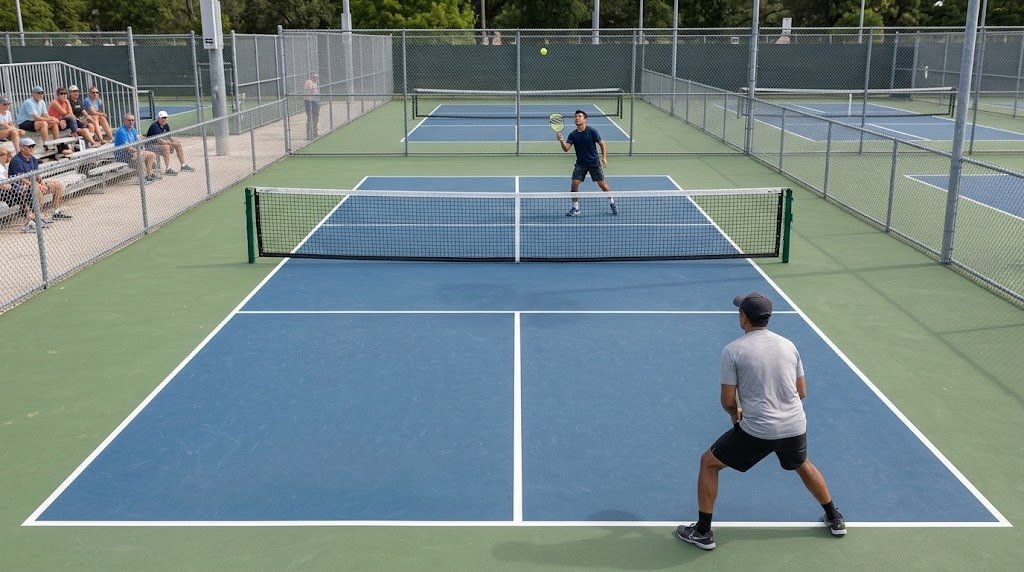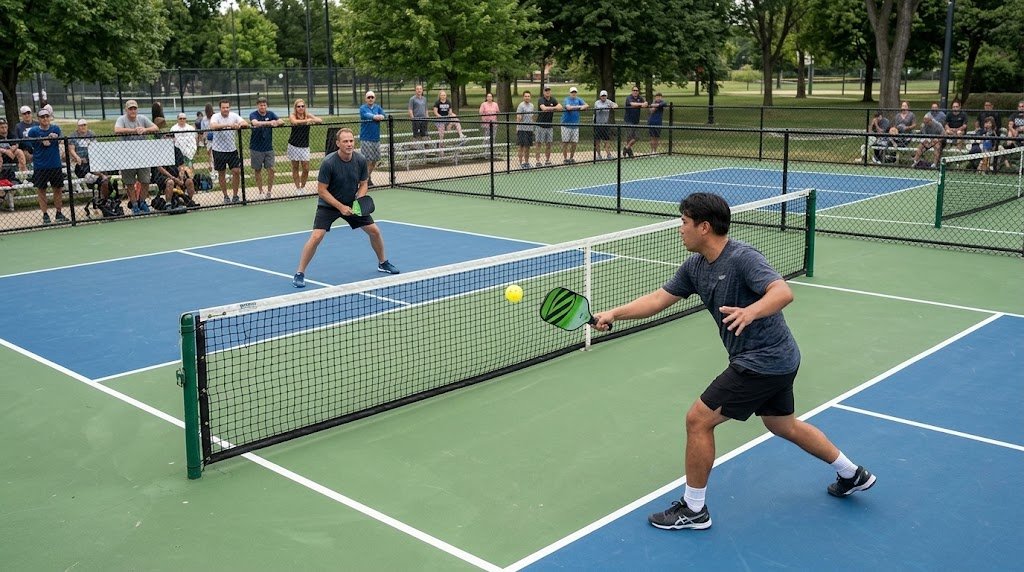

Andy Hernandez seized control early and never looked back, riding a powerful serve and aggressive net game to a 15-10 victory over Nicholas Tanuredjo in the Men's Singles Challenger at the $30,000 Proton National Tour in Corona. The win, fueled by Hernandez’s higher pre-match rating of 4.393 compared to Tanuredjo’s 3.967, set the tone for a commanding performance that combined precision with relentless pressure. From the first point, Hernandez dictated pace, mixing deep drives with sharp angles that kept his opponent scrambling.
Tanuredjo, though rated respectably, struggled to find consistent rhythm against Hernandez’s varied attack. While he managed to stay in contention through the mid-game stretch, a series of unforced errors and difficulty handling pace at the non-volley line allowed Hernandez to pull away. The five-point margin reflects not just superior execution but also Hernandez’s ability to capitalize on opportunities when they arose.
Kitchen Command and Control
In pickleball, owning the non-volley line is often the difference between reacting and dominating. Hernandez demonstrated strong positioning awareness, frequently stepping into the zone to take dinks out of the air and limit Tanuredjo’s time and space. Controlling this area doesn’t mean volleying illegally inside the kitchen—it means using legal, balanced positioning to pressure opponents with timely putbacks and resets. Hernandez’s ability to stay just behind the line, then explode forward on volleyable shots, disrupted Tanuredjo’s rhythm without overstepping boundaries.
Meanwhile, Tanuredjo found himself frequently reacting from behind the line, which reduced his offensive options and increased the risk of popping the ball up. While no specific faults are recorded in the match data, the positional disparity contributed to longer rallies ending in Hernandez’s favor. Effective kitchen play isn’t about aggression alone—it’s about timing, patience, and knowing when to step in and when to hold ground.
Dinks, Faults, and the Margin of Error
The dink game, often underestimated, played a quiet but critical role. Hernandez used soft, low dinks to neutralize Tanuredjo’s power and draw him forward, setting up passing shots or lobs when the opening appeared. These exchanges, while not flashy, shifted momentum in subtle ways. A well-placed dink can force an opponent into a difficult lift—increasing the chance of a fault, whether from hitting into the net or sending the ball out of bounds.
Out-of-bounds risk rises when players stretch for wide dinks or attempt risky angles under pressure. Hernandez minimized this by keeping his shots compact and controlled, while Tanuredjo, attempting to redirect pace, occasionally overreached. Again, no specific faults are attributed to either player in the source, but the general principle holds: in tight exchanges, decision-making at the kitchen line often decides who wins the point—and the match.
Straight Sets, Clear Message
Hernandez’s 15-10 win wasn’t just a victory—it was a statement. The score reflects a player who imposed his will, used his higher-rated toolkit effectively, and made fewer costly errors when it mattered. For Tanuredjo, the match offers a clear feedback loop: improving consistency at the non-volley line and reducing unforced errors under pressure could narrow the gap against top-tier talent.
As the Proton National Tour continues, Hernandez carries momentum into the next round. His performance underscores a truth in modern pickleball: ratings may forecast potential, but it’s execution on the court—especially in the kitchen, on the dink, and under pressure—that turns pre-match expectations into post-match results.