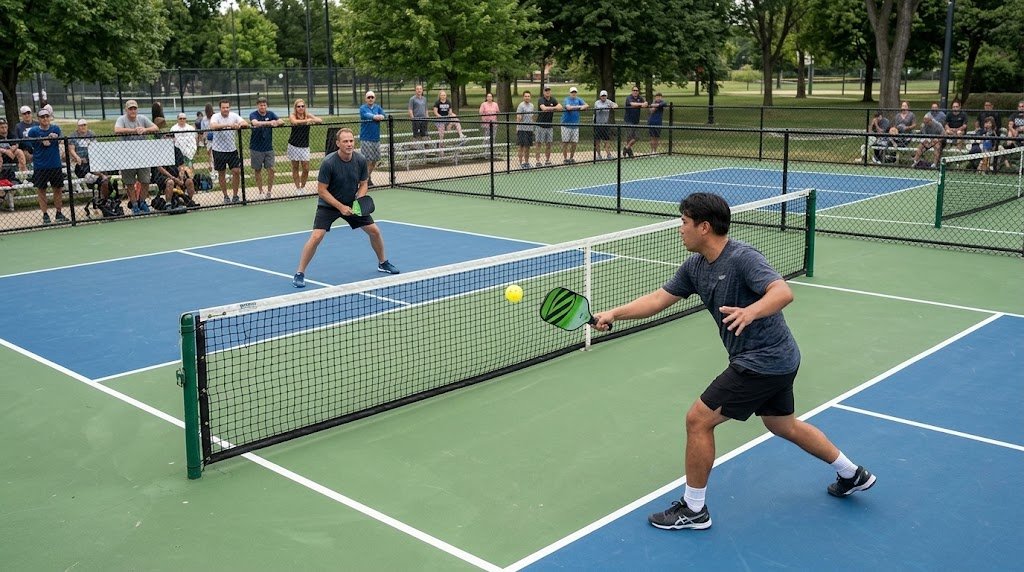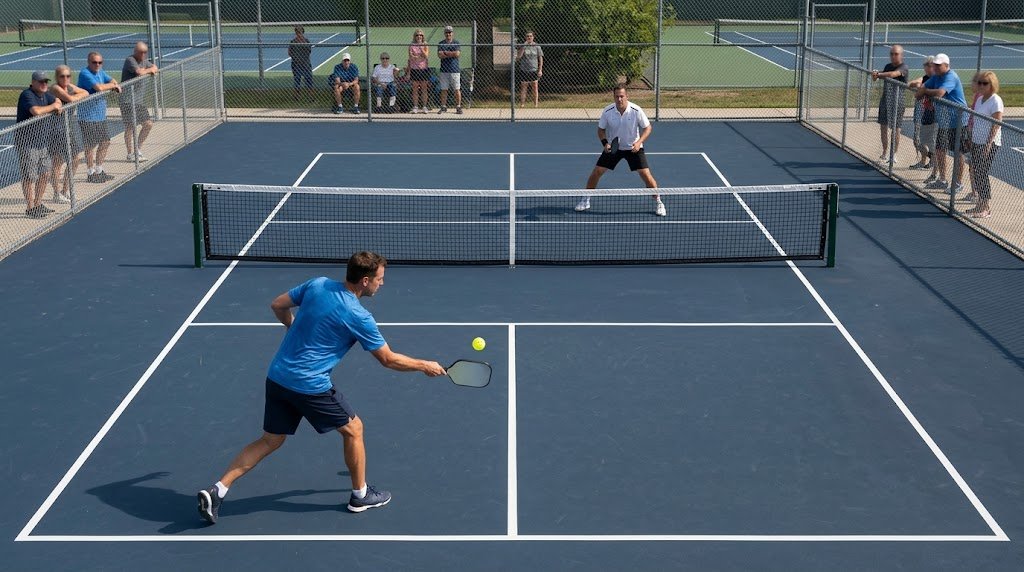


Leon Esmas needed no warm-up act to secure a commanding victory in the Men's Singles Challenger division of the MPO $30,000 Proton National Tour by MPO. Playing on September 20, 2026, in Corona, Esmas moved with decisive clarity to defeat Tyler Orden, 11–1, in a single-game scoreline that reflected the gap in their pre-match ratings.
The Measurable Gap
Entering the match, the statistical landscape painted a clear picture of the competitive hierarchy. Esmas carried a pre-match rating of 4.093, a solid four-point indicator that signaled elite-level readiness for high-stakes professional competition. In contrast, Orden held a pre-match rating of 3.597, placing him a half-point behind in the MPO hierarchy. In professional pickleball, such a differential often dictates the pace at which a match unfolds, as the higher-rated player typically commands more control over the rhythm of play. The 11–1 result was not a fluke but a mathematical inevitability driven by Esmas’s superior positioning and tactical execution.
For Esmas, this victory served as a confirmation of his status within the division. Winning straight points allows a player to build momentum without the disruption of early errors. By securing the match in a single game, Esmas avoided the extended duration that can introduce fatigue and variable performance, instead focusing on a clean, high-efficiency performance that maintains professional credibility in the draw.
Kitchen Mechanics and Line Control
Understanding why such a decisive margin can occur requires looking at the fundamentals of pickleball strategy, specifically the interplay between the non-volley zone—commonly known as the kitchen—and the baseline. While we did not witness specific rallies from this specific match, the 11–1 score suggests that Esmas effectively minimized out-of-bounds risk while maintaining aggressive pressure.
In general analysis, controlling the non-volley line is about occupying space without violating the rules. A player can stand near the kitchen to cut off angles, but stepping into the zone to hit a ball before it bounces constitutes a fault. This distinction is vital: controlling the line means influencing where the ball goes, whereas volleying illegally inside the kitchen results in a point loss. High-rated players often master this nuance, using the proximity to the net to finish points quickly without committing the error of illegal volleys.
Furthermore, the kitchen serves as a transition zone for dinks. A well-placed dink forces the opponent to move away from the baseline, potentially resetting the point to the higher-rated player's advantage. When one player dominates these small exchanges, the scoreboard often reflects a lopsided margin. The 11–1 result likely stems from Esmas's ability to manage these transitional shots with precision, reducing the number of long rallies that might allow a lower-rated player to recover.
Strategic Implications
This result underscores the importance of consistency in the MPO tour. For Orden, a loss in the Challenger division is a standard part of the competitive ladder, offering a benchmark against higher-rated opposition. The margin of victory highlights the specific areas where gap analysis is necessary, from reaction time to shot placement.
For Esmas, the performance serves as a reminder that in professional singles, there is no room for extended error. The efficiency of the 11–1 win suggests a player comfortable with the demands of a $30,000 cash prize event, where focus and discipline are as valuable as raw power. The match stands as a clear record of competitive separation, with Esmas advancing through his segment with minimal resistance. As the tour progresses, such matches provide data points for future projections, but for now, the 11–1 result speaks for itself as a definitive statement of current form and skill differential in the Corona event.