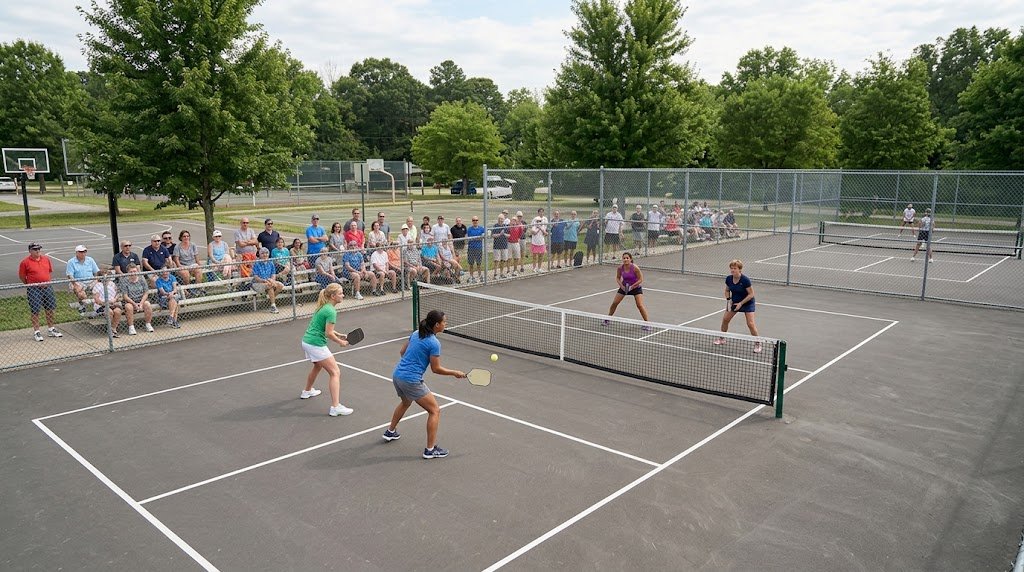
Duan Huynh and Kiet Lam didn't just win—they dominated. In a commanding performance at the Men's 3.0–3.49 Doubles event on September 20, 2026, the pair shut out Danny Nguyen and kelvin tran 11–0, securing a straight-games victory that left little doubt about their control of the match. From the first serve to the final point, Huynh and Lam dictated tempo, spacing, and shot selection with precision, turning what could have been a competitive outing into a one-sided exhibition of consistency and court awareness.
The scoreline tells the story: an 11–0 margin isn’t just a win—it’s a statement. In pickleball terms, that’s not merely outplaying opponents; it’s neutralizing their ability to gain momentum, sustain rallies, or force errors through pressure. While the match didn’t extend to a second or third game, the single game’s outcome reflects a clear disparity in execution, particularly in net play and unforced error minimization. Nguyen and tran entered with pre-match ratings of 3.182 and 2.729 respectively, while Huynh and Lam came in at 3.066 and 3.397—a combined rating edge favoring the winners, though ratings alone don’t explain shutouts. What they do suggest is that Huynh and Lam brought a level of stability and shot selection that proved difficult to overcome.
Kitchen Command and Control
One of the most telling aspects of Huynh and Lam’s performance was their command of the non-volley zone line. Controlling the kitchen isn’t just about standing close to the net—it’s about timing, positioning, and forcing opponents into difficult choices. By maintaining aggressive yet legal court presence just behind the kitchen line, Huynh and Lam limited Nguyen and tran’s ability to execute effective dips, drives, or surprise drop shots without risking a fault. This kind of positional discipline doesn’t guarantee points, but it reduces opponents’ options and increases the likelihood of weak returns or unforced errors—especially when paired with consistent dinking and reset shots.
It’s important to distinguish between controlling the line and volleying illegally inside the kitchen. A player can stand inches from the line, take a volley after the ball bounces, or retreat to let a shot bounce—all legal. Stepping into the non-volley zone to volley the ball before it bounces constitutes a fault. The article does not claim any specific fault occurred; rather, it highlights how effective kitchen play—whether through dinks, resets, or well-timed volleys from behind the line—can shape match outcomes by denying opponents rhythm and attacking opportunities.
The Role of Dinks, Faults, and Court Awareness
In matches like this, the difference often lies in the margins: a dink that lands just inside the sideline versus one that drieves wide, a reset that neutralizes aggression versus one that pops up for a putaway. While no specific faults or out-of-bounds shots are recorded in the source data, general pickleball strategy tells us that minimizing unforced errors and maximizing shot consistency are hallmarks of dominant performances. Huynh and Lam’s ability to keep the ball in play, vary pace, and direct shots with purpose likely contributed to their opponents’ struggle to find offensive windows.
Conversely, Nguyen and tran, despite their ratings, appeared unable to establish a rhythm in the opener. Whether due to shot selection, positioning, or the pressure of facing a synchronized duo, they failed to score a single point—a rare but telling outcome that underscores how quickly a match can tilt when one team gains early control and refuses to relinquish it.
A Satisfying Conclusion
This 11–0 victory wasn’t about flash or spectacle—it was about execution. Huynh and Lam played smart, stayed patient, and made Nguyen and tran earn every inch of court—only to find that inch never came. The result stands as a clear testament to the power of consistency, communication, and court geometry in doubles pickleball. For the winners, it’s a confidence-builder. For Nguyen and tran, it’s a reminder of how thin the margin can be between competing and being contained. In the end, the scoreboard didn’t lie: when one team controls the net, limits errors, and makes the opposition work for every chance, even a single game can feel like a full statement.