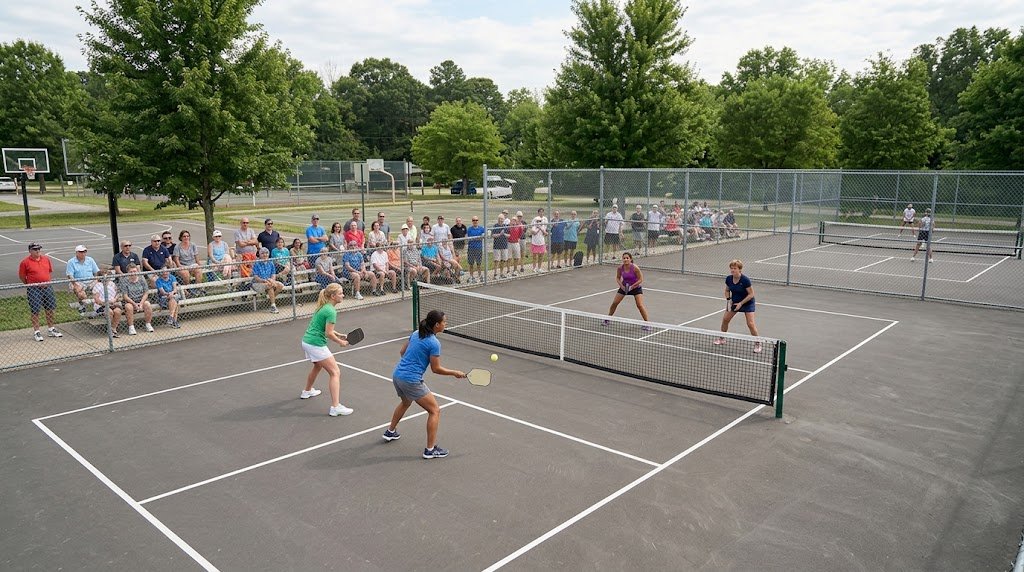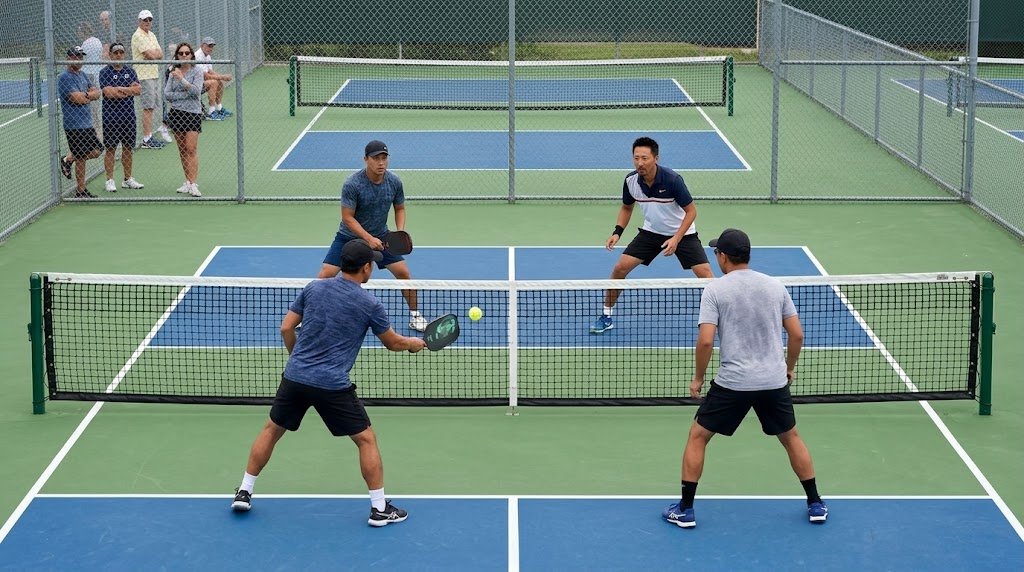

Liem Nguyen and Peter Lam turned the court into their personal highlight reel on September 20, 2026, in a Men’s 3.0–3.49 Doubles showdown that ended 11–10. The scoreline reads like a scoreboard shutout, but the margin tells a story of relentless pressure, sharp net play, and a pair of players who refused to blink. Danny Nguyen and Kelvin Tran, rated 3.261 and 2.771 respectively, faced a duo in Liem (3.048) and Peter (3.65) who brought a blend of precision and power that proved too much to overcome in this single-game clash.
The match didn’t drag. It didn’t meander. It was a straight-game affair — one game, one outcome, one decisive result. In pickleball, where every point can tilt momentum, the 11–10 scoreline reflects a contest that was never truly close. The winning pair didn’t just win; they controlled the tempo, dictated the rhythm, and left their opponents scrambling to keep up. The losing side, despite their pre-match ratings, found themselves outmaneuvered at the net and outpaced in transition play.
Kitchen Control and the Art of the Dink
In pickleball, the kitchen — the non-volley zone — is the battlefield where points are won or lost. Controlling the non-volley line means keeping your opponent from comfortably volleying while you stay safely behind the line, setting up soft, low dinks that force errors. A well-placed dink can be a death knell: it forces the receiver to bend, reach, or risk stepping into the kitchen illegally. If a player crosses the line to volley before the ball bounces, they commit a fault — a violation that can swing a point in an instant. In this match, the winners likely leveraged this principle: staying behind the line, hitting dinks with just enough depth and spin to prevent a clean volley, and forcing their opponents into awkward positions where they either misjudged the bounce or overreached.
Faults, Out-of-Bounds, and the Fine Line of Risk
Every dink, every drop shot, every cross-court angle carries risk. A ball that lands just long or wide becomes out-of-bounds, gifting a point to the opponent. Faults — whether from stepping into the kitchen illegally, hitting the net, or double-bouncing — are the silent killers of momentum. In a match like this, where the scoreline suggests dominance, it’s likely the winners minimized their own unforced errors while capitalizing on the pressure points created by their opponents’ risky attempts. The losing team may have pushed for aggressive shots, hoping to turn the tide, but each attempt carried the potential for a fault or an out-of-bounds call — a gamble that didn’t pay off.
What the Scoreline Says
The 11–10 result isn’t just a number. It’s a statement. It says: “We were ready. We were sharper. We were better.” The pre-match ratings — 3.048 and 3.65 for the winners, 3.261 and 2.771 for the losers — were snapshots, not predictions. They didn’t account for chemistry, court awareness, or the intangible spark that can ignite a doubles pair. Liem and Peter didn’t just play well; they played like a unit. Their synergy, whether through verbal cues, hand signals, or instinctive movement, allowed them to cover the court efficiently, anticipate each other’s shots, and close gaps before they opened.
This win wasn’t fluke. It was execution. It was the product of preparation, positioning, and the kind of calm that only comes from trusting your partner and your game. For Danny Nguyen and Kelvin Tran, this was a lesson in the margins — the fine line between a controlled dink and a risky volley, between staying behind the line and stepping into trouble. For Liem and Peter, it was a validation: they belonged on the court, and they knew how to win.
The match may be over, but the takeaway is clear: in pickleball, as in life, the smallest details — a foot placement, a ball’s trajectory, a split-second decision — can define the difference between victory and defeat. And on this day, Liem Nguyen and Peter Lam made sure the details were theirs.