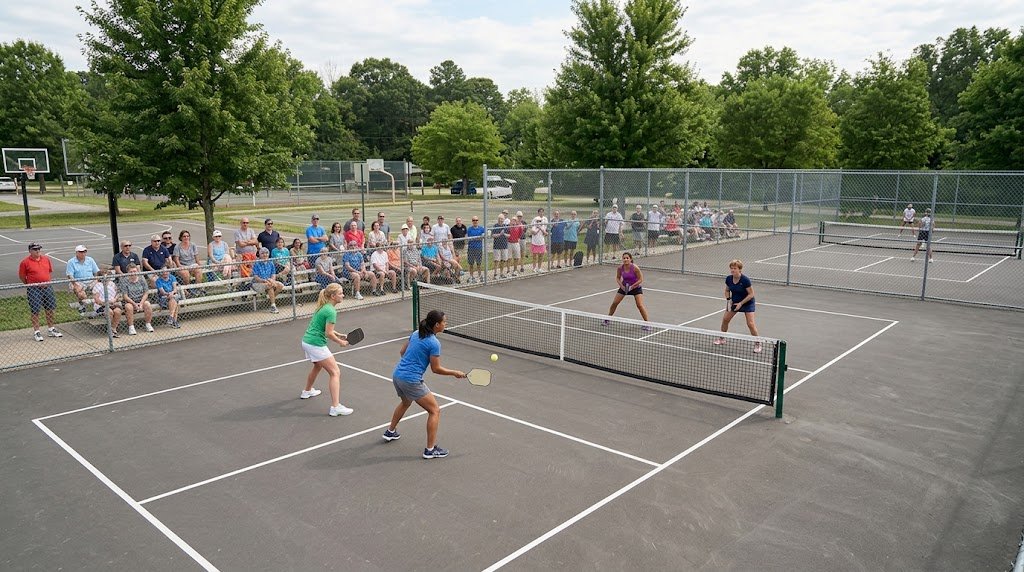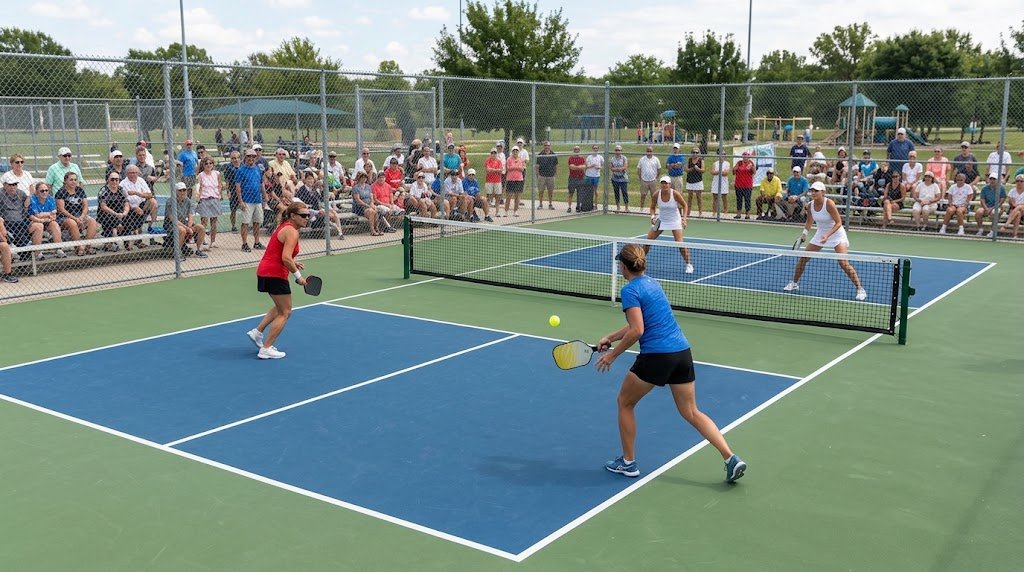
Rachel Ly and Cierra Saenz closed out a commanding 11--5 victory in the Women's 2.49-2.99 Doubles bracket, riding a pre-match rating gap that proved telling on the scoreboard.
With Ly opening at 3.207 and Saenz tabbed at 2.686, their combined average landed just above the midpoint of the divisional band, while their opponents carried a slightly loftier 2.682--2.900 pairing on paper.
What looked like a mathematical coin-flip on paper became anything but once the first game settled.
The winners' side asserted early rhythm, building points through clean exchanges and limiting the kind of unforced errors that tilt short games in doubles.
Every concealed point mattered when games stretch past a single digit, and Ly and Saenz kept the pressure valve turned high.
Kitchen chess is the silent engine of any successful doubles campaign, and teams that linger too long near the non-volley line risk both kitchen fouls and soft pockets of air.
Controlling that kitchen zone means hovering at the edge with split steps ready, dinking just over the net while staying light on the balls of the feet.
Volleying inside the kitchen is not automatically illegal, but lingering there after the ball has bounced invites a fault, and over-aggressive swings can sail out of bounds on either sideline.
The threat of those out-of-bounds lines narrows the effective court, nudging smarter teams toward the center and punishing tentative dinks.
Sayo Mizutani and Machiko Yoshida entered their 2.682--2.900 combination knowing one clean stretch could flip momentum, yet a five-point haul under that ceiling left little margin for error.
A lopsided finish of 11--5 carries weight, especially in a doubles draw where chemistry often trumps individual flash.
Ly and Saenz converted pressure into progress, while their opponents were forced into a handful of rallies that never quite reached full stride.
That six-point margin is more than a number; it is a statement of control in a format where a single extended game can shift identity.
Looking past the line score, the rating differential tells its own subplot.
With Ly rated above the bracket ceiling and Saenz anchored near the band bottom, their 2.947 average paired evenly against a 2.791 opposition.
Yet execution on a given day is the only stat that ultimately carries a scoreboard.
The straight-games result rewards the side that dared to dictate tempo rather than react.
In doubles chess, patience and precision walk hand in hand, and the winners' side demonstrated both without needing an extra game for validation.
The 11--5 line may look unremarkable beside higher-scoring affairs, but in a doubles bout every concealed point is magnified, making this a masterclass in steady execution.
For observers tracking the Women's 2.49-2.99 field, this match served as an early indicator that pre-match ratings are a snapshot, not a prophecy.
The kitchen line remains the battleground, the dink the most delicate weapon, and discipline the quietest victor when games close before full stretch.
Ly and Saenz exit with their momentum intact and their straight-games win firmly rooted in that kitchen-centered doctrine.