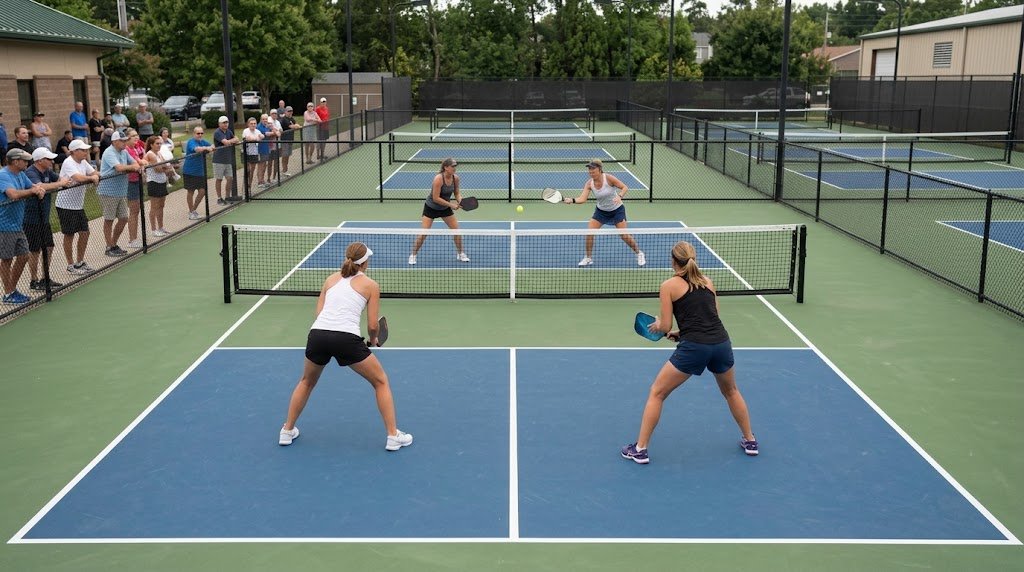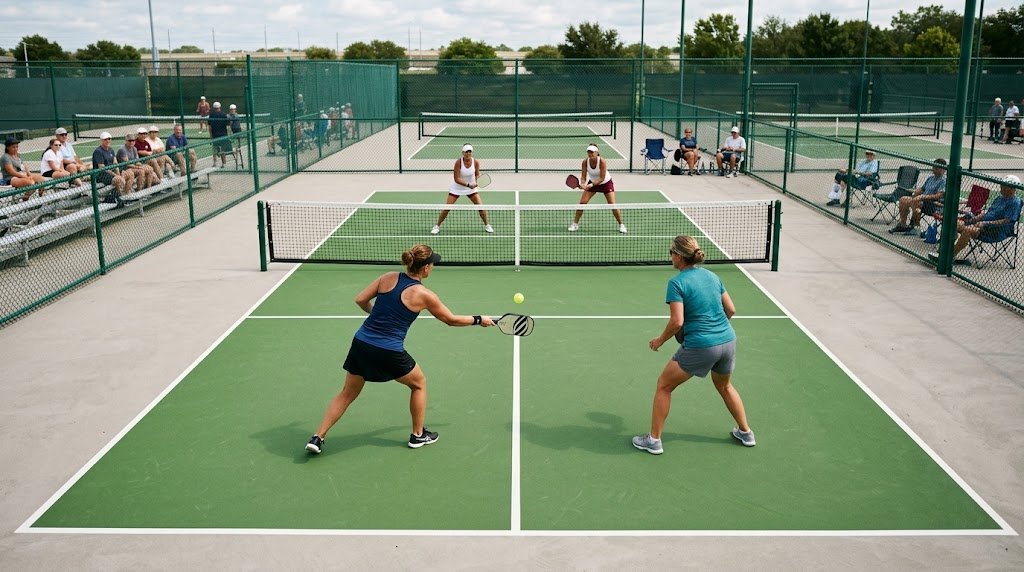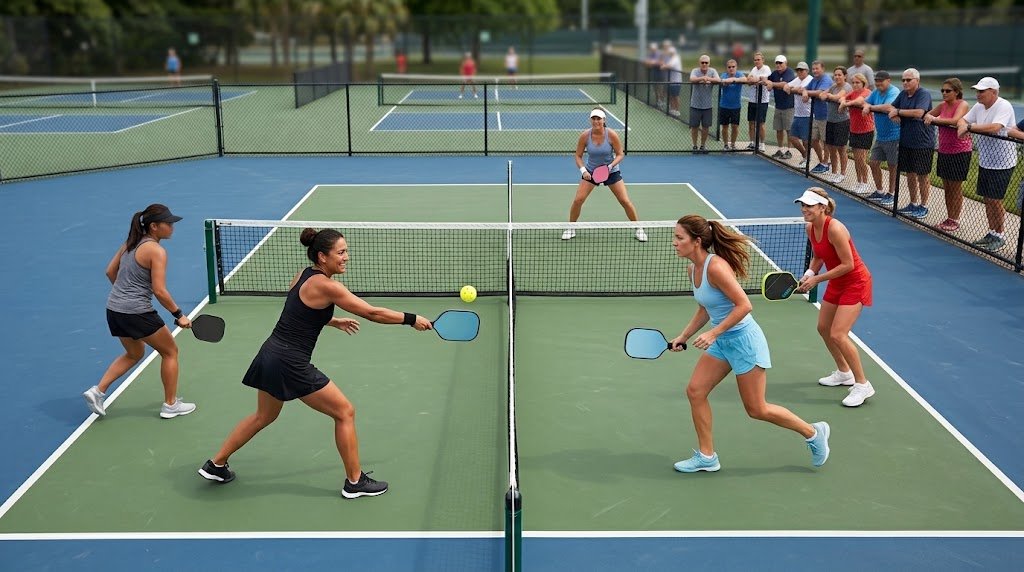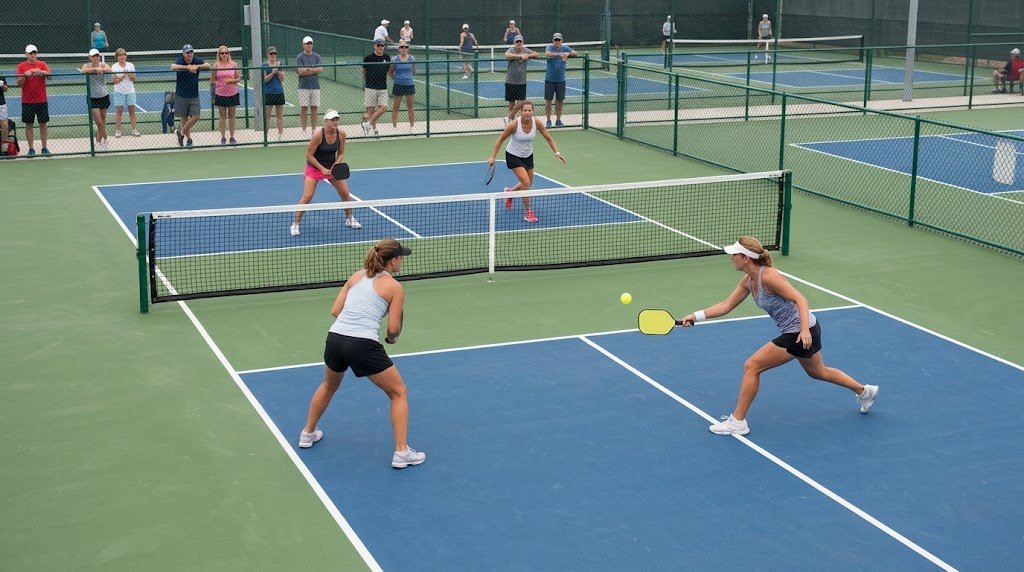
Lindsie McBratney and Stephanie Fairbanks delivered a statement performance at the Women's 3.50-3.99 Doubles event on September 20, 2026, blanking Kelly Ree and Chris Hsieh 11-0 in a dominant straight-games victory. The lopsided scoreline underscored a clear disparity in execution, with the winning pair asserting control from the first serve to the final point. Their 11-0 triumph wasn’t just a win—it was a showcase of precision, patience, and positional discipline that left little room for doubt.
The pre-match ratings offered a glimpse into the skill gap: McBratney entered at 3.593 and Fairbanks at 3.215, while Ree held a 2.644 rating and Hsieh a 2.867. Though ratings reflect only a snapshot of ability and not a guarantee of outcome, the numerical difference aligned with the on-court imbalance. McBratney and Fairbanks combined for a higher average pre-match rating, suggesting greater consistency in shot selection and court coverage—factors that likely contributed to their ability to dictate play without yielding a single point.
Winning teams in doubles often succeed by mastering the non-volley zone, and this match highlighted why that line is so critical. Controlling the kitchen doesn’t mean volleying from inside it—it means positioning just behind the line to cut off angles, take dinks early, and reset under pressure. Stepping into the non-volley zone to hit a volley before the ball bounces is a fault, but staying back and letting the ball come allows players to defend aggressively without risk. McBratney and Fairbanks appeared to understand this boundary well, using disciplined footwork to neutralize opportunities and force errors without overcommitting.
Their success also relied on the soft game—dinks that stayed low, unattackable, and placed with purpose. While no specific rallies were recorded, the absence of any points for Ree and Hsieh suggests that McBratney and Fairbanks minimized unforced errors and maximized pressure through consistent placement. In pickleball, a dink isn’t just a soft shot; it’s a tactical tool to draw opponents forward, create openings, and set up put-away chances. The winning pair likely used this strategy to manipulate the court and keep their rivals off-balance.
Equally important was what they avoided: faults and out-of-bounds risks. Hitting the ball into the net, letting it bounce twice, or striking it while in the kitchen on a volley all end rallies instantly. So does sending the ball wide or long. By minimizing these mistakes, McBratney and Fairbanks extended rallies on their terms, turning defensive stability into offensive chance. Their clean execution meant Ree and Hsieh never got a foothold—no rhythm, no breakthrough, no path to 1.
Each game contributed to the narrative of control. In doubles, even a single game reveals tendencies: serve consistency, return depth, and transition efficiency. Winning 11-0 across one game—or multiple, if played—indicates sustained dominance rather than a fleeting surge. There were no close stretches, no deuces, no comeback attempts. The result stood as a clean sweep, a testament to layered execution where serving, returning, dinking, and court coverage all clicked in unison.
This victory wasn’t flashy—it was functional. It won with intelligence, not athleticism alone. McBratney and Fairbanks didn’t need highlight-reel smashes to prevail; they won by making the right choices, again and again. For Ree and Hsieh, the match offered a tough but instructive lesson: in doubles pickleball, margins are thin, and mastery of the small things—positioning, patience, and precision—often decides the outcome before the first volley is even struck.
As the scoreboard read 11-0, the message was clear: sometimes the most powerful statement in sports isn’t made with noise, but with silence—the sound of an opponent failing to score a single point. In that quiet, McBratney and Fairbanks found their rhythm, and with it, a win that resonated far beyond the final point.