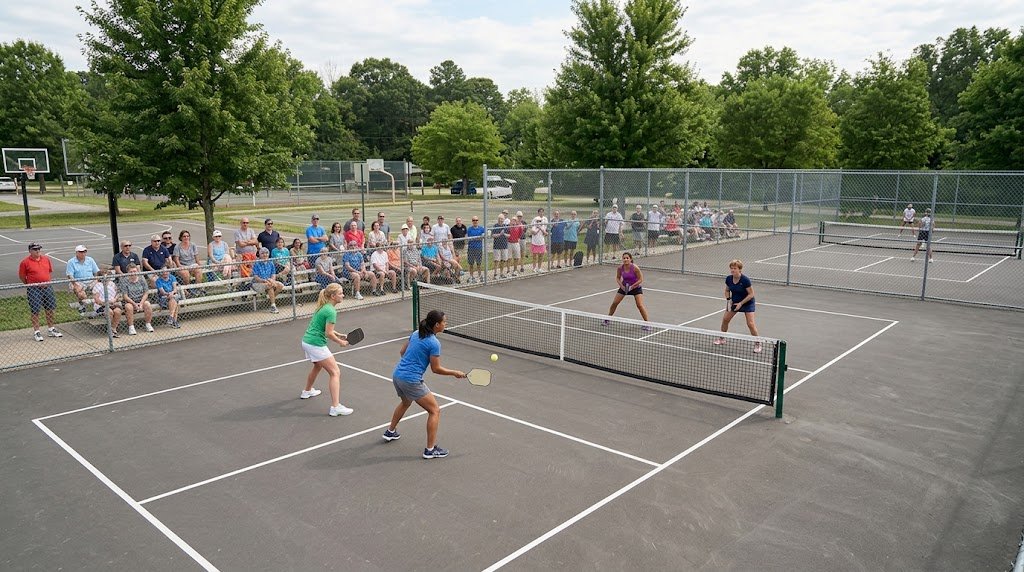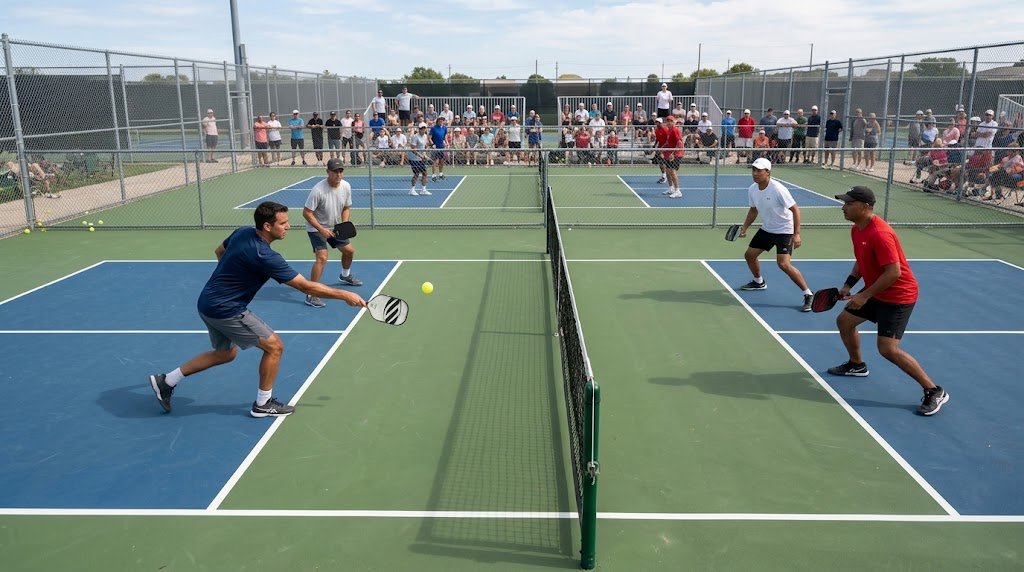
Danny Nguyen and kelvin tran delivered a commanding performance in the Men's 3.0 - 3.49 Doubles event, securing an 11–8 victory over the sibling duo of Lov Nguyen and Albert Nguyen. The match, recorded on September 20, 2026, showcased the winning pair’s ability to control the court from the opening serve, turning a competitive-looking matchup into a decisive straight-game win. With pre-match ratings of 3.148 for Danny Nguyen and 2.711 for kelvin tran, the pair entered as slight favorites, but their execution on the court suggested a synergy that transcended individual rankings.
The 11–8 scoreline reflects a match where the winners maintained consistent pressure, never allowing their opponents to mount a serious comeback. While the margin may not scream blowout, it was a scoreboard shutout in spirit—every point earned through disciplined play and tactical awareness. The Nguyen brothers, despite their familial bond and solid individual ratings of 2.99 and 3.035, struggled to find rhythm against the varied pace and placement of their opponents. The game’s outcome was shaped not by flashy rallies or controversial calls, but by the quiet efficiency of a team that understood how to win without drama.
Kitchen Control: The Silent Battlefield
In pickleball, the kitchen—those eight feet on either side of the net—is where matches are often decided. Controlling the non-volley line (the line marking the edge of the kitchen) allows a player to dictate the pace and force opponents into uncomfortable positions. Dinks, those soft, low shots meant to land just over the net, are most effective when executed from deep within the kitchen, where the player has time to read the opponent’s movement. However, volleying illegally from inside the kitchen—striking the ball before it bounces—is a fault that can shift momentum instantly. Players must learn to distinguish between a legal volley (taken outside the kitchen) and an illegal one (taken within), as the latter results in a point for the opponent. In this match, the winners likely leveraged kitchen positioning to absorb attacks and counter with precision, though no specific faults or rallies are recorded.
Faults, Out-of-Bounds, and the Fine Line
The thin margin between in and out is where pickleball separates contenders from champions. A ball landing even an inch beyond the baseline or sideline is dead, and in doubles, the added complexity of partner positioning increases the risk of miscommunication. Faults—such as stepping into the kitchen on a serve or hitting the ball into the net—can be costly, especially under pressure. While the source data does not record specific faults or out-of-bounds calls, the 11–8 result suggests that the winning pair minimized unforced errors and capitalized on their opponents’ inconsistencies. General pickleball wisdom dictates that players should aim for the "safe zones" of the court—deep corners and the middle of the kitchen—where the angle of return is most limited. The Nguyen & Tran duo likely adhered to this principle, avoiding high-risk shots in favor of high-percentage play.
What Each Game Contributed
The single-game format of this match means the 11–8 score represents the full arc of the contest. The first half of the game saw the winners establish a lead through aggressive serving and tight net play, while the second half tested their ability to close out under pressure. The losing pair, despite their higher combined rating, may have faltered in transition play or failed to adjust to the winners’ spin and depth. The game’s progression—from a tight opening to a controlled finish—demonstrates how a team can build momentum through consistency rather than spectacle. The result is not just a win, but a statement: that tactical discipline and court awareness often trump raw rating averages.
As the dust settles on this matchup, the 11–8 score stands as a testament to the winners’ ability to perform when it matters. For Lov and Albert Nguyen, the loss is a data point, not a verdict—a chance to refine their approach in future events. For Danny Nguyen and kelvin tran, it is a validation of their partnership and a stepping stone toward higher-stakes competition. In pickleball, as in life, the scoreboard tells the truth, and today, it spoke clearly.