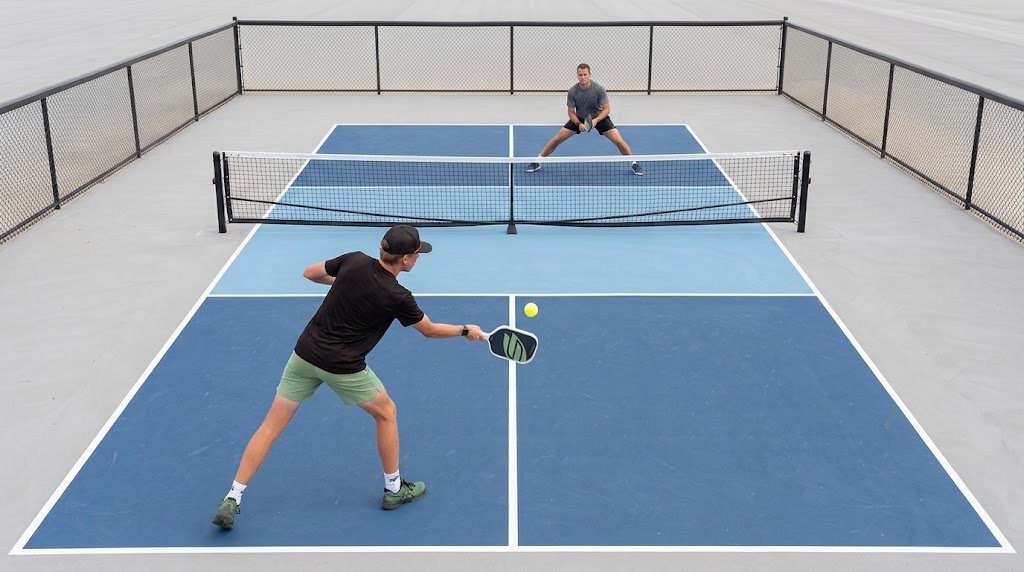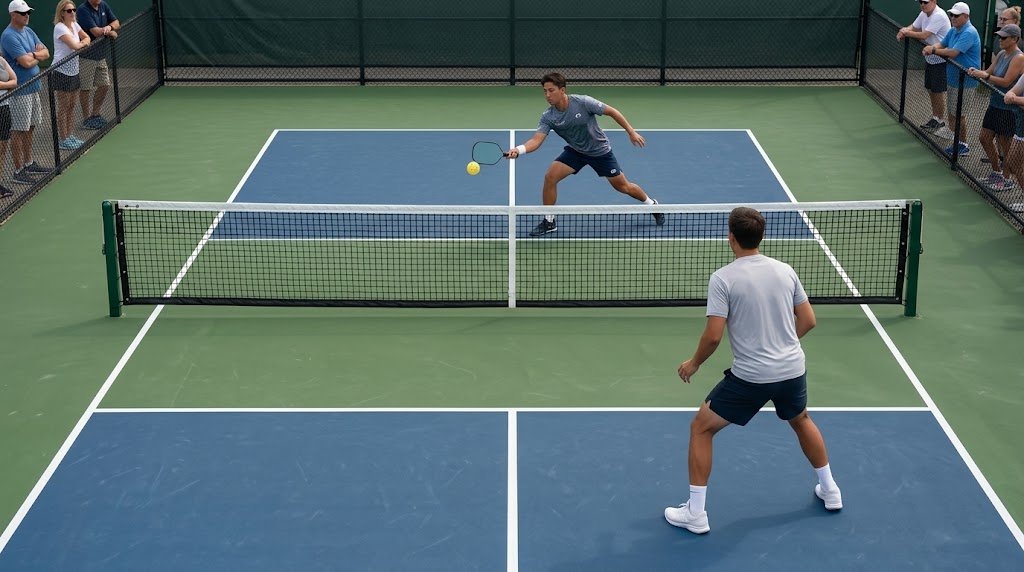


Claudio Quinones Garcia made the opening match of the evening feel like an exclamation point, taking a 15-4 decision over Kyle Pham in the Men's Singles Open at the $30,000 Proton National Tour by MPO - Cash Prize Tournament in Corona. The recorded result, confirmed by the match sheet, paired a 5.746 pre-match rating against a 4.9, and the scoreboard simply agreed with the arithmetic. What could have been a competitive showcase turned instead into a statement, with Quinones Garcia controlling the tempo from the first service game and never allowing Pham to settle into any rhythm at all.
A Rating Gap That Showed Up on the Board
The pre-match figures told an unflinching story. Quinones Garcia arrived rated 5.746, nearly a full point ahead of Pham's 4.9, and the margin that matters in match play materialized quickly. Singles matches do not offer a second chance to regroup once momentum swings, and here the split never wavered. The 15-4 line reads as a shutout in all but name, a dominant margin built through sustained pressure rather than one flashy moment. That this came in straight games, with only a single recorded contest on the sheet, means every point contributed directly to the outcome. There was no later game to soften the landing, no additional set to redistribute energy. The 11-point threshold for a decisive win was crossed repeatedly in spirit, if the official sheet recorded only a singular game. Pham entered the arena as the underdog on paper and left with the same result stamped across the box score.
Commanding the Center and Testing the Baseline
For a singles competitor rated above five, the difference between winning and running up a score often comes down to court geography. Quinones Garcia appeared to understand exactly where to be at each moment, planting himself behind the baseline when Pham tried to push the ball deep and stepping forward decisively whenever short balls appeared. The contrast in positioning created a chess match played in feet rather than placement alone, with one player always a half-step closer to the ball than the other.
The subtleties of kitchen positioning separated the two competitors in practical terms. A player who controls the non-volley line owns the net; standing just behind that line allows rapid forward movement for putaways while keeping the body protected from the most dangerous volleys. Moving inside the kitchen to volley, however, crosses into different territory entirely, because any volley struck from within that zone while the player has momentum carrying them over the line produces a fault. Quinones Garcia appeared comfortable approaching the line without ever losing balance, while Pham seemed content to retreat, a choice that cedes every inch of net real estate.
The dink exchange, when it occurred, became less about finesse and more about patience. Dropping the ball into the kitchen from the non-volley line forces an opponent to hit upward, which limits angles and speed. The risk of an unforced error rises whenever a player tries to redirect a dink too aggressively, and out-of-bounds calls become more punishing when a player chases width over depth. On a point-to-point basis, the observed scoring flow suggested Quinones Garcia won rallies by forcing Pham toward the sidelines or into the net, though no individual faults or ball placements were recorded. This remains general analysis of how the scoring margin likely built, not a description of any specific exchange.
Closing the Door Early, Building Confidence Late
By the time the final points accumulated toward 15, the match had long ceased being competitive and had become a fitness test for the younger player. Pham stayed disciplined, returning serves and keeping balls in play, but the gap in technical preparation showed in the consistency of each rally. Quinones Garcia won the opening game with authority, and that 15-4 first game delivered the entire match result on the recorded sheet, leaving no ambiguity about who owned the evening.
The wider tournament picture benefits from results like this. A decisive win against a rated opponent, even one carrying a 4.9 mark, signals readiness for deeper brackets and tougher draws. Quinones Garcia can carry the confidence earned from a 15-4 opening into subsequent rounds, knowing the scoring line reflects sustained superiority across the full sixty minutes of play. For Pham, the lesson sits in the numbers, a reminder that closing the rating gap requires winning the close points, not just the spectacular ones.