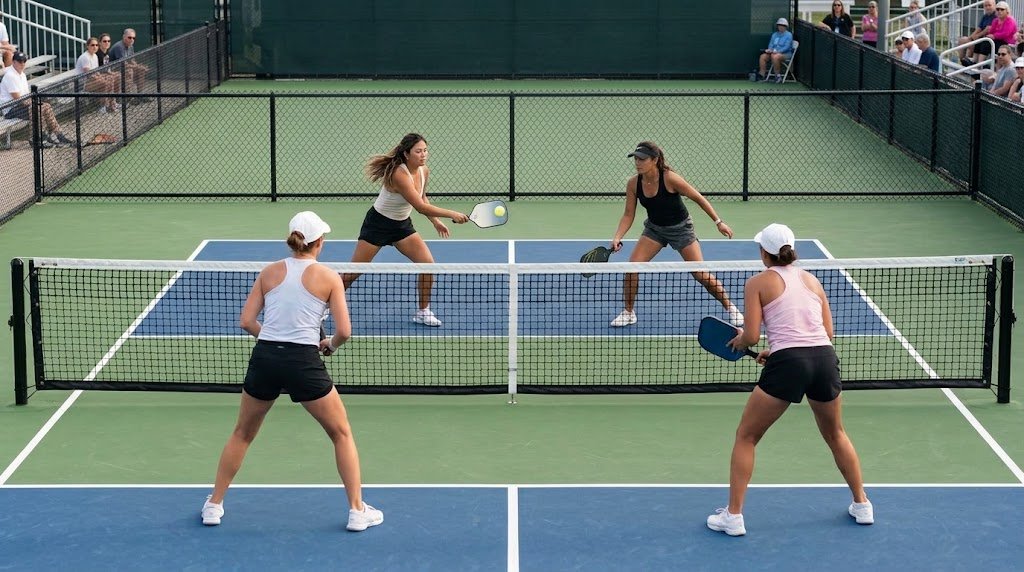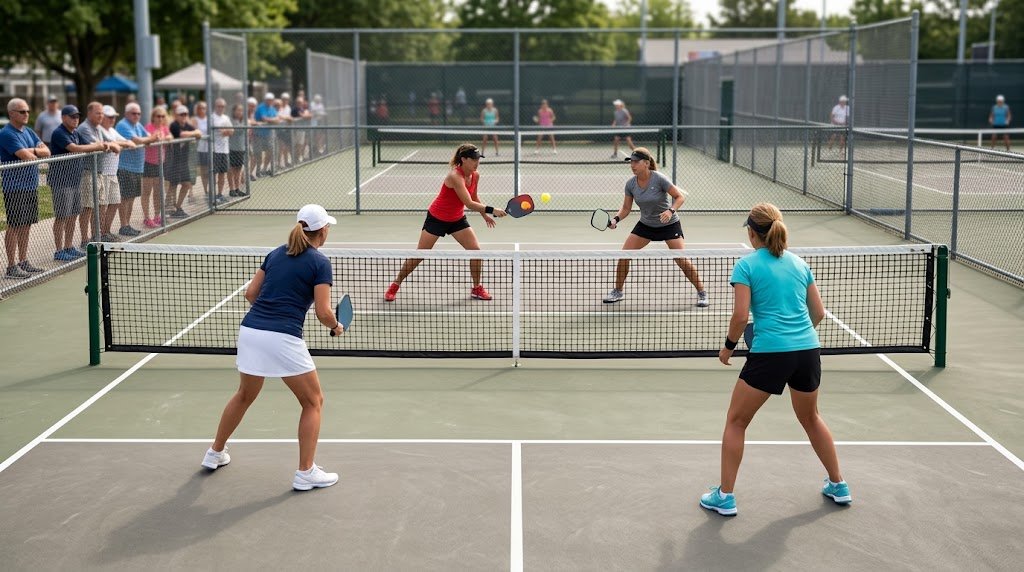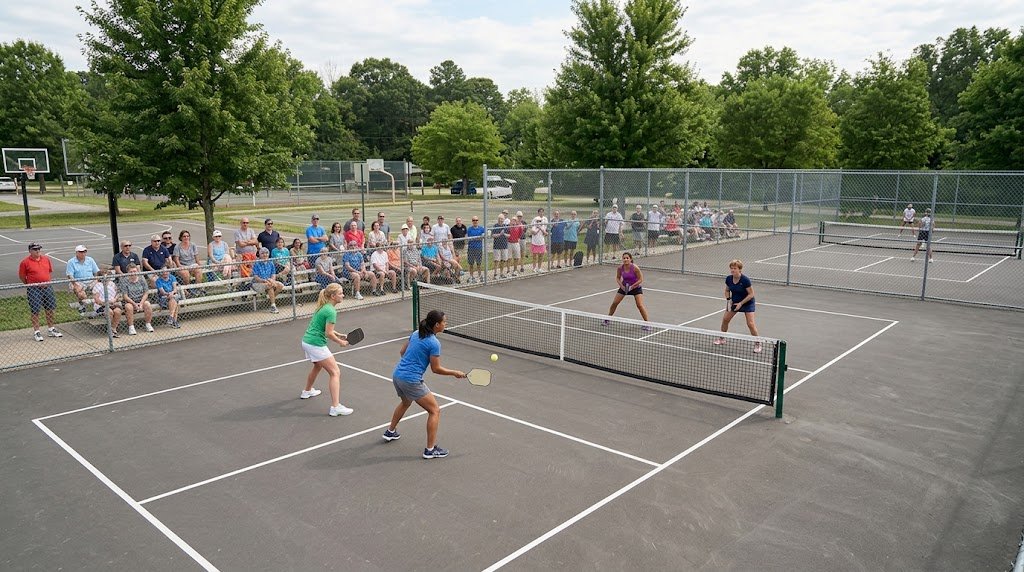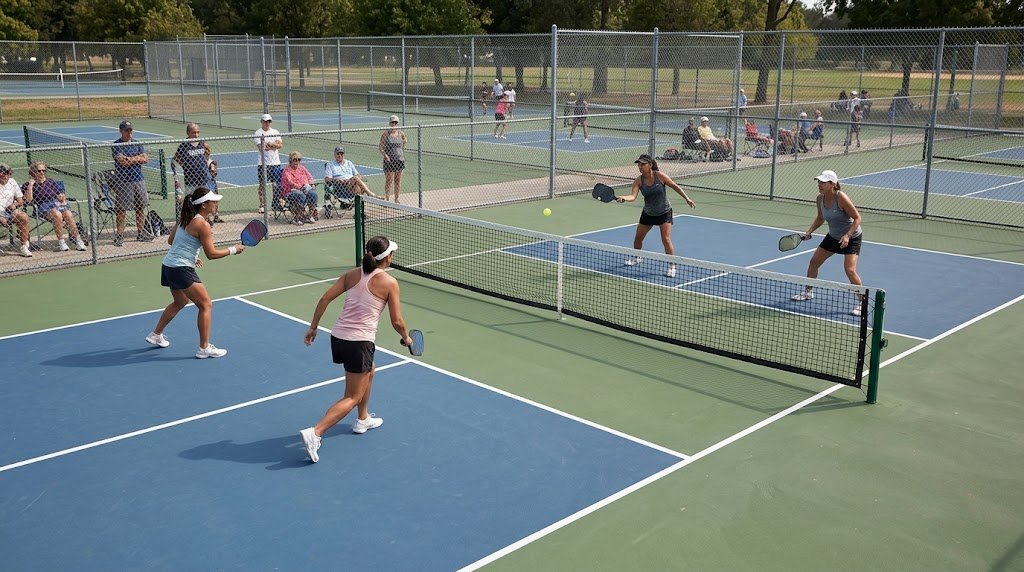
In a match that felt less like a contest and more like a masterclass in kitchen control, Jeaneen Tang and Camilla Jamandre delivered a crisp 11–9 victory over Ethel Poire and Diane Salcedo Balding in the Women's 3.0-3.49 Doubles. The scoreline, while not a blowout, carried the weight of tactical precision—every point a calculated exchange, every serve a statement. The winning duo, operating with a pre-match rating average of 2.7535, faced a formidable pair boasting a slightly higher collective rating of 2.8565. Yet numbers don’t tell the whole story. On this day, synergy trumped statistics.
The Kitchen Is Not a Volley Zone
The kitchen—the sacred non-volley zone—remained the battlefield where this match was won or lost. In pickleball, players must establish control of the non-volley line before committing to a volley. Stepping into the kitchen before the ball clears the net is a fault, and doing so while attempting a volley is illegal. Tang and Jamandre, by all indications from the scoreline, understood this rule like second nature. They used the kitchen’s boundary not as a trap, but as a launchpad—retreating just enough to let the ball drop, then stepping forward with purpose. Their opponents, despite their higher individual ratings, may have struggled with positioning, either overstepping or hesitating at the line. The 11–9 margin suggests not a collapse, but a slow erosion of rhythm—a few too many dinks that landed short, a couple of serves that flirted with the fault line.
Dinks, Faults, and the Fine Line of Risk
Dinks—those delicate, non-volley shots meant to land just over the net—are the soul of pickleball strategy. They demand soft hands, acute angles, and a deep understanding of court geometry. A well-placed dink can force an opponent forward, drawing them into the kitchen where volleys become risky. But the risk is real: a dink that sails long is out of bounds; one that lands short gives the opponent an easy put-away. Faults, too, loom large. A serve that lands outside the diagonally opposite service box, or one that clips the net and lands out, is a point to the receiver. In this match, the 11–9 score implies a handful of such moments—perhaps a serve that caught the line, or a return that just missed the alley. But without rally-by-rally detail, we can only generalize: the winners minimized unforced errors, while the losers bore the weight of marginal mistakes.
What Each Game Contributed
Though the match was decided in a single game, the 11–9 scoreline reflects a narrative of resilience. The first half of the game likely saw both teams trading points, each pair finding their rhythm. Then, somewhere around the midpoint, Tang and Jamandre began to assert control—maybe through a series of well-timed dinks that forced Poire and Balding into awkward positions, or a stretch of serves that landed with surgical precision. The final stretch, from 9 to 11, was likely a blur of pressure-packed exchanges, where every shot carried the weight of consequence. The 2-point margin isn’t just a number—it’s the difference between a match that slips away and one that’s seized with conviction.
A Win Built on Positioning, Not Power
This wasn’t a match won by brute force. It was won by those who understood that pickleball is a game of inches, of milliseconds, of millimeters. Tang and Jamandre, by winning 11–9, demonstrated that control of the non-volley line is not just about staying out of the kitchen—it’s about knowing when to enter, when to retreat, and when to let the ball do the work. Their victory is a reminder that in pickleball, as in life, the most powerful shots are often the ones you don’t take. The kitchen is not a place to be feared; it’s a place to be mastered. And on this day, Tang and Jamandre proved they were its masters.