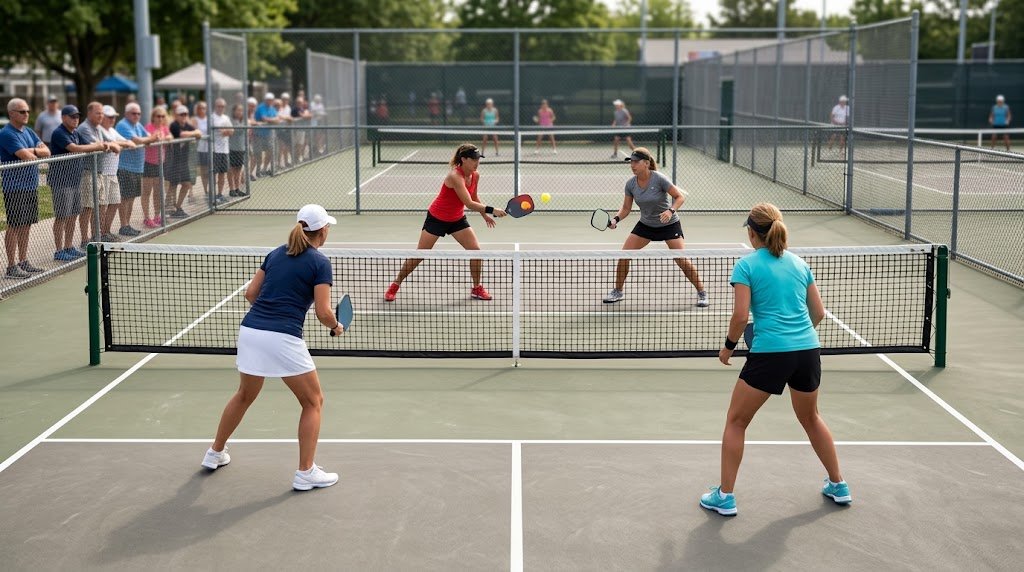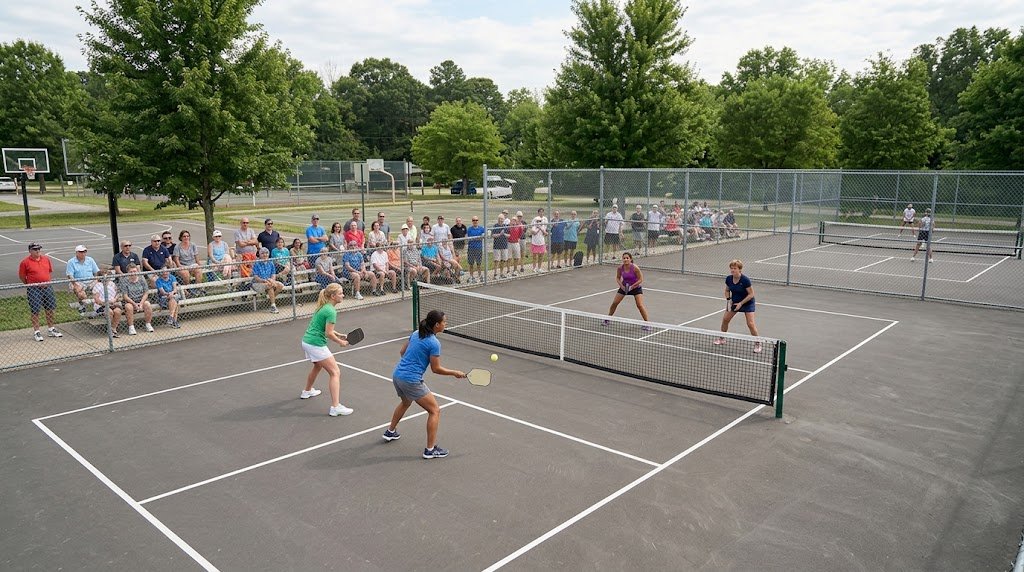

Tanya Wu and Cinn Duong turned the Women's 3.0-3.49 Doubles matchup into a clean 11-5 shutout, taking their only recorded game in straight fashion. The final margin was six, and the tally tells the story: Wu and Duong controlled the scoreboard while Ethel Poire and Diane Salcedo Balding could not find the extra five points.
A Clean, Commanding Finish
The recorded result, attributed unobtrusively to the event data, gives Wu and Duong the win. The score was never in doubt in the same way a tight contest is: one completed game, 11-5, and the shutout label fits because their opponents did not reach double digits.
That does not mean every exchange was identical or that the match lacked texture. It means the available record captures a decisive outcome, not a sequence of rallies. The six-point difference is the headline, while the absence of a second recorded game keeps the story focused on one completed contest rather than padded recap.
The Pre-Match Snapshot
The pre-match ratings add useful context without turning this into a forecast. Wu arrived at 3.46, Poire at 2.911, Salcedo Balding at 2.81, and Duong at 2.518. Those numbers were a snapshot of the matchup, not current ratings or a prediction of where anyone will land next.
Wu carried the highest listed pre-match rating on the court. Poire was the highest-rated player on the opposing side, and her 2.911 figure helped define the contest as more than a simple pairing of averages. The doubles context matters, too: two partnerships, four names, and one combined result. A strong individual number cannot be separated from the way a team converts opportunities into points.
Kitchen Control Is Not Kitchen Volleys
For players watching from the baseline, the kitchen is where smart positioning can change a match. Controlling the non-volley line means moving forward at the right moments, taking space, and making the opponent work from deeper or less comfortable positions. It is a positioning concept.
Volleying illegally inside the kitchen is different. A player may not hit a volley while standing in the kitchen or crossing its boundary under the stated rules. That is a specific rules question, not the same thing as controlling the line. The recorded result does not identify any kitchen play, so no violation should be assumed here.
The dink is the patient version of that lesson. A well-placed dink can pull an opponent forward, create an opening, or force a higher ball. It can also become a fault if it is rushed, mistimed, or sent into the net. Out-of-bounds risk is another constant: a ball that looks safe at the edge can turn a promising exchange into a free point. None of those possibilities are being credited to Wu, Duong, Poire, or Salcedo Balding without a recorded rally.
One Game, One Clear Result
Because only one game is recorded, there is no second-half turnaround, comeback, or extra-game drama to invent. The single 11-5 result is still enough to show a commanding performance. The six-point margin is the exact scoring difference, not a count of rallies or a measure of how many points each side could have made.
Wu and Duong leave the result with a clean, satisfying takeaway: they won the game, won the match, and kept Poire and Salcedo Balding from reaching double digits. In pickleball, a shutout is not just a number on a card. It is a reminder that control, patience, and smart court placement can turn a doubles matchup into a decisive statement.