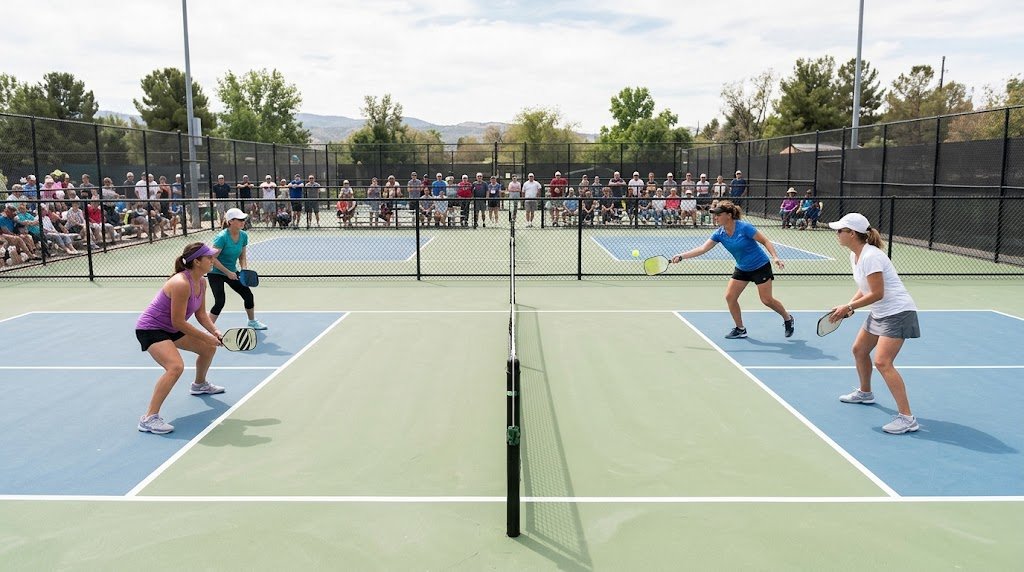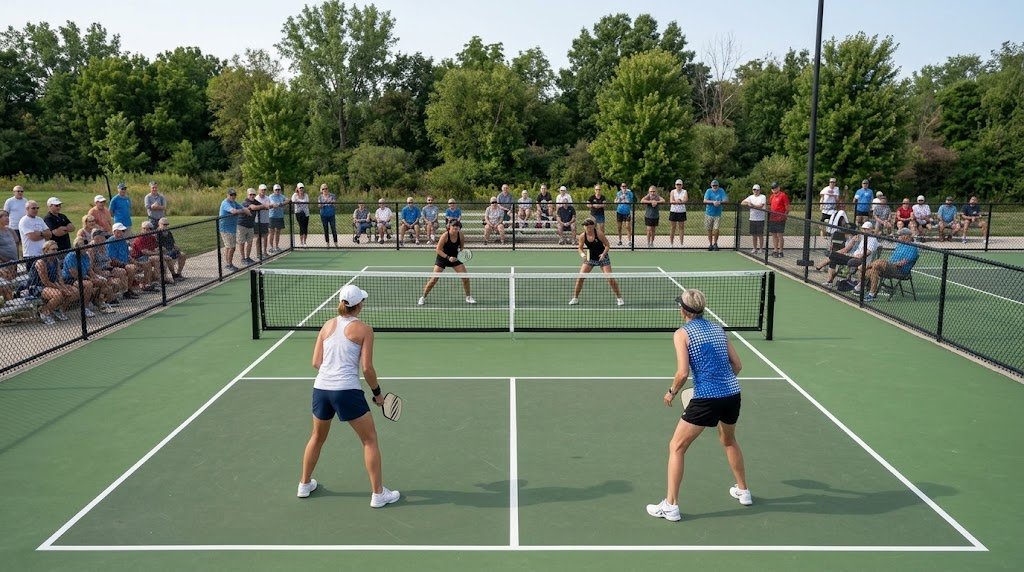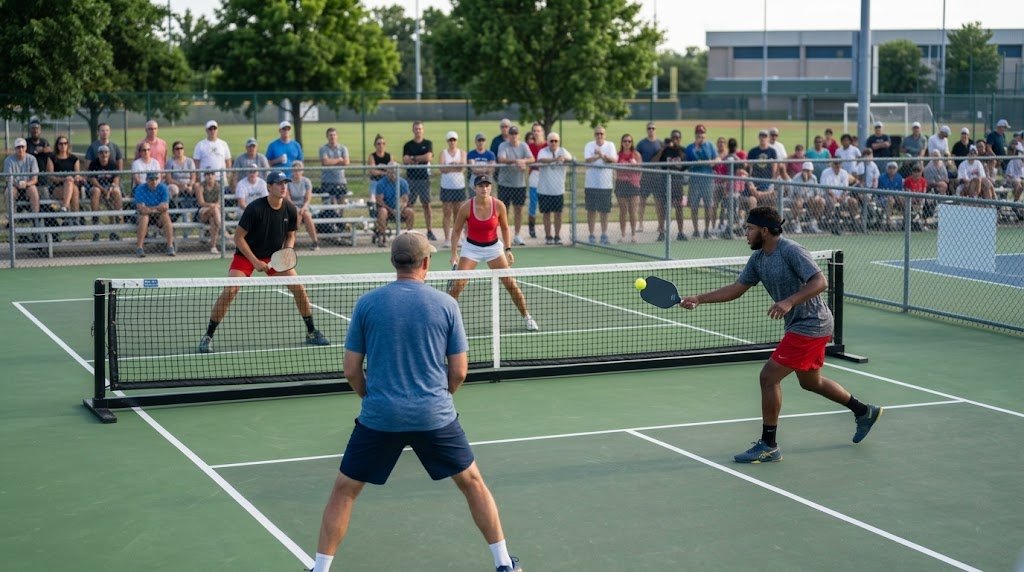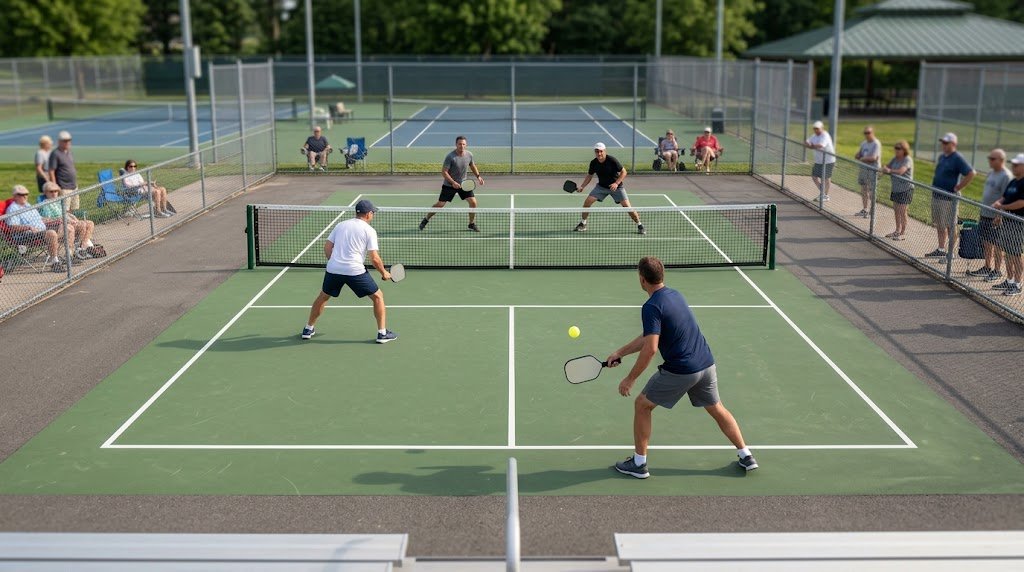

In a commanding display of precision and poise, Juan Campos and David A. Pantoja Sr. turned the court into their personal canvas, painting an 11–9 victory over Brian Hong and Joe Solancho at the $30,000 Proton National Tour by MPO Cash Prize Tournament in Corona. The Senior Men’s 3.0 doubles clash didn’t just go to the wire—it snapped it clean in half with a single, decisive surge.
The scoreboard tells a story of momentum, not mercy. Campos and Pantoja entered the match with pre-match ratings of 2.806 and 3.402 respectively, a pairing that suggested both grit and gold-standard experience. Hong (2.87) and Solancho (3.077) brought their own pedigree, but the final tally—11–9—was less about surprise and more about execution under pressure.
This wasn’t a match decided by a single ace or a lucky deflection. It was a chess match played at pickleball speed, where every dink, every volley, and every split-second decision rippled through the scoreline. Campos and Pantoja didn’t just win—they earned every point through disciplined positioning and relentless pressure.
Kitchen Control: The Silent Battleground
In pickleball, the kitchen is not just a zone—it’s a psychological battlefield. Controlling the non-volley line means owning the rhythm of the rally. When a player camps behind that line, they’re not just avoiding a fault; they’re dictating the tempo, forcing opponents to initiate the risky, low-percentage shots. The kitchen’s 7-foot no-volley zone is a trap for the impatient. A player who steps inside to volley without clearing the ball first risks a fault—a violation that shifts momentum in an instant.
But here’s the nuance: legal volleying requires the ball to bounce first on the opponent’s side before it crosses the kitchen. If a player lunges in and swats a ball mid-air without that bounce, it’s illegal. Not a warning. Not a judgment call. A fault. And in a match like this, where margins are measured in inches and milliseconds, one such misstep can be the difference between 9 and 11.
Dinks, Faults, and the Art of the Soft Touch
The dink—those whisper-soft, dead-drop shots that kiss the net and die—is the soul of pickleball. It’s the shot that turns defenders into spectators and forces opponents to lung, stretch, and eventually, break. But dinks are only effective when paired with proper kitchen positioning. Too far back, and you’re giving your opponent time to attack. Too close, and you’re inviting a fault.
Faults and out-of-bounds risks are the silent assassins of doubles play. A ball that sails long by six inches isn’t just a point lost—it’s a psychological crack. It tells your partner, “I’m not reading the court.” It tells your opponents, “They’re vulnerable.” In this match, the scoreline suggests that Campos and Pantoja minimized those cracks, while Hong and Solancho may have been caught in the crossfire of their own aggression.
What the Scoreline Built
The 11–9 result isn’t just a number—it’s a narrative. Every point in that final stretch was a test of nerve. Campos and Pantoja didn’t just survive it; they thrived. Their ability to hold serve, control the kitchen, and convert pressure points into points on the board is what separates contenders from champions.
This win doesn’t just add to their trophy case—it reinforces their identity as a duo that thrives in the margins. They didn’t need a miracle. They needed discipline. And they had it in spades.
The match may be over, but the story it tells is just beginning: in pickleball, as in life, the kitchen is where legends are made—one dink, one volley, one fault avoided at a time.