

A Rating Gap That Told a Story
Carl Taibl and Cade Pierson moved through the Ultimate Pickleball League on September 21 with purpose, taking their doubles match against Casey Eich and Ethan Williams by an 11-0 scoreline, 21-17. The recorded result, confirmed by league records, reflects more than a single day: it aligns with a noticeable edge built into the pre-match ratings.
The numbers set the stage before the first serve. Taibl carried a 5.352 pre-match rating and Pierson a 5.006, while Eich stood at 4.674 and Williams at 4.782. Averaged across their respective teams, the winners entered with a combined 5.179 against 4.728 for the losers, a gap of roughly 0.45 points. In a format built on ratings, that difference pointed toward a contest the higher-rated pair would control, and the scoreboard confirmed it.
Straight Games, No Drama
There was no second game needed here. Taibl and Pierson built their advantage and protected it all the way to 21, closing out the match in straight games at 21-17. Eich and Williams stayed within striking distance for much of the set, but once the lead grew, the lower-rated pair could not close the distance.
An 11-point margin can feel commanding without needing extra narrative. The gap widened to double digits and stayed there, suggesting the winners found rhythms the opponents could not disrupt. It was not a match that swung late or turned on one moment; it was a steady demonstration of accumulated advantage.
General Patterns Worth Studying
What happened during the rally is not part of the record, so any analysis stays conditional. Still, the scoring line invites a look at how points are earned and lost in doubles play generally.
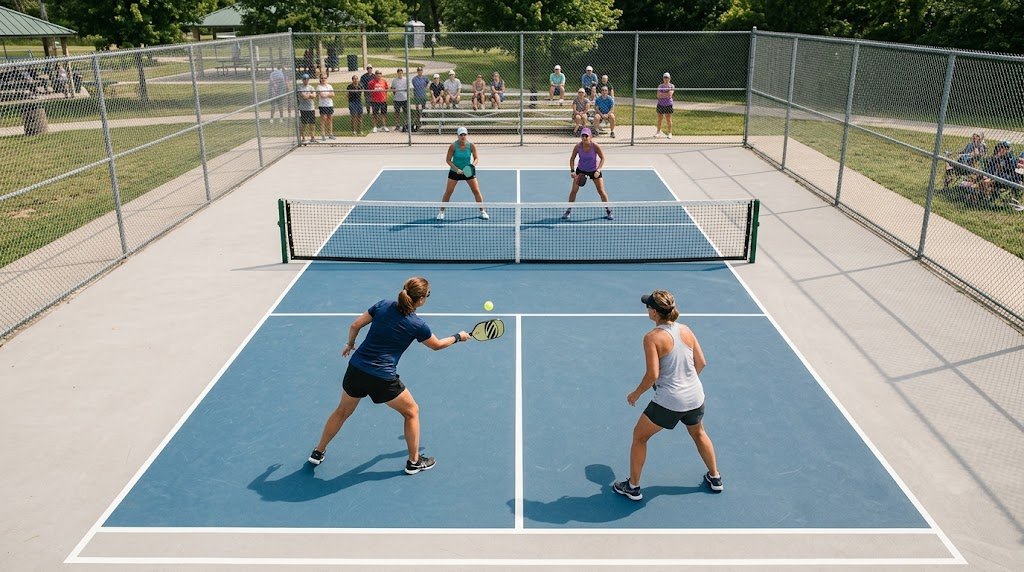
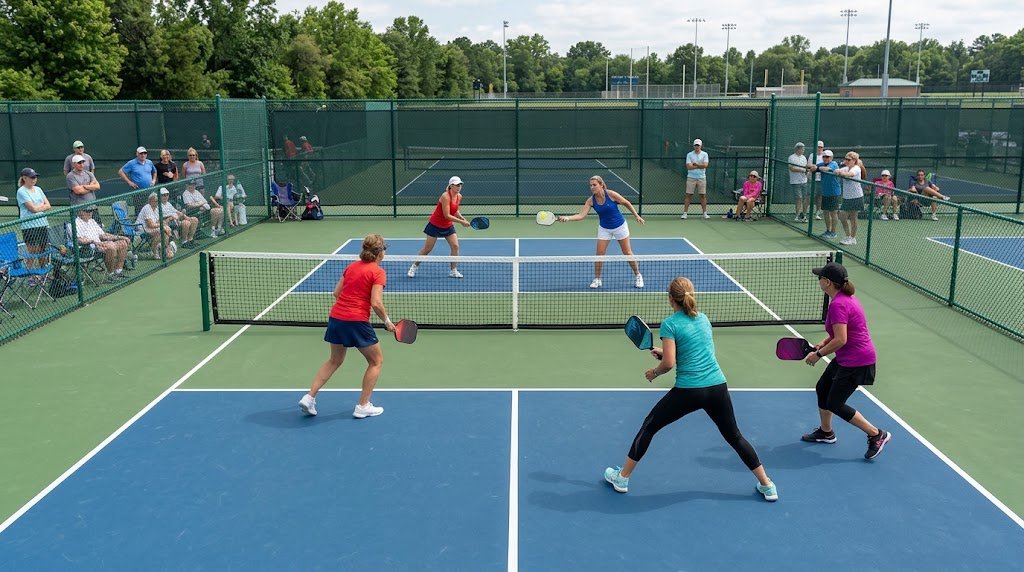
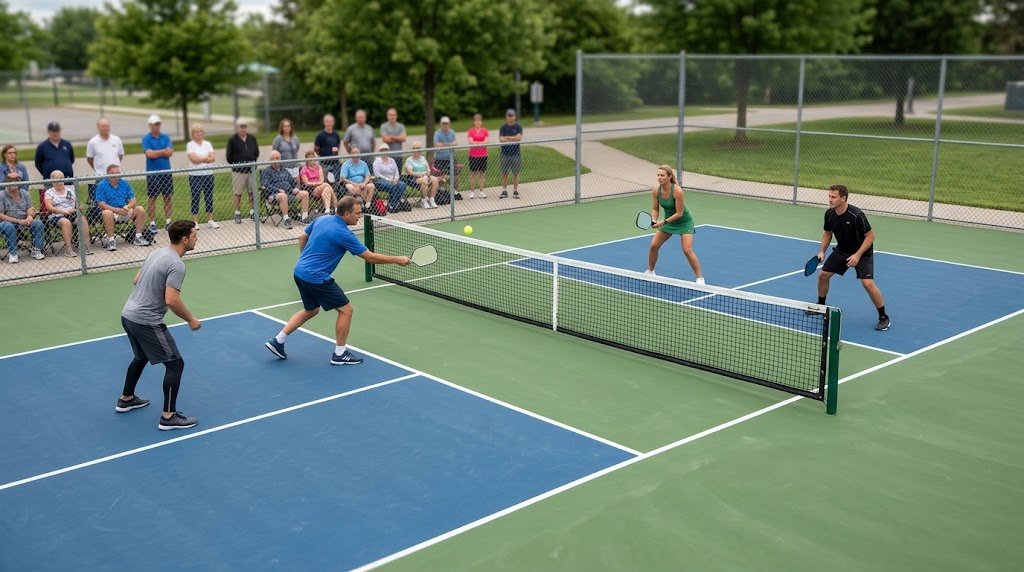
Kitchen positioning often decides close exchanges. A player standing at the non-volley line controls space and can cut off angles, while moving forward too early into the kitchen can turn an aggressive stance into a fault. The distinction matters: controlling the non-volley line means owning the high ground at the edge of the zone, while volleying inside it before the ball bounces is an out-of-bounds error, not a tactical choice.
Dinks add another layer. A soft shot that drops into the zone can force an opponent to rise and attack, which creates openings. At the same time, an attempted dink that travels long lands out of bounds, giving the point away. The same applies to any shot that sails long or wide, a risk that grows as players push for pace.
Faults complete the picture. Stepping on or over the non-volley line during a volley, missing the ball entirely, or hitting it out all turn possession into a point for the other side. None of these specific moments can be tied to Taibl, Pierson, Eich or Williams, but each shapes how a doubles match can tilt.
A Result That Stands on Its Own
The ultimate takeaway belongs to the scoring line. Taibl and Pierson combined their higher pre-match ratings into a 21-17 win and an 11-point gap, a performance that justifies the number beside their names. For Eich and Williams, the match offered a clear benchmark: competitive enough to remain in the set, not quite enough to overturn the rated difference.
That kind of result gives a league its structure. Pre-match ratings are a snapshot, not a forecast, but when winners pull away by double digits, the snapshot looks sturdy. Taibl and Pierson left no ambiguity about where they stood on September 21.