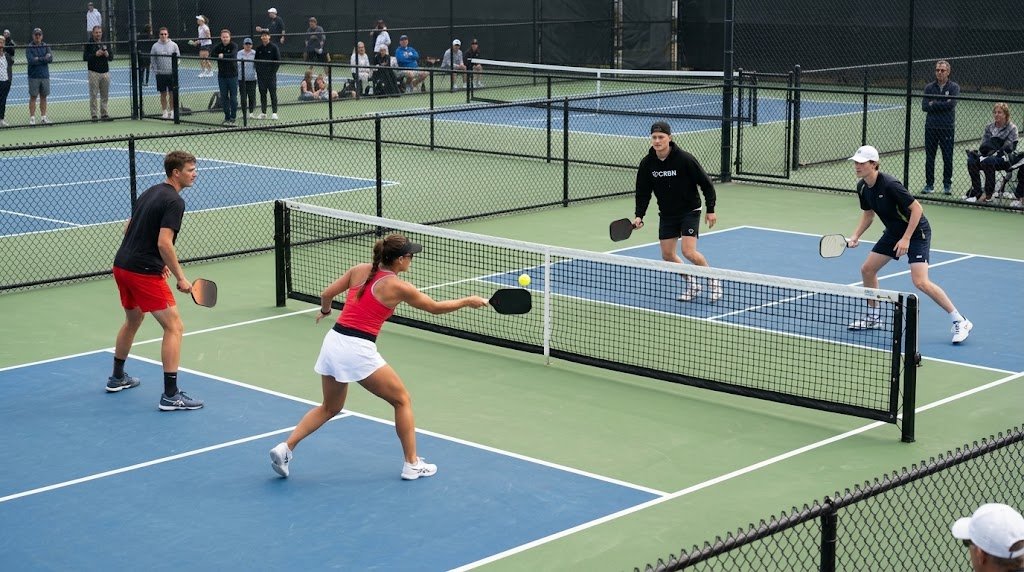


Carl Taibl and Cade Pierson made the most of their one clear opening, then closed out a 21–15 win over Brodie Smith and Maxi Beck in Ultimate Pickleball League - 2026 Season - UPL - Doubles 1 on Sept. 21, 2026.
The recorded result gives the winning pair a six-point margin. In a match that produced one game, that was the difference: Taibl and Pierson won the available game, and Smith and Beck did not force another.
One game, six points clear
Taibl and Pierson did not need a second game to settle this doubles matchup. Their 21 points supplied the victory, while Smith and Beck's 15 kept the contest within reach on the numbers but left them six short of the target.
The pre-match ratings framed a tight-looking comparison, not a forecast. Smith entered at 5.585, the highest individual snapshot among the four players. Taibl was at 5.338, Beck at 4.933 and Pierson at 4.995.
That spread made the result a useful statement without turning the ratings into a verdict. Taibl and Pierson combined the second- and fourth-highest snapshots; Smith and Beck paired the highest with the third-highest. The court result, rather than the arithmetic, determined the day.
For the winners, the game was the whole job: reach 21 first and take the match. For Smith and Beck, the same game became the challenge. They supplied the opposition total, but 15 was not enough to create a deciding second game.
What the kitchen line means
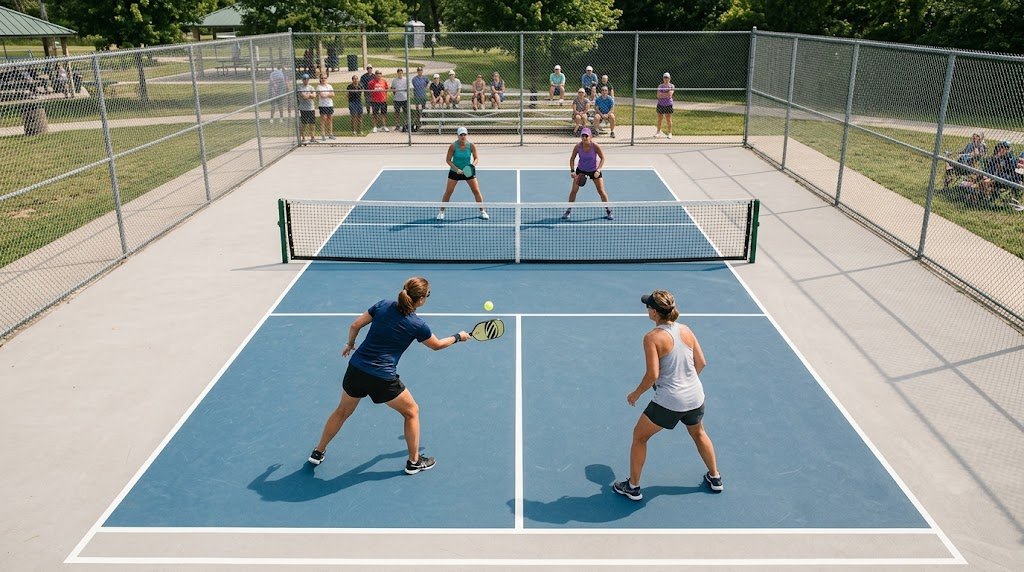
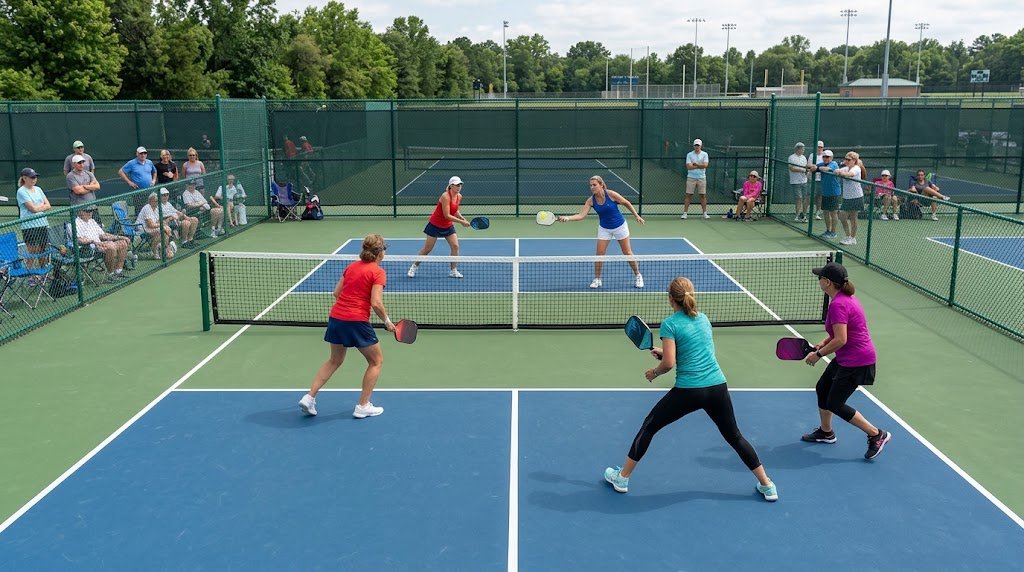
The non-volley line matters because it defines the kitchen, or non-volley zone. A team that establishes position near that line can make shorter shots, protect the middle and limit easy attacking angles. In general terms, that is controlling the kitchen line: using the space to dictate options before taking a swing.
That is not the same as volleying from inside the kitchen. A player may not hit a volley while standing in the non-volley zone or touching it, and momentum rules also govern what happens after a volley. Crossing into the kitchen is allowed at the proper time, including to play a ball that has bounced; the illegal act is volleying under prohibited conditions.
No rally or fault was recorded for this match, so none should be assigned to Taibl, Pierson, Smith or Beck. The 21–15 score confirms the outcome, not the route taken to get there.
Dinks, faults and the edge of the court
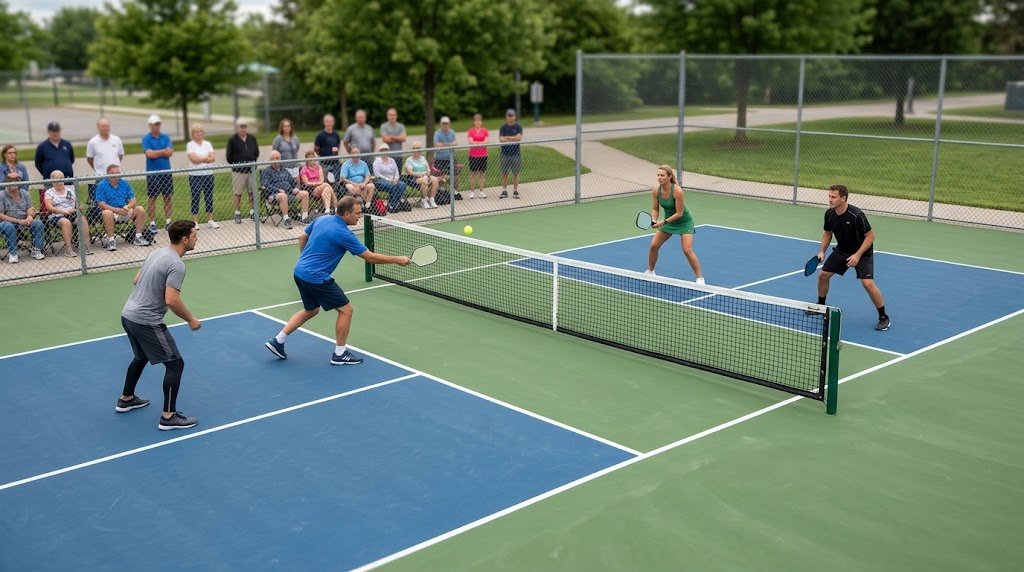
Dinks are the soft exchanges that often decide who earns the next attack. A well-placed dink can pull an opponent wide, invite a pop-up or buy time for a partner to settle at the line. A dink that sits up, however, can hand the other team the initiative. That is general strategy, not a description of a shot in this match.
Faults create the same kind of strategic tension. Serves must clear the net and find the correct service area, returns must do the same, and volleys must respect the kitchen rules. Each error can erase a carefully built point, which is why disciplined teams value percentage shots as much as power.
Out-of-bounds risk sits at the other end of the court. A drive aimed near a sideline or baseline can pressure opponents, but missing wide or long gives the point away. The best teams balance ambition with the score and the available margin. Here, six points separated the teams; how either pair managed that balance was not captured in the supplied record.
The result leaves Taibl and Pierson with the clean doubles win: one game played, one game won, and a 21–15 finish that turned a close rating snapshot into a clear scoreboard statement.