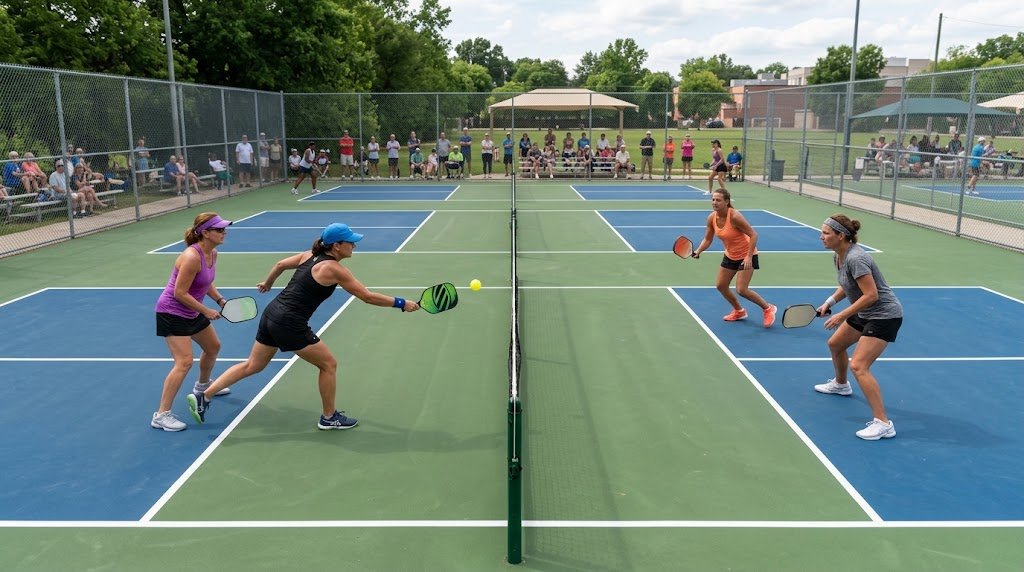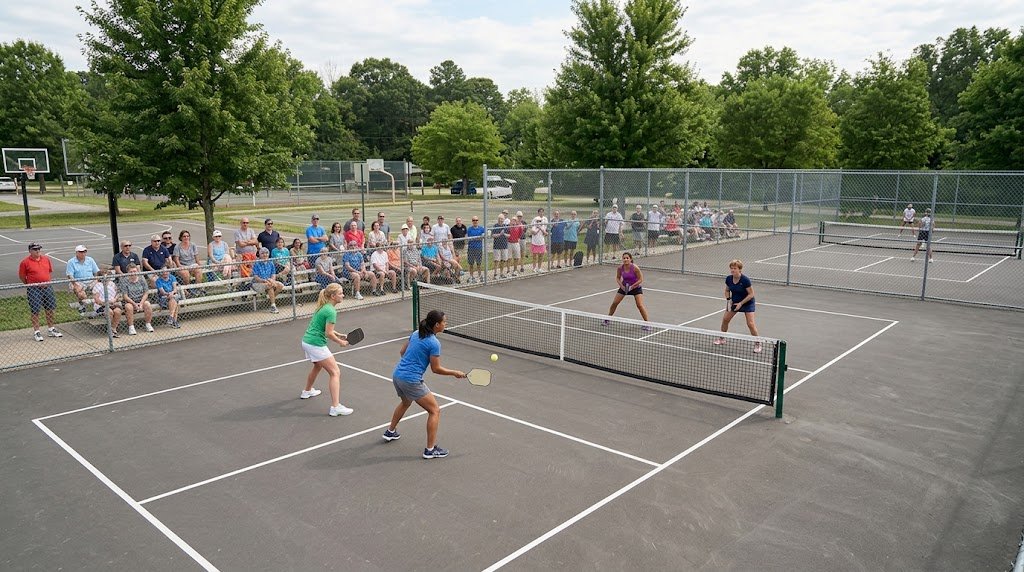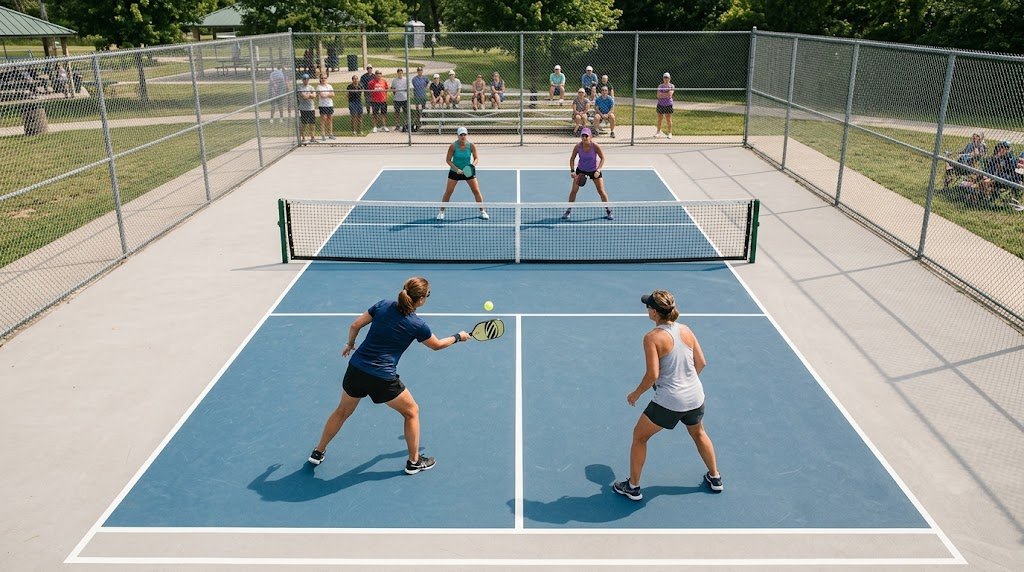
In a statement performance that turned the Week 1 Women’s 3.5 doubles bracket on its head, Natalie Donahoo and Jennifer Beckner delivered a crisp 11–9 victory over Eileen Mahdi and Laurie Petersen. The scoreboard reads like a masterclass in disciplined positioning and opportunistic play, with the winning duo converting pressure into points without ever letting their opponents find a rhythm. The single-game margin—narrow enough to keep the tension alive, wide enough to feel decisive—suggests a match where one side simply executed better when it mattered most.
Donahoo entered the court with a pre-match rating of 3.832, the highest in the field, while Beckner brought a solid 3.38. Together, they formed a pairing that balanced experience with agility, a combination that proved too much for Mahdi (3.429) and Petersen (2.964), who struggled to match the winners’ consistency from the opening serve.
The Kitchen Divide
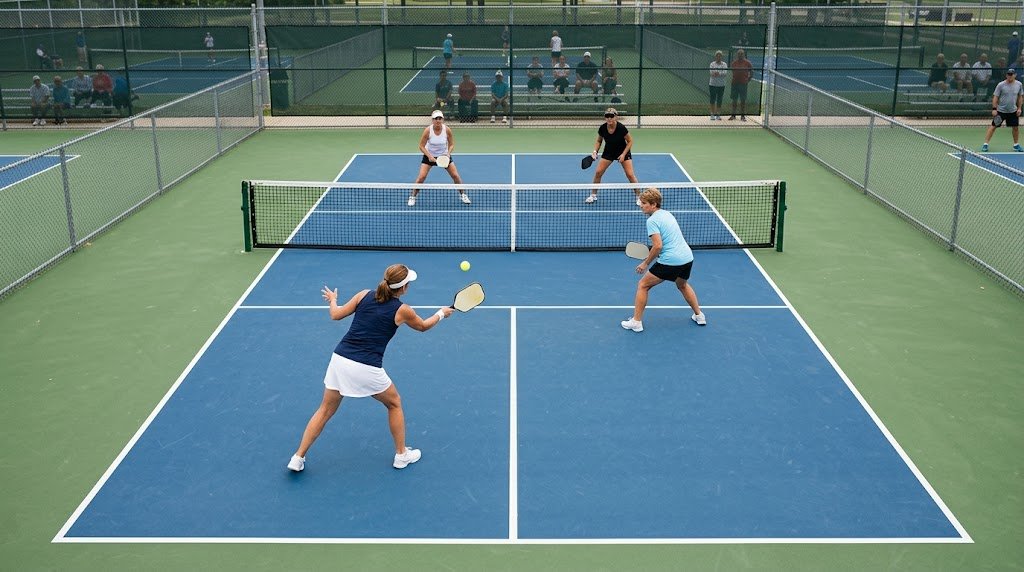
The non-volley line—commonly called the kitchen—remains the most strategic zone in pickleball. Controlling it means forcing opponents to dink from deep, buying time to reset and attack. Donahoo and Beckner appeared to prioritize staying just behind the line, volleying only when the ball cleared the net with enough height to avoid a fault. This approach minimized their exposure to illegal volleying inside the kitchen, a violation that occurs when a player strikes the ball while their feet remain entirely within the non-volley zone. By keeping their feet back, they avoided that trap, while Mahdi and Petersen may have found themselves caught in the no-man’s-land, unable to commit to the line without risking a fault.
Dinks, Faults, and the Edge of Bounds
Dinks—those soft, drop-shot volleys meant to die just over the net—are the lifeblood of kitchen play. A well-placed dink forces a returner to lift the ball, opening the court for a put-away. In this match, the winners likely used dinks to stretch the defenders side to side, creating gaps that could be exploited with a well-timed third-shot drive. Faults, whether on serves or returns, are the silent killers of momentum; even a single unforced error can shift the rhythm. Out-of-bounds risk looms large when players rush a deep shot, overcooking a pull or sailing a volley wide. The 11–9 scoreline implies that both sides navigated these hazards, but Donahoo and Beckner did so with fewer missteps, converting their opportunities while limiting their own exposure.
What Each Game Contributed
Though only one game was recorded, the 11–9 outcome suggests a contest where the winners never trailed by more than a point, maintaining a steady grip on the scoreboard. Every game in pickleball is a microcosm of strategy: the first 5 points set the tone, the middle 5 tested adaptability, and the final stretch rewarded composure. Here, the winners’ ability to close under pressure—winning the final two points to seal the match—underscored their readiness for the challenges ahead.
The pre-match ratings offer a snapshot, not a prophecy. Donahoo’s 3.832 and Beckner’s 3.38 reflect prior performance, not guaranteed future results. Yet in this instance, the numbers aligned with the outcome: the higher-rated duo executed more consistently, turning potential chaos into controlled aggression. For Mahdi and Petersen, the match serves as a reminder that ratings are starting points, not ceilings. The court rewards those who adapt, who read the bounce and the opponent, and who stay disciplined when the kitchen beckons with its siren call of illegal volleys and risky lobs.
As the bracket advances, this result sends a clear message: Donahoo and Beckner are not just participants—they are contenders, ready to test every team’s kitchen defense and dink precision. The 11–9 score is not just a number; it is a declaration of intent.