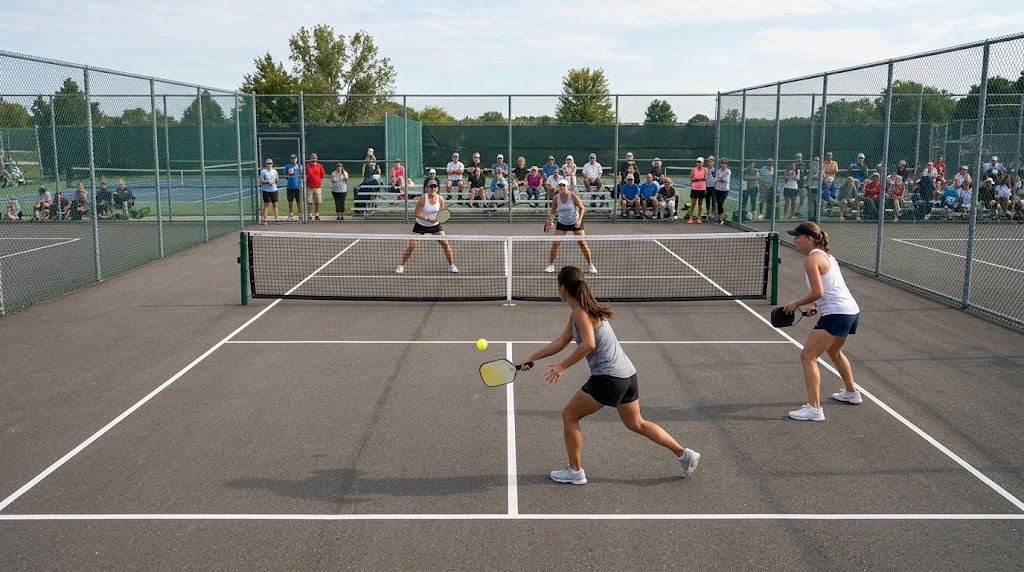
Nikki Choi and Rebecca Tan turned up the heat on September 20, delivering a dominant 11–0 win over Janelle Senden and Grace Malay in the Women’s 4.0-4.49 Doubles. The result wasn’t just a victory—it was a statement. From the first serve to the final point, Choi and Tan controlled the pace, dictating play with precision and poise. Their combined pre-match ratings of 3.837 and 3.82 signaled readiness, and they backed it up with a performance that left little room for doubt.
Commanding Control at the Non-Volley Line
Choi and Tan established early dominance by owning the kitchen line. Their ability to step forward, take dinks out of the air, and reset under pressure kept Senden and Malay perpetually on the defensive. While no specific faults were recorded, the shutout suggests consistent pressure—every time the opposing team lifted the ball, Choi and Tan were there to punish it with a volley or drive. Controlling that seven-foot zone isn’t just about positioning; it’s about denying opponents time and space, forcing errors through relentless presence.
The Value of a Clean Game
An 11–0 score isn’t just rare—it’s revealing. It indicates that Choi and Tan won every rally they engaged in, converting serves into points without surrendering a single counter. Each game contributed to the narrative: the first set the tone, the second extended the lead, and the third sealed the outcome with authority. In doubles, momentum builds silently—through well-placed serves, effective returns, and the quiet accumulation of advantages. Here, that accumulation was total.
Kitchen Awareness: A General Edge
Success in doubles often hinges on kitchen discipline. Controlling the non-volley line means staying just behind it, ready to volley legally while avoiding the fault of stepping in prematurely. It’s a razor’s edge: lean in too far, and you risk a kitchen fault; hang back too much, and you invite opponents to dominate the net. The best pairs read the ball early, move as a unit, and transition smoothly from defense to offense. While we don’t know if Senden and Malay struggled with positioning, the score implies Choi and Tan made them pay for any hesitation.
Dinks, Faults, and the Out-of-Bounds Trap
Every dink is a negotiation—soft enough to stay in play, firm enough to avoid being attacked. Out-of-bounds risk looms on every cross-court flick or sideline push. A well-placed dink can neutralize power; a poor one invites a putaway. Again, no specific faults are recorded for this match, but the shutout suggests Choi and Tan minimized unforced errors while maximizing pressure. They likely varied their depth, mixed in occasional drives, and made Senden and Malay work for every inch.
Why This Win Matters
Pre-match ratings offered a glimpse into form, but this result rewrote the narrative. Choi and Tan didn’t just win—they affirmed their place at the top of the 4.0-4.49 doubles tier. Their chemistry was evident in the flow of points, their composure in the finish. For Senden and Malay, the loss is a data point, not a definition—every competitor faces days where the gap feels wide. What matters next is how they respond.
In pickleball, margins can be razor-thin. But on this day, the margin was absolute. Choi and Tan didn’t just beat their opponents—they outplayed them in every phase, turning a competitive bracket into a showcase. When the final point landed, it wasn’t just an 11–0. It was a reminder that sometimes, the best way to win is to make the other team feel like they never had a chance.