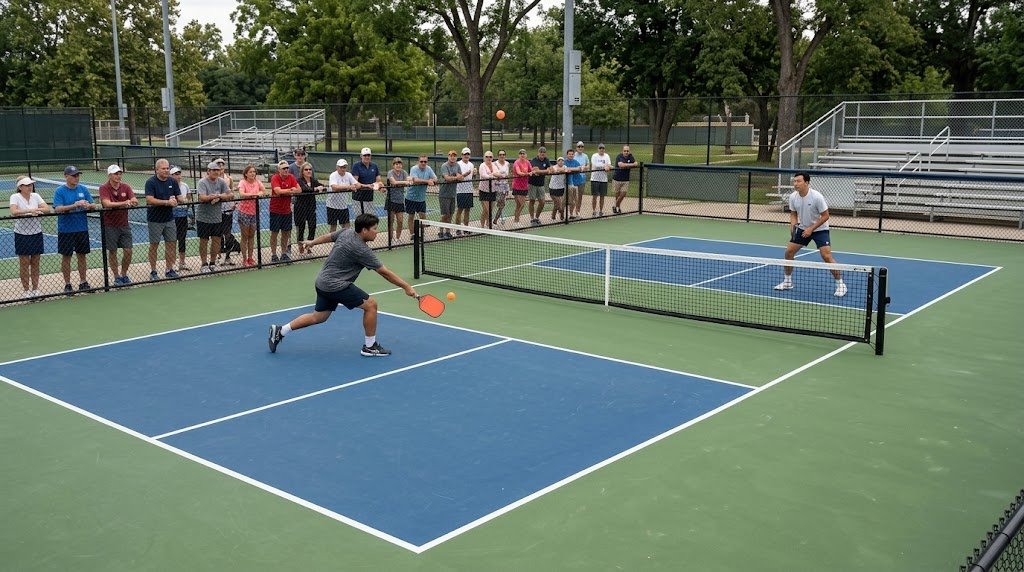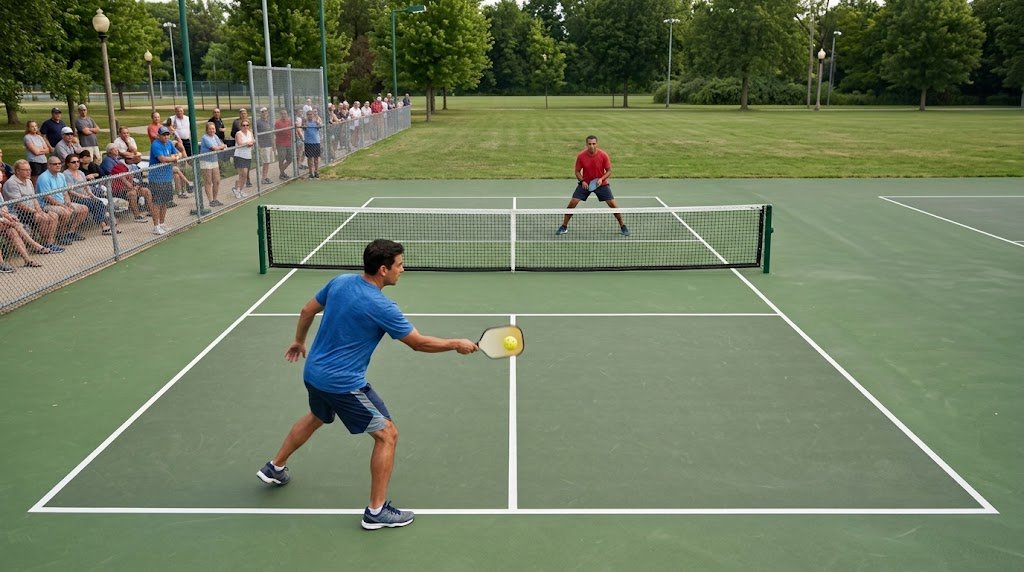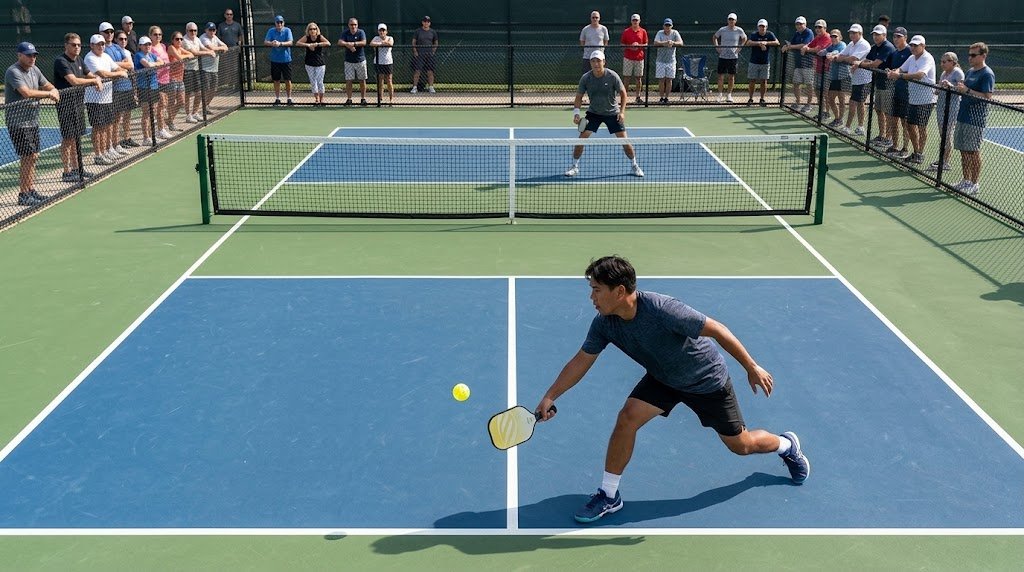


Leon Esmas delivered an 11-0 statement in the Men's Singles Challenger at the $30,000 Proton National Tour by MPO Cash Prize Tournament in Corona on September 20, 2026, blanking Nicolas Mejia to win the recorded match.
That is a clean scoreboard shutout, not a nail-biter. Esmas, the higher-rated player before the match at 4.124, took the sole game 11-0. Mejia entered at 3.84, a 0.284-rated gap that made the result look lopsided on paper. Ratings are snapshots rather than current standings, and this result does not forecast either player's next rating.
A Score With No Spare Parts
The match consisted of one game, so there were no additional games to compare. The 11-0 score is the entire recorded outcome: Esmas won, Mejia did not score. Calling it straight games would be wrong because only one game is listed.
The margin supplies the story. An 11-0 result says Esmas controlled the scoring sufficiently to reach 11 without adding a point for Mejia. It does not tell us how many rallies occurred, whether points involved long exchanges, or which shot patterns produced the result. Those details remain outside the record.
The Kitchen Is a Zone, Not a Volley
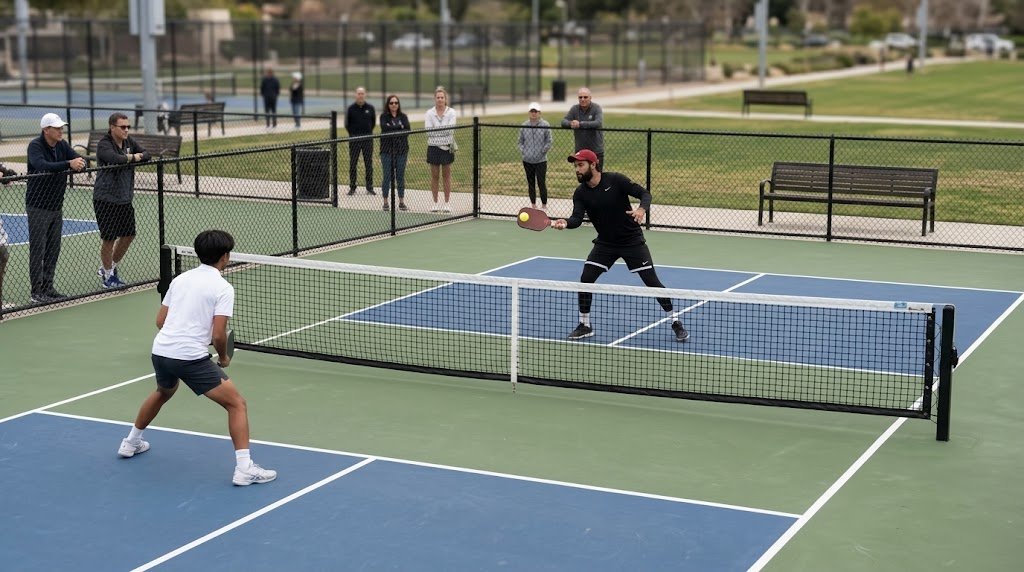
For players reading this as a clinic in control, the kitchen offers plenty of lessons. The non-volley kitchen is the area adjacent to the net, and the non-volley line is its boundary. Controlling that line means using positioning and shot selection to pressure an opponent while staying disciplined about where your feet and momentum carry you.
Standing closer to the non-volley line can limit an opponent's angles and make it harder to pass. It can also create trouble if a player steps into the kitchen, volleys, or carries forward momentum into the kitchen while hitting a volley. That is an illegal kitchen volley. Merely occupying the kitchen or controlling its line is not itself a violation.
A volley hit before the ball bounces is different from a dink, which is a soft shot that lands in the kitchen. Players must be ready to stop at the line rather than sail into the kitchen. They also need to understand that a player may be in the kitchen after a bounce; the restriction concerns volleys and related momentum, not ordinary presence in the zone.
Dinks, Faults and the Out-of-Bounds Trap
The dink game is where kitchen control is tested. A soft, low ball can force an opponent to lift the paddle and create an opening, but a dink that sails long or drifts wide is a fault. The same is true when a shot lands outside the legal court boundaries. An out-of-bounds ball is not a winner; it is a point lost.
The safest answer is controlled aggression. Aim for the kitchen, use the crosscourt to enlarge the target, and avoid turning every point into a power contest. If the ball is too high, a player may need to be more selective rather than swing harder. If the opponent is deep, a well-placed dink can pull them forward and open the next shot.
Faults are not just about where the paddle contacts the ball. A ball can be out because it misses the court, and a player can commit a kitchen violation if a volley is hit while the player is inside the kitchen or carries illegal momentum into it. Those are distinct concepts, and neither should be confused with a merely aggressive position.
A Clean Result, Not a Full Film
Esmas's 11-0 result is commanding because it leaves no unanswered points in the recorded game. It is also a useful reminder that pickleball rewards precision as much as power. The player who can keep the ball in, reach the kitchen, and make the opponent chase can turn a small margin into a decisive one.
Mejia's 3.84 pre-match rating and Esmas's 4.124 snapshot do not explain every detail of the match. They simply frame the result: Esmas won the recorded game without allowing a point, and the final number was 11-0. For anyone hoping to turn a shutout into a repeatable plan, the takeaway is clear—control the kitchen, respect the boundary, and let the scoreboard do the talking.