

The scoreboard told a story of pure efficiency on September 20, 2026, as Nicole Eugenio and Erik Pailet put on a clinic during the $30,000 Proton National Tour by MPO - Cash Prize Tournament in Corona. Facing off in the Mixed Doubles 4.5+ division, the duo of Eugenio and Pailet operated with a level of precision that left little room for error, securing a commanding 15–4 victory.
Pre-match ratings suggested a significant gap in technical baseline, with Eugenio holding a 5.535 rating and Pailet sitting at 5.775. Their opponents, Kelly Jensen (4.653) and Dylan Flippin (5.158), entered the contest facing an uphill battle against one of the most highly rated pairings on the court. That gap was immediately evident in the final tally, as Eugenio and Pailet dictated the tempo from the opening serve.
A Statement of Control
The 15–4 result represents more than just a lopsided score; it serves as a statement of high-level execution. In competitive mixed doubles, the ability to maintain a rhythm while neutralizing an opponent's attack is the difference between a contested match and a runaway victory. Eugenio and Pailet utilized their established ratings to navigate the match with authority, ensuring that Jensen and Flippin were consistently playing from a defensive position.
While the scoreline reflects a wide margin, it also highlights the importance of momentum in the 4.5+ tier. When a team with the combined technical pedigree of Eugenio and Pailet finds their stride, the margin for error for the opposition shrinks rapidly. The 11-point spread underscores a match where the winning side successfully dictated the terms of engagement.
The Geometry of the Kitchen
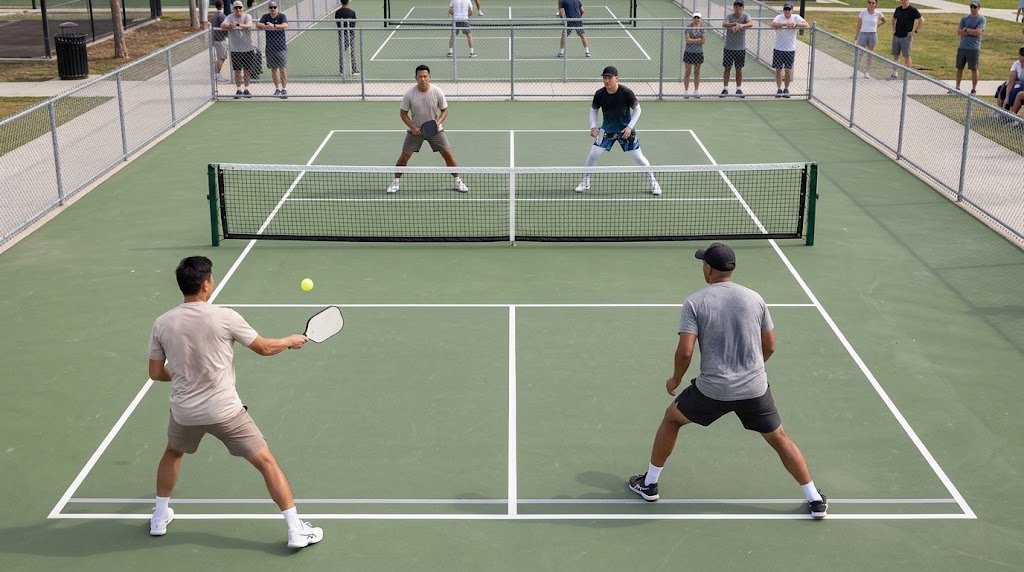
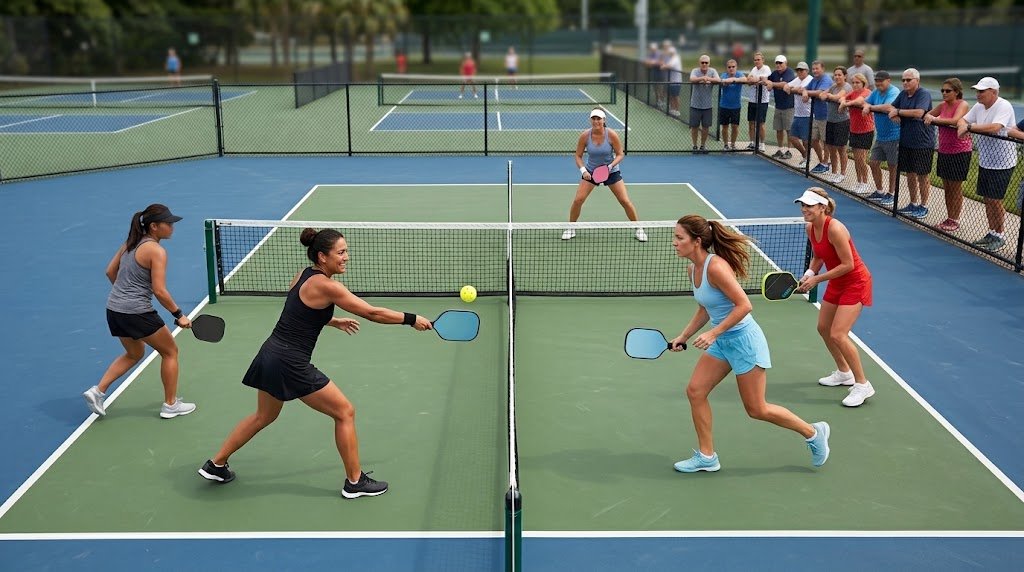
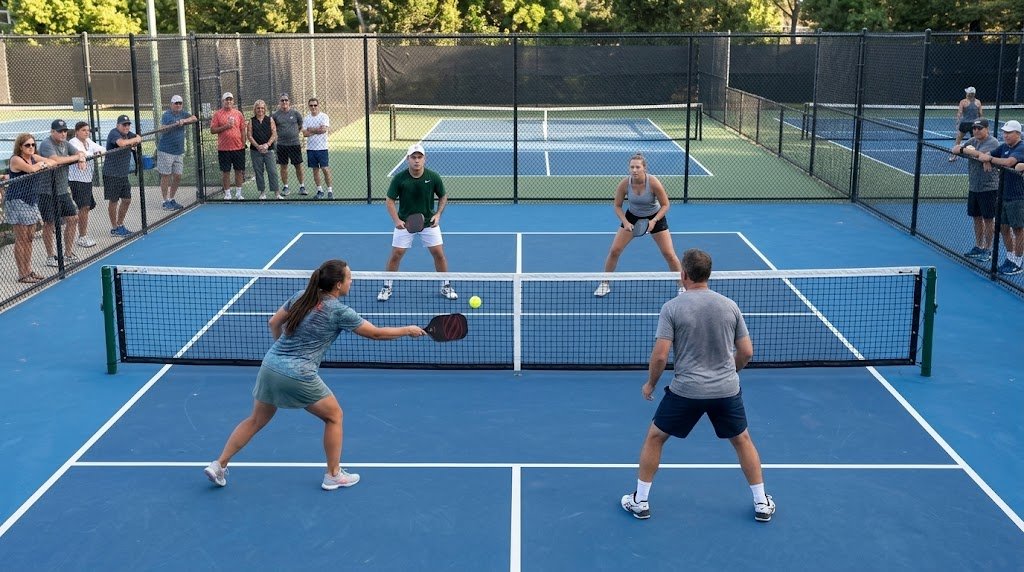
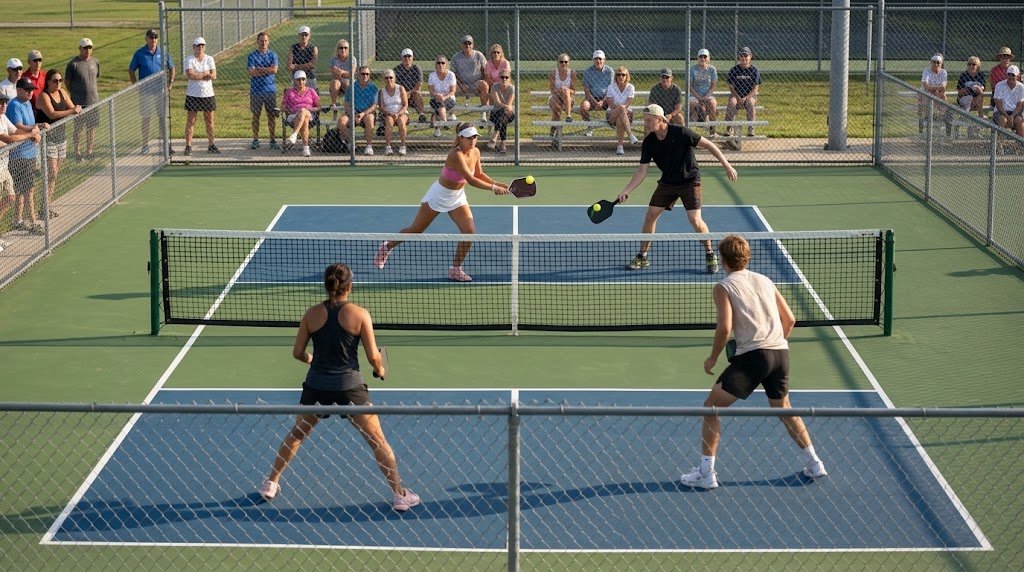
In matches of this caliber, the outcome often hinges on the subtle nuances of court positioning and the mastery of the non-volley zone, commonly known as the kitchen. Success at this level is frequently determined by how effectively a team can control the non-volley line. Controlling this line involves moving in unison to pinch the center and limit the angles available to opponents.
Strategic play often revolves around the dink—a soft, controlled shot intended to keep the ball low and force an opponent into making a mistake. A well-placed dink can neutralize power, turning a high-velocity exchange into a battle of patience. However, this requires disciplined movement to avoid common pitfalls, such as out-of-bounds risks or committing a fault.
Precision vs. Violation
Understanding the boundary between aggressive play and a violation is essential for high-level pickleball. A player must work to maintain presence at the non-volley line without stepping on or over the line during a volley. To volley illegally inside the kitchen is a fault; the distinction lies in the timing of the contact relative to the player's foot position.
Maintaining a strong presence at the line allows a team to intercept shots early, but it requires constant vigilance to ensure that the momentum of the game doesn't lead to unintended encroachment. For teams looking to bridge the gap seen in this match, mastering this delicate balance between aggression and discipline is the primary path toward closing the margin against elite-rated opponents.
Moving Forward
For Eugenio and Pailet, this 15–4 performance cements their status as a formidable force within the Proton National Tour circuit. They demonstrated that when high-level ratings are backed by seamless coordination, the result is a clinical display of mixed doubles excellence. As the tournament progresses, the standard set by this duo will undoubtedly serve as the benchmark for the rest of the 4.5+ field.