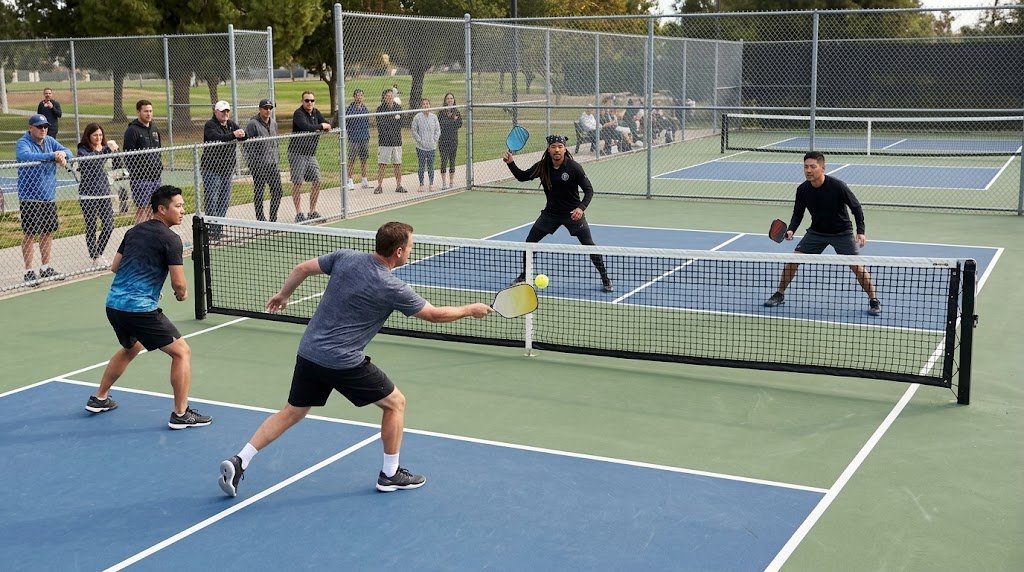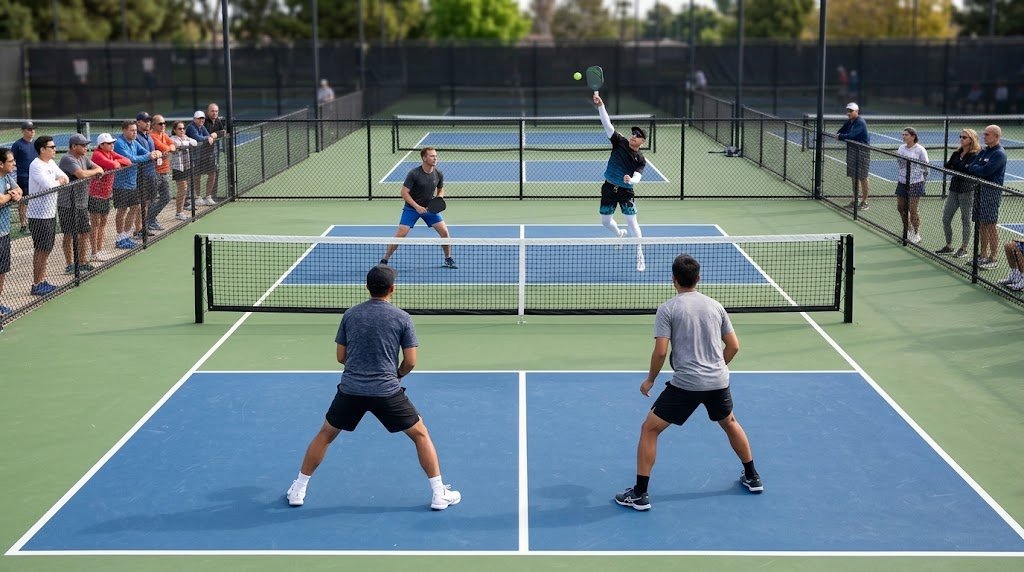

Eleven on one side. Zero on the other. Prija Phaphouampheng and Arin McGunigle put a bold mark on the scoreboard with an 11–0 victory over Joshua Gonzales and Benjamin Vu on September 20, 2026, in Men's 3.5-3.99 Doubles. Some results need a long explanation before they catch your attention. This one arrives with its own exclamation point.
The confirmed DUPR record contains one game, and its margin is unmistakable: a shutout. Gonzales and Vu finished without a recorded point, while Phaphouampheng and McGunigle reached 11. That makes this a commanding result on the scoreboard, even though a final score cannot tell us the length of the rallies or how many opportunities changed hands.
The ratings make the result more interesting
Look at the historical ratings attached to this match and there is another reason to stop scrolling. Phaphouampheng entered with a recorded doubles rating of 2.994 and McGunigle with 3.464. Across the net, Gonzales was listed at 3.756 and Vu at 3.479. These are pre-match snapshots, not the players' current ratings.
Both opposing ratings were higher than either winner's recorded number. That gives the outcome a striking ratings contrast, but it does not tell us how likely each team was to win. Ratings summarize previous results; they do not put points on the board for the next game. Here, the lower-rated pair produced the bigger number where it counted: the final score.
Nor should the zero become a verdict on Gonzales and Vu as players. One result belongs to one matchup. The interesting takeaway is that this particular scoreline ran sharply against the ordering of the recorded ratings. That is plenty of sporting drama without inventing a tournament title or a rivalry.
Kitchen chess: why the soft game matters
For a pickleball reader, a lopsided doubles score naturally raises a kitchen question: who was able to establish a useful position near the non-volley line? This match record does not answer it. What it does offer is an opportunity to explain why that part of the court carries so much strategic weight.
In doubles, a controlled dink can make the next attacking opportunity possible. The goal is not simply to hit softly forever; it is to place the ball well enough that the other team has fewer comfortable options. General strategy can look like chess played with a perforated ball: a patient exchange, a difficult reach, and the possibility of a ball that sits up. Those are tactical possibilities, not a reconstruction of this game.
Kitchen positioning also comes with a catch. Holding a position near the line and volleying from inside the non-volley zone are different things. A player can benefit from being close to the kitchen while still needing to respect its volley restrictions. Position is valuable; position without control can become a liability.
Faults, boundaries and the price of a miss
The same balance applies to the sidelines and baseline. A shot aimed closer to a boundary may leave less room for error. A ball that lands out ends that rally, while a well-placed ball inside the line can make an opponent's response harder. Aggression and margin are always in conversation.
Faults and out-of-bounds balls would be relevant details in a courtside report, but this record does not identify any. It would be unfair to pin the result on a particular player's errors. The confirmed takeaway is narrower and stronger: Phaphouampheng and McGunigle completed this recorded game with an eleven-point scoring margin and no points conceded.
That is the hook worth remembering. Two players with lower pre-match ratings delivered an emphatic scoreboard result against a higher-rated pairing. No imaginary crowd roar is necessary. For this matchup, 11–0 does the talking.