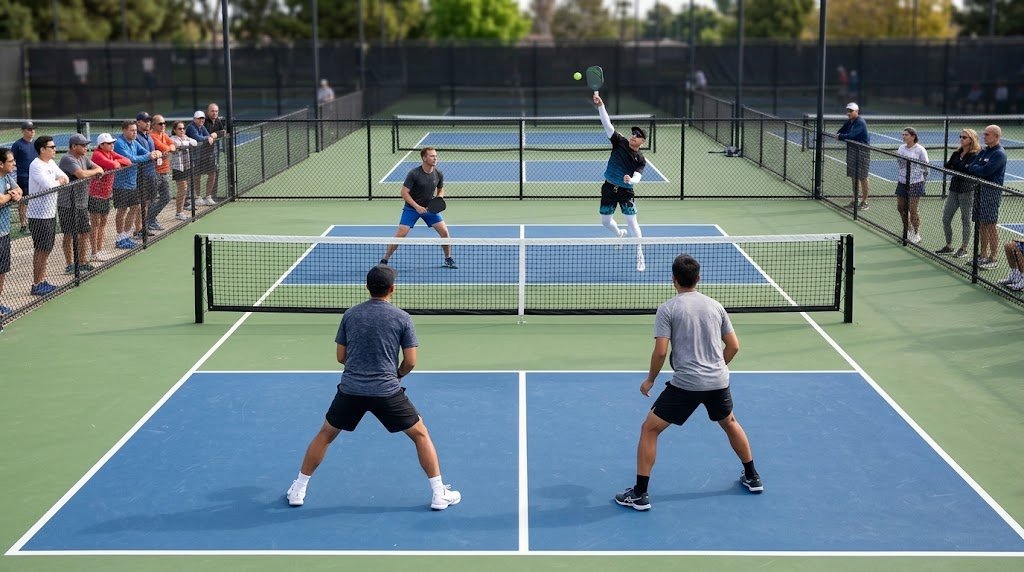


Kitlong Lai and Daryl James Bulaon took the court on September 20 in the Men's 3.5–3.99 Doubles bracket and walked off with an 11–8 result over Tom Do and Terry Doan, claiming straight games in a clean, commanding display. The pre-match ratings, recorded before the contest, placed Lai at 3.729, Bulaon at 3.161, Tom Do at 3.834 and Terry Doan at 3.415, giving the winning side a combined edge in the supplied snapshots. The final line does not reveal rallies, faults or rotation patterns, but the margin tells a clear story of control and steady pressure. A win built on 11–8 frames reads as confident and organized, not lucky, and that rhythm carried straight through both games without a dramatic turnaround.
Reading the Numbers
Pre-match ratings offer a snapshot, not a forecast of future form. They help situate each team in the bracket, but they do not explain what happened on the court. The combined rating gap favored Lai and Bulaon, yet Do and Doan were far from paper tigers, so the victory had to be earned point by point. When the first game ended 11–8, the margin already signaled composure; the second frame simply reinforced the pattern, and the win held without a third-act scare. Treat the ratings as context, not destiny, and the result looks like a team executing within its strengths rather than stealing an upset.
Kitchen, Dinks and Out-of-Bounds Risk
In doubles pickleball, the kitchen line is where points are won or lost. Controlling the non-volley zone means staying close enough to cut off angles, yet not crossing the line during a volley, which would be an illegal kitchen violation. Dinks are soft, low shots designed to move opponents side to side and force weak returns; when they land inside the kitchen, the receiving team must let them bounce before attacking, opening the window for the dinker to step up. Out-of-bounds risk rises whenever players stretch for wide dinks or rush the net behind a deep return, because a single misjudgment turns a neutral rally into a lost point. Good kitchen positioning compresses the court, shortens reaction time for opponents and makes errors more expensive, but none of that can be confirmed from the scoreboard alone; it remains general strategy, not observed action from this match.
What the Scoreline Tells Us
An 11–8 result frames as a controlled statement, not a cliffhanger. Each game added to the margin, and the straight-sets win reads as a team dictating tempo rather than surviving chaos. The losing side stayed within striking distance, which can feel urgent in the moment, yet the final numbers still frame the afternoon as a clean sweep rather than a grinding war of attrition. In a doubles context, that often translates to solid serving rhythm, consistent third-shot choices and fewer unforced errors under pressure, though specifics like rally length or fault counts are not recorded in the source.
Closing Perspective
A straight 11–8 result leaves no ambiguity: Lai and Bulaon owned the flow of the match, and the combined pre-match rating context supports the idea that the winning side entered with a clear plan and executed it. Do and Doan pushed the score toward 8, but they could not crack the rhythm once it was set. Whatever the next stop on the calendar, this win is a clean benchmark for the winners and a tough but fair lesson for the defeated side, with no need to rewrite the narrative around a match that simply went their way.