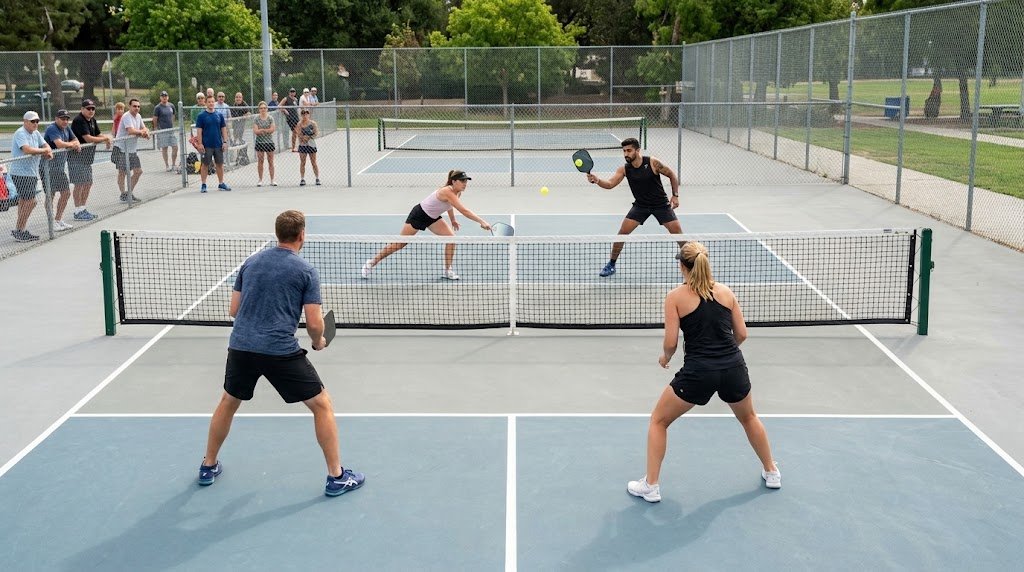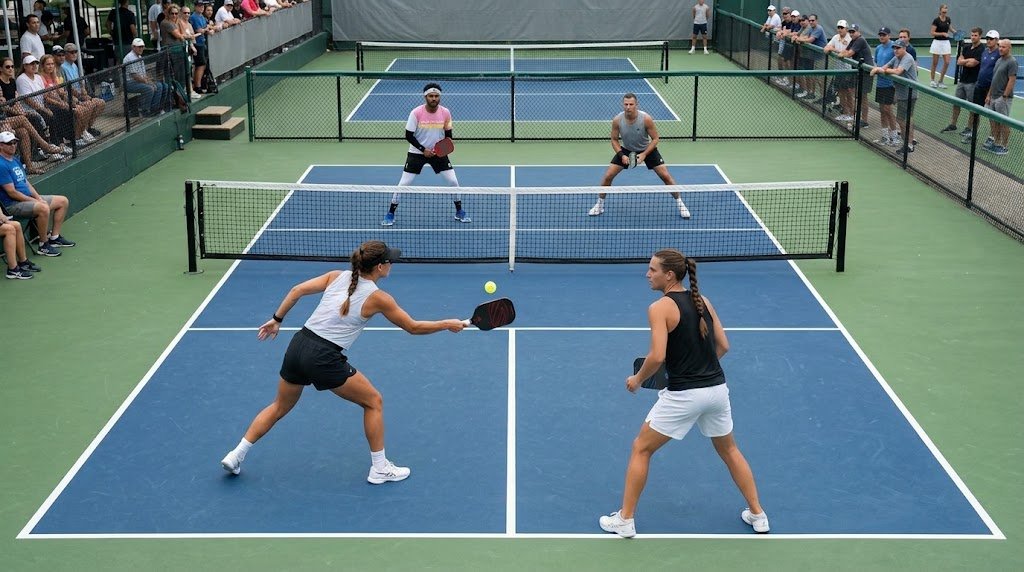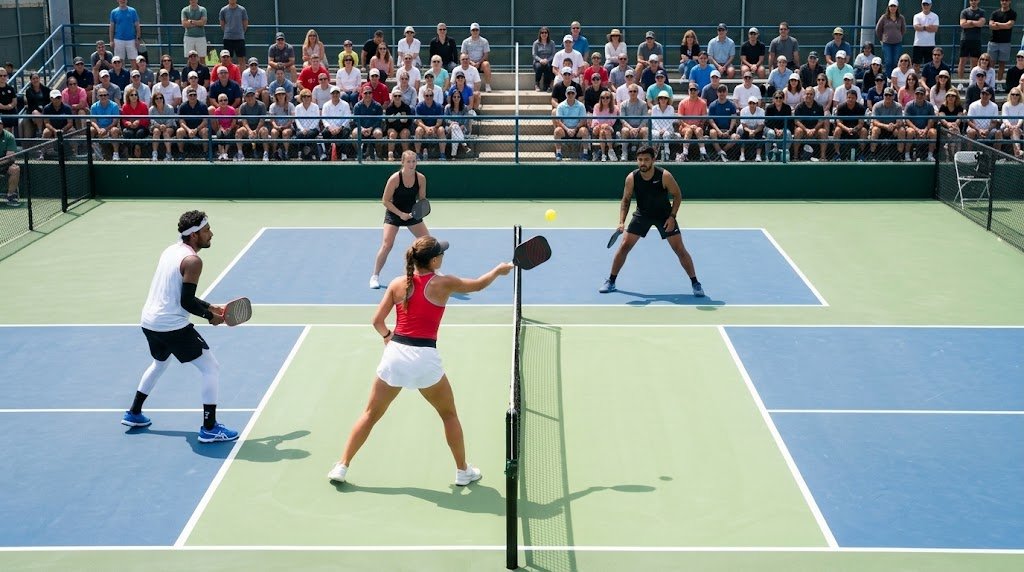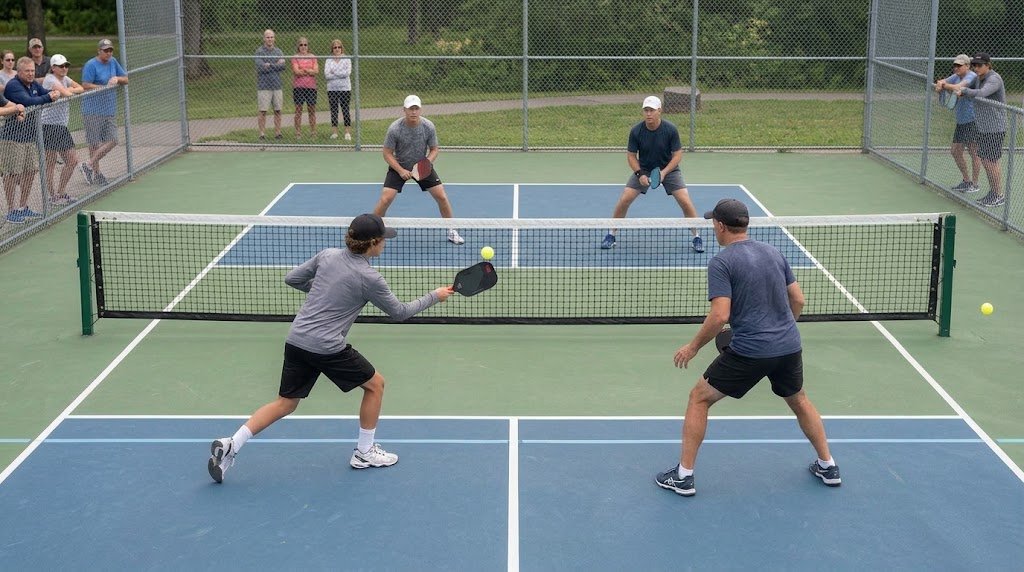

In a display of surgical precision and relentless pressure, lesa ritchie and Maddox Castellanos carved through the competition at the $30,000 Proton National Tour by MPO in Corona, delivering a commanding 11-0, 11-4 victory over Tatiana Ruiz and Brodie Sodersten in the Mixed Doubles 4.5+ division. The scoreboard didn’t just reflect a win—it broadcasted dominance, turning what could have been a competitive clash into a masterclass in court control and tactical execution.
From the opening serve, ritchie and Castellanos established a rhythm that their opponents struggled to disrupt. The first game was a flawless shutout: 11-0. Not a single point conceded. It was the kind of start that shifts momentum before the match even finds its footing. In pickleball terms, it was less a game and more a statement—etched in pickleball ink, not pencil.
The second game, while not as sterile, remained firmly in the winners’ grasp. Ruiz and Sodersten managed to claw back four points, but each surge was met with a calm, calculated response from ritchie and Castellanos. The final score—11-4—capped off a straight-sets victory that underscored their superiority without resorting to theatrics. No drama, no comebacks, just results.
Kitchen Control: The Silent Battlefield
In high-level doubles, the kitchen—the non-volley zone—is more than just a painted rectangle. It’s a psychological frontier. Controlling the line means owning the rhythm of the rally. When a player steps inside the kitchen and attempts a volley, they risk a fault if they initiate contact while grounded within the zone. This isn’t about where the ball is—it’s about where the player is when they strike. The rule is clear: no volleying from within the kitchen. But the nuance lies in timing, footwork, and the split-second decision to cross the line or hold back.
Effective kitchen play hinges on dinks—soft, low shots meant to land just over the net and force opponents to lift the ball. A well-placed dink can pull a player forward, forcing them into a vulnerable position. But every dink carries risk: too short, and it’s a free point for the opponent; too deep, and it’s an easy put-away. Out-of-bounds shots, whether wide or long, are the silent killers of rallies—often dismissed as minor errors, but they accumulate like sand in the gears of a well-oiled machine.
The Rating Gap and What It Meant
Pre-match ratings offered a snapshot, not a prophecy. Ruiz (4.607) and Sodersten (5.221) brought a combined 9.828 rating to the court, while ritchie (4.968) and Castellanos (5.354) countered with a collective 10.322. That half-point advantage in total rating hinted at a tilt in the scales—but ratings don’t dictate outcomes. They inform, they suggest, they whisper. The match, however, shouted.
The gap in individual ratings—particularly Castellanos’ 5.354, the highest of the four—suggested a potential edge in experience or consistency. But it was the synergy between ritchie and Castellanos that proved decisive. Their ability to rotate seamlessly, cover gaps before they opened, and communicate without words turned a favorable rating into a decisive result.
What Each Game Contributed
The first game was the exclamation point. Zero points conceded. It wasn’t just about the score—it was about the message: we are here, we are ready, and we are not yielding. The second game, though less perfect, served as reinforcement. It proved they could adapt, could handle pressure when the opponent found even a sliver of resistance. Each game built on the last, turning a potential upset into a coronation.
This wasn’t a match decided by a single shot or a lucky bounce. It was a product of preparation, positioning, and poise. The winners didn’t just win—they controlled the narrative from the first serve to the last.
In the end, the scoreboard told the truth: 11-0, 11-4. Not a fluke. Not a surprise. A result earned through precision, patience, and the quiet confidence of players who knew they belonged on the court—and made sure everyone else knew it too.