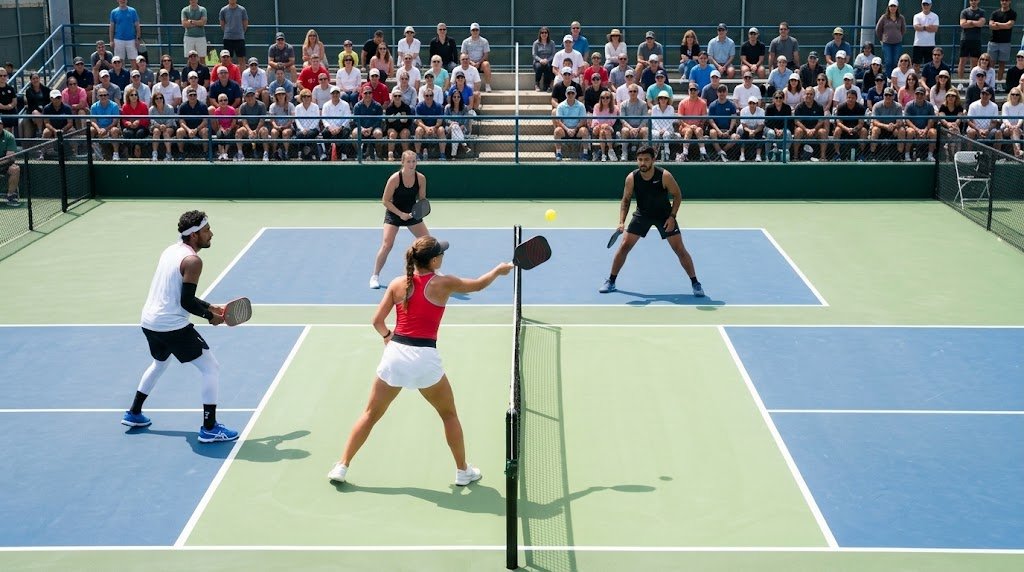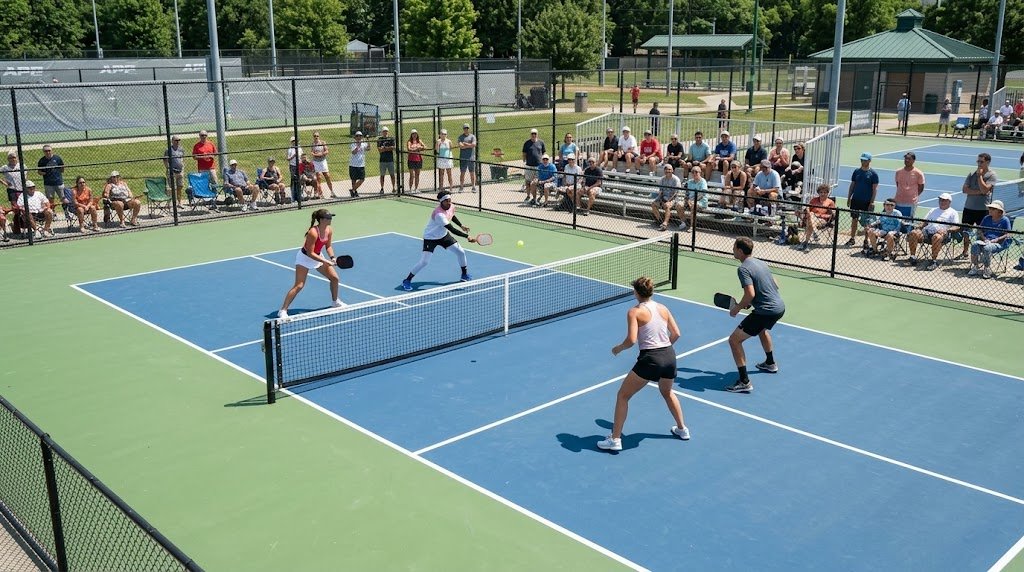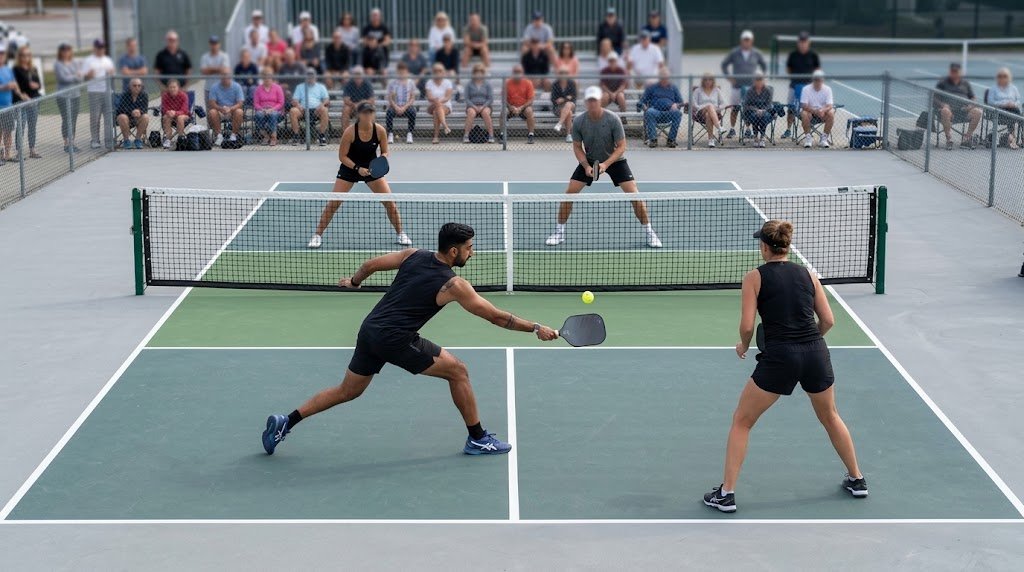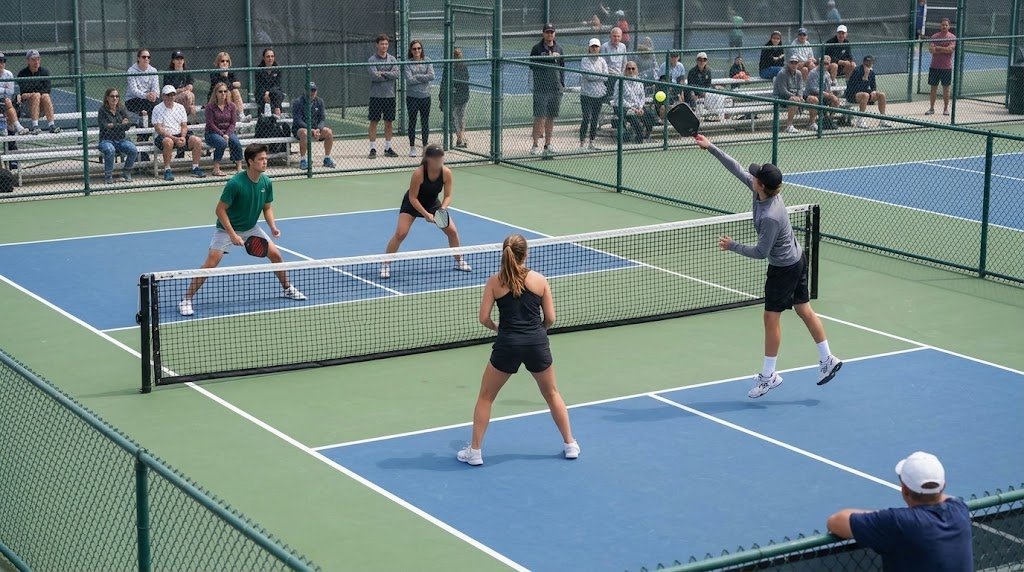


In a commanding display at the $30,000 Proton National Tour by MPO - Cash Prize Tournament in Corona, the duo of lesa ritchie and Maddox Castellanos delivered a textbook performance, sealing a 11-9 victory over Jaslyn Gines and Matthew Powley in the Mixed Doubles 4.5+ division. The scoreboard tells the story: a single-game affair that ended not with a whimper, but with a decisive flourish. While the margin may appear narrow on paper, the context of a 4.5+ competitive bracket suggests a high-level clash where every point is earned, not given.
The pre-match ratings offer a snapshot of the competitive landscape: ritchie entered with a 4.97 rating, while Castellanos brought a robust 5.355. Their opponents, Gines (4.519) and Powley (5.148), were no slouches, but the pairing of ritchie and Castellanos proved to be the more cohesive unit when it mattered most. This wasn't a match decided by individual brilliance alone, but by the synergy of a team that understands the rhythm of doubles pickleball.
The Kitchen: A Battleground of Patience and Precision
In pickleball, the kitchen is not merely a zone; it's the epicenter of tactical warfare. Controlling the non-volley line is the first rule of engagement. Players must establish their presence behind this invisible boundary, using it as a shield while probing for openings. The dink—a soft, low shot designed to clear the net and land just inside the opponent's kitchen—is the primary weapon in this phase. It demands exquisite touch and timing, as a dink that sails too long or too high becomes an easy target for a volley.
Faults and out-of-bounds risks are the constant companions of kitchen play. A ball that clips the net tape or lands on the boundary line can become a point of contention, but the rules are clear: if it touches any part of the line, it's in. The danger lies in the overzealous volley. Players must resist the urge to attack a ball that has yet to cross into the kitchen. A premature volley from within the non-volley zone is a fault, a violation of the sacred space that separates patient rallying from aggressive finishing. Understanding this distinction is what separates casual players from those who truly command the court.
Straight Games and the Weight of a Single Set
This contest, decided in a single game to 11, falls into the category of a straight-games victory. In a format where consistency is king, the ability to close out a match without needing a second chance is a testament to mental fortitude. The 11-9 scoreline reflects a contest where neither side was willing to yield, but ritchie and Castellanos found that extra gear when the pressure peaked. They didn't just win the game; they controlled its narrative, turning potential volatility into a controlled conclusion.
The result is a statement, not just a score. It signals that the ritchie-Castellanos partnership is a force to be reckoned with in the 4.5+ mixed division. For Gines and Powley, it's a learning moment—a reminder that ratings are snapshots, not destinies, and that the court often rewards the team that plays with the most unity. As the tournament progresses, this win will serve as a benchmark, a reminder that in pickleball, as in life, the most satisfying victories are those earned through patience, precision, and a well-timed dink.