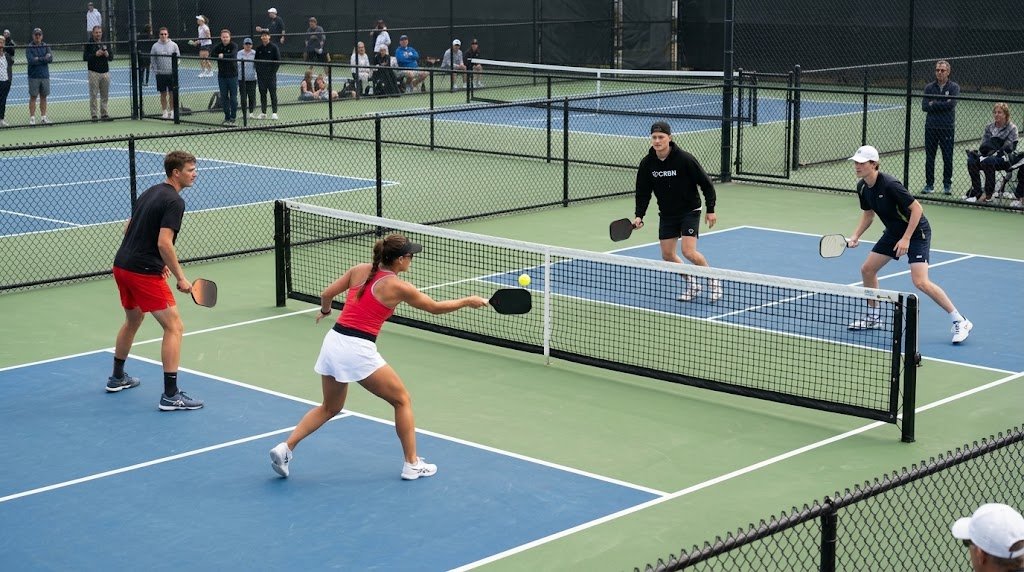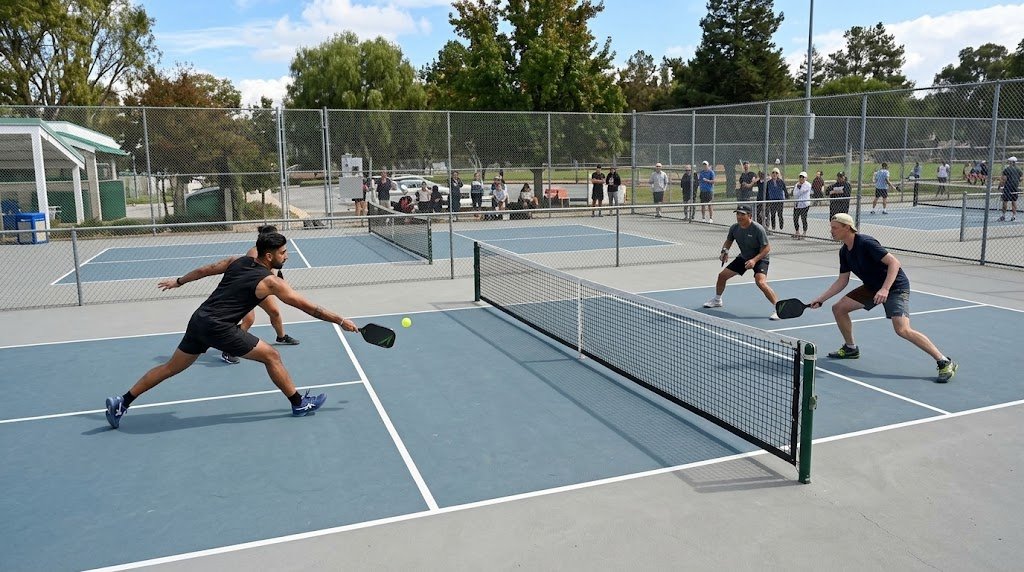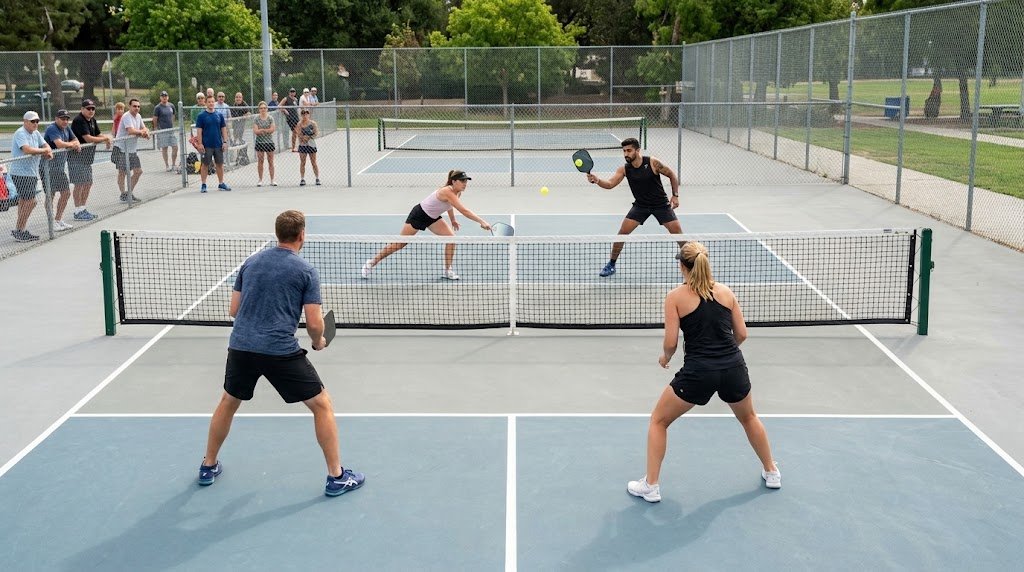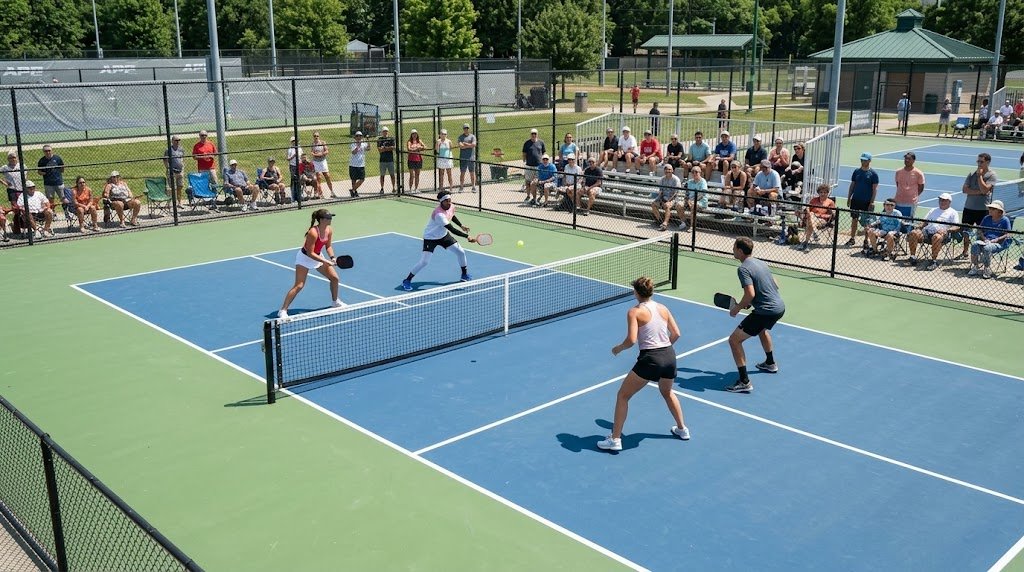


The scoreboard told a story of efficiency and distance. In the Mixed Doubles 4.5+ division of the $30,000 Proton National Tour by MPO in Corona, Cade Pierson and Yaamunan Venkatesan dispatched Meghan Poi and Franco Poi in a single game, securing a 15–2 victory. It was a straight games win that left little room for interpretation: the rhythm of the match belonged to Pierson and Venkatesan from the opening serve to the final point.
A Statement of Control
With pre-match ratings of 5.005 and 5.325 respectively, the winning pair entered the court with a statistical edge that the result reflects. The 13-point margin (15–2) is not just a win; it is a statement of command. In high-level doubles, maintaining a serve sequence is where the match is often won or lost. By keeping their opponents on the defensive for the duration, Pierson and Venkatesan dictated the tempo. The losers, rated 4.57 and 4.496, struggled to find a foothold, dropping only two points in the entire game. This lopsided result highlights the gap in offensive consistency, where the winner side likely converted opportunities with precision while the opposition faced a barrage of pressure that made recovery nearly impossible.
Navigating the Kitchen Zone
To understand how such a dominant performance unfolds, one must look at the architecture of the pickleball court. The kitchen, or non-volley zone, is the central battleground. Players are prohibited from volleying a ball while they are standing inside this zone or if their momentum carries them into it to complete a volley. This rule forces a strategic dance. Successful teams often control the non-volley line by establishing their feet firmly behind the line before striking the ball.
This positioning allows for aggressive offensive volleys while avoiding penalties. Conversely, players who shuffle into the kitchen while attempting to smash or drive risk a fault if their momentum is not halted before the strike. The key is footwork. A player who hesitates or lags behind their shot may find themselves stranded in the no-volley zone, turning a potential winning ball into a free point for the opponent. In general analysis, the side that respects the kitchen line while maintaining aggression usually retains the upper hand in point construction.
The Art of the Dink and the Fault Line
Beyond the kitchen, the dynamics of the dink serve as a common filter. Dinking requires finesse over power. Players must keep the ball low and deep, forcing the opponent to lift it or approach the net to play a more decisive shot. However, the risk of an out-of-bounds fault increases with the intensity of these exchanges.
As players push the ball deeper to apply pressure, the margin for error shrinks. A well-placed dink that flies just past the baseline becomes a point for the opposition. In close competition, these out-of-bounds calls can swing the momentum. In this specific match, the 15–2 score suggests that Pierson and Venkatesan managed this risk effectively, likely minimizing unforced errors while maximizing the pressure placed on the Poi pair. The ability to sustain offensive pressure without stepping out of bounds is a hallmark of high-level play. It is not just about hitting the ball hard; it is about hitting it smart, keeping it in play, and forcing the opponent to make the mistake.
A Clear Path Forward
The result of this match is a clear indicator of form and readiness. While pre-match ratings are a snapshot of a player’s history and not a guarantee of future performance, the outcome in Corona reinforces the quality of the Pierson-Venkatesan pairing. For the opponents, the 15–2 score is a data point for adjustment, highlighting areas where consistency must improve to compete at this level. For the winners, it is a validation of their current trajectory.
As the Proton National Tour continues, matches like this set the standard. They remind the audience that in pickleball, the difference between winning and losing often lies in the smallest margins: the angle of a dink, the placement of a foot, and the discipline to stay out of the kitchen. The 15–2 result is a testament to that discipline, a clean sweep that will certainly be remembered by those present on the court in Corona.