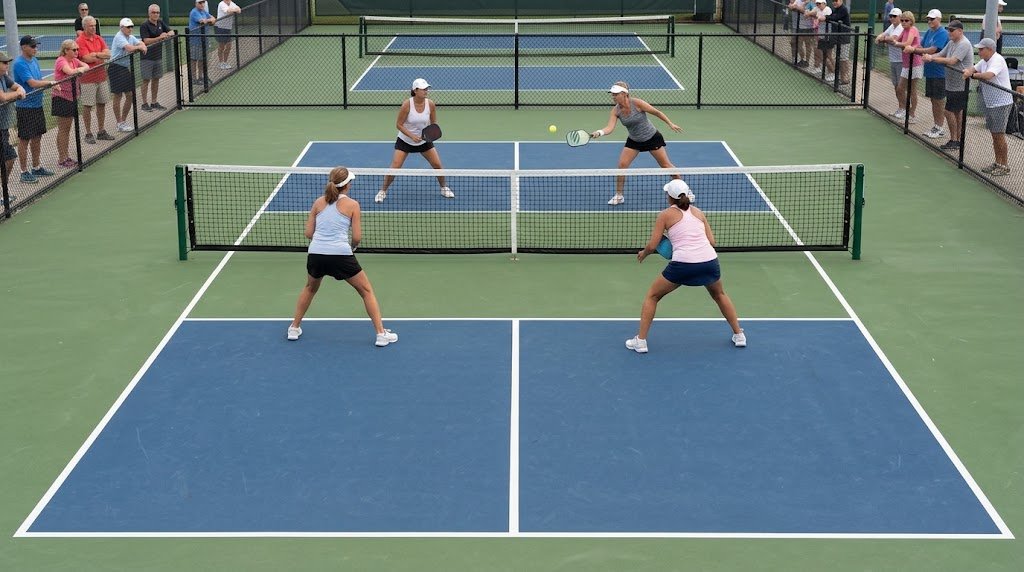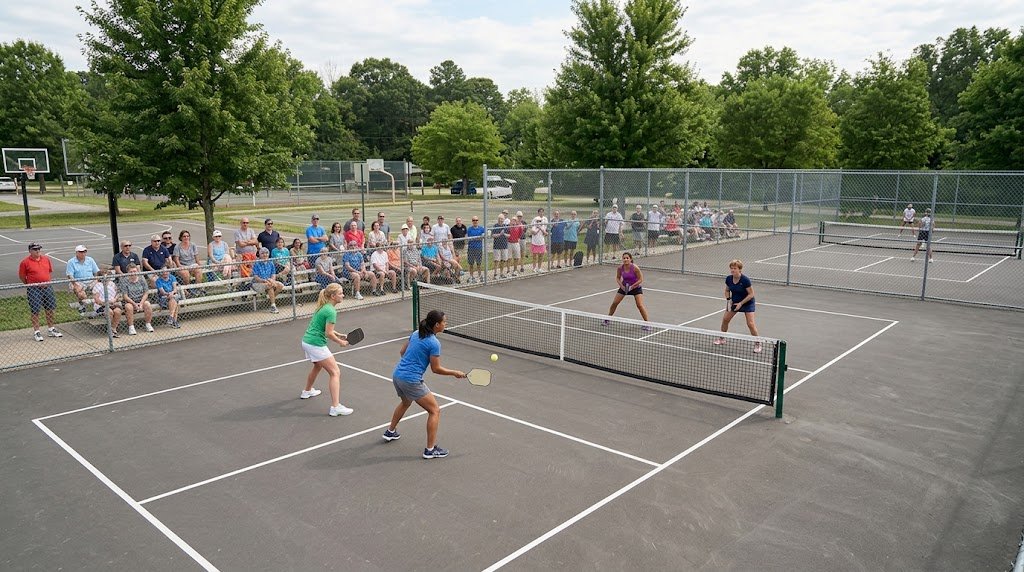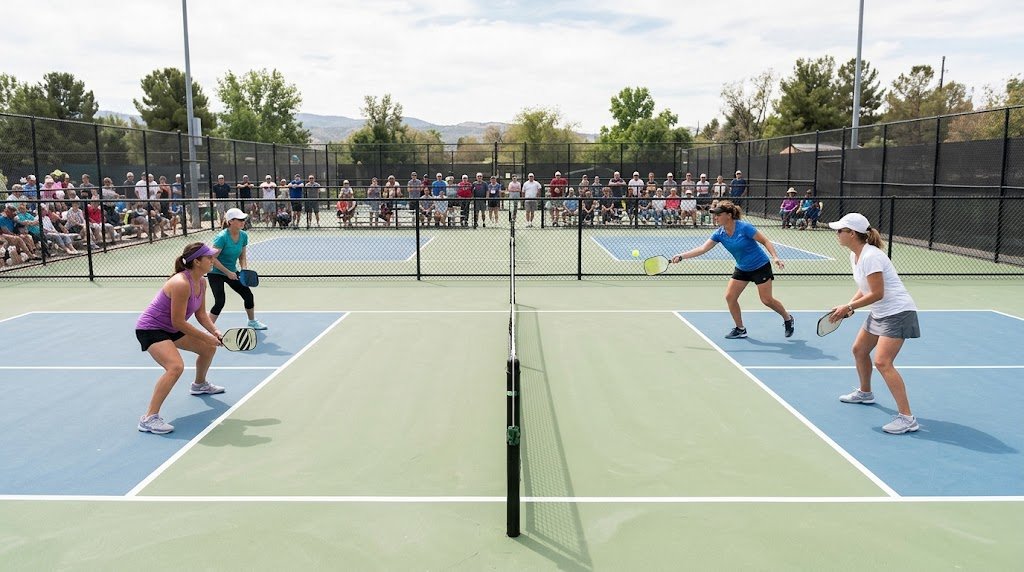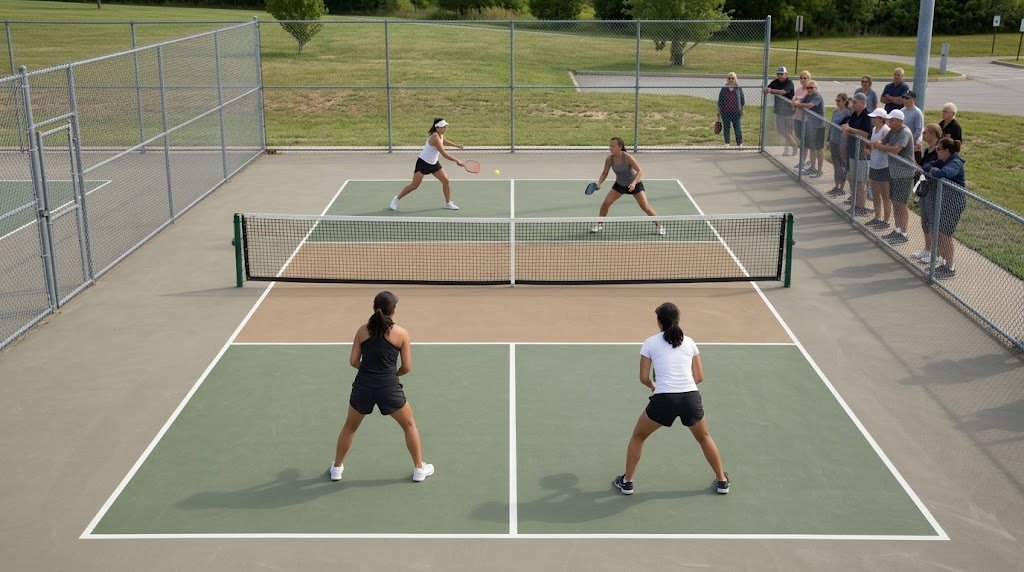

In a display of precision and poise that left no room for debate, Tanya Wu and Cinn Duong delivered an 11–2 statement win over Rira Manzano and Kiyoka Suzuki in the Women’s 3.0–3.49 Doubles event on September 20, 2026. The scoreboard didn’t just reflect dominance—it announced it. From the first serve to the final point, the pairing of Wu and Duong controlled the tempo, the angles, and the kitchen, turning what could have been a competitive doubles match into a masterclass in tactical execution.
Wu, entering with a pre-match rating of 3.489, brought veteran court awareness, while Duong, rated at 2.536, injected youthful urgency and aggressive net play. Together, they formed a synergy that Manzano (3.341) and Suzuki (3.173) struggled to disrupt. The 11–2 scoreline wasn’t just a margin—it was a message. Every point was a calculated strike, every rotation a deliberate shift in pressure. The opposing duo, despite their solid individual ratings, found themselves constantly reacting, never dictating.
The Kitchen Commandos
The key to Wu and Duong’s success lay in their kitchen positioning. In pickleball, the non-volley line (the “kitchen”) is sacred ground—stepping over it while volleying is a fault, and doing so illegally can shift momentum in an instant. Wu and Duong understood this boundary not as a limitation, but as a tactical fulcrum. They used controlled dinks—soft, drop-shot returns designed to land just over the net and deep in the opponent’s kitchen—to force Manzano and Suzuki into awkward positions. These dinks, when executed with the right spin and pace, become weapons: they invite errors, force rushed decisions, and often draw faults if the receiver steps forward too eagerly.
Faults and out-of-bounds risks are always lurking in doubles, especially when players overreach for volleys near the kitchen line. A player who lunges forward to intercept a hard-driven ball risks crossing the line illegally—a violation that awards the point to the opponent. Wu and Duong avoided this trap by maintaining disciplined footwork, staying behind the line until the ball crossed, then moving in only after the third shot had bounced. This patience allowed them to volley legally and with control, turning potential violations into offensive opportunities.
Scoring Breakdown: What Each Game Contributed
The match unfolded in straight games, with Wu and Duong taking the first game 11–2 and maintaining that momentum through the second. The early game set the tone: a fast start, minimal unforced errors, and relentless pressure on the serve return. Manzano and Suzuki, though capable, never found their rhythm. Their pre-match ratings suggested a competitive pairing, but the scoreboard told a different story—one of misalignment, not just skill gap.
The second game saw Wu and Duong tighten their net play, using quick hands to deflect shots and force weak returns. Duong, in particular, showed flashes of brilliance with sharp, angled volleys that carved through the defense. Manzano and Suzuki, despite their experience, couldn’t adapt in real time. The scoreline didn’t reflect a collapse—it reflected a system under constant, intelligent pressure.
General Kitchen Analysis: Positioning, Dinks, and Faults
In doubles, kitchen positioning is everything. The ideal stance is shoulder-width, knees slightly bent, eyes locked on the ball. Players should stay just behind the non-volley line until the ball crosses the net and bounces on their side—only then may they step forward. Dinks are most effective when hit with backspin or topspin, landing short and deep in the opponent’s kitchen, forcing them to volley from an awkward, low position.
Faults occur when a player volleys the ball while any part of their body or equipment crosses the kitchen line before the ball has bounced on their side. Out-of-bounds risk increases when players overcommit to deep shots or fail to track the ball’s trajectory. General best practice: call the ball early, communicate rotation, and never sacrifice position for a flashy volley. Wu and Duong exemplified these principles—not through perfection, but through consistency.
The Verdict: A Statement, Not a Fluke
This wasn’t a lucky win. It was a calculated dismantling. Wu and Duong didn’t just win—they imposed their style. The 11–2 scoreline is a scoreboard shutout, not a mercy rule. It reflects a pairing that understood the nuances of doubles: the importance of the third shot, the value of a well-placed dink, and the discipline required to stay legal at the kitchen line.
For Manzano and Suzuki, the result is a data point—not a verdict. Pre-match ratings are snapshots, not prophecies. This match revealed a gap in execution, not necessarily in talent. And for Wu and Duong, it’s a benchmark: a reminder that in pickleball, as in life, the kitchen is not just a zone—it’s a statement. They didn’t just play the game. They defined it.