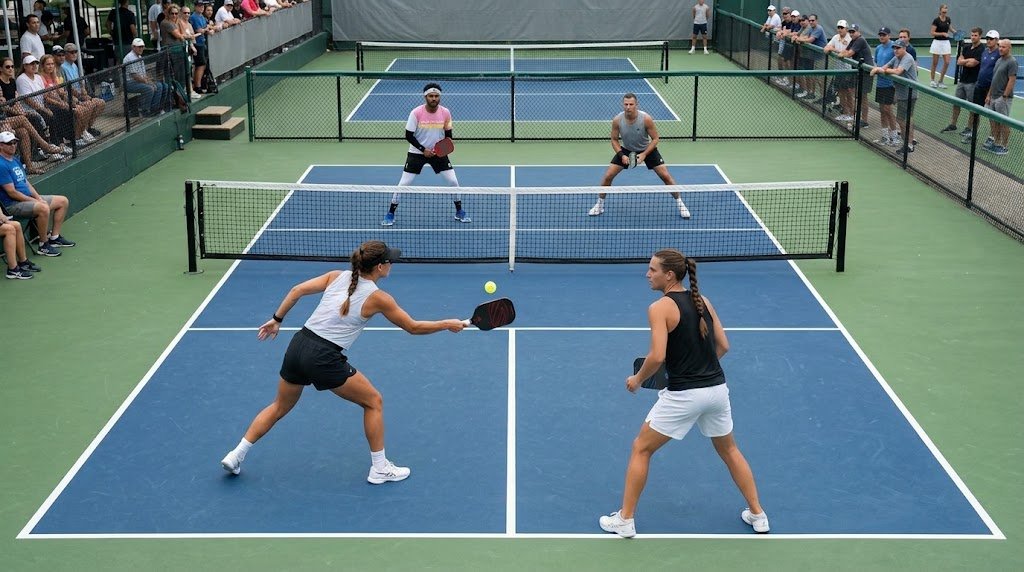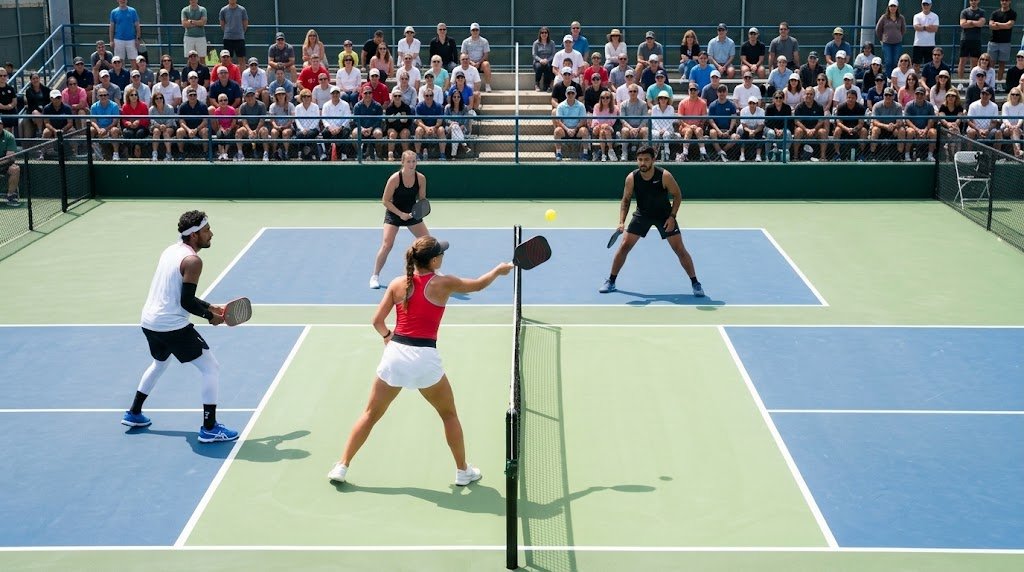


Connie Yoo and Tyrone Wang opened their $30,000 Proton National Tour campaign with a decisive 11–3 victory over Sherry Duarte and Albert Chen, seizing early control and never relinquishing the momentum in Corona. The top-seeded pairing converted their considerable pre-match rating advantage into immediate scoreboard pressure, turning what could have been a feeling-out process into a masterclass in efficient doubles play.
Rating Gap Translates to Early Command
Yoo entered the match with a 4.452 rating, while Wang carried a 4.534 mark — both comfortably above the 4.5 threshold that defines this division. Across the net, Duarte held a 4.122 rating and Chen a 3.749, giving the winners a combined edge of more than a full point. In doubles, that differential often manifests as sharper third-shot decisions, cleaner transitions through the transition zone and fewer unforced errors when the pace accelerates. The result reflected exactly that: Yoo-Wang dictated the tempo from the first serve, forcing their opponents into defensive positions and capitalizing on every short return.
Kitchen Control Without Crossing the Line
Controlling the non-volley line is the single most reliable predictor of success in modern doubles. The team that establishes a balanced, ready presence at the kitchen first forces the opposition to hit up, creating attackable balls. That control, however, demands discipline: a volley struck while any part of the body touches the kitchen surface is a fault, as is momentum carrying a player into the zone after a legal volley. The best pairs hover millimeters behind the line, using compact punch volleys and well-timed resets to keep opponents pinned deep. Yoo-Wang exhibited that geometry consistently, their paddles meeting the ball out front while their feet remained legally planted.
The Dink Game as Offensive Weapon
A purposeful dink exchange is not merely a neutralizer — it is a probing tool. By varying depth, spin and angle, a team can shift opponents laterally, open seams between partners and manufacture high-contact opportunities. The risk lives in the margin: a dink that sits up becomes a put-away; one that drifts wide gifts the point. Elite pairs treat the kitchen as a chessboard, each soft shot a calculated move toward a forced error or a clean winner. While the scoreboard alone cannot reveal specific rally construction, an 11–3 margin in a 4.5+ bracket suggests the winners won the majority of these micro-battles, turning defense into offense before the opposition could settle.
Fault Management and Boundary Discipline
Unforced errors — nets, sidelines, baseline overhits — are the silent architects of lopsided scores. A team that limits giveaways while extending rallies forces the opponent to earn every point, a taxing proposition over a single game to 11. Out-of-bounds risk spikes when players press for winners from compromised positions or misjudge the drift on elevated balls. The cleaner side typically prevails not through spectacular highlights but through the accumulation of high-percentage choices: cross-court dinks over the low middle, deep returns that buy time to the line, and patient resets that neutralize speed-ups. Yoo-Wang’s scoreline implies a high degree of that discipline.
Straight Games, Clear Message
The single-game format leaves no room for mid-match adjustments; the first seven points often write the story. Yoo-Wang authored theirs with authority, converting rating superiority into a shutout-class margin that announces their intent for the bracket ahead. Duarte and Chen, despite the result, own ratings that place them firmly in the 4.5 conversation — a reminder that any pair in this draw can threaten on a different day. For the victors, the statement is simple: they arrived, they executed, and they left no doubt. The tour continues; the standard is set.