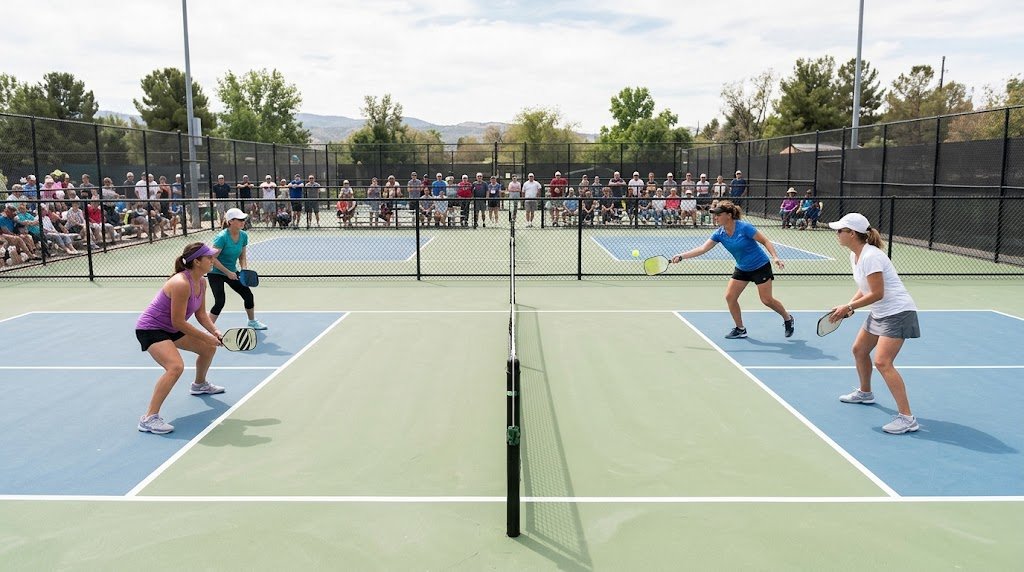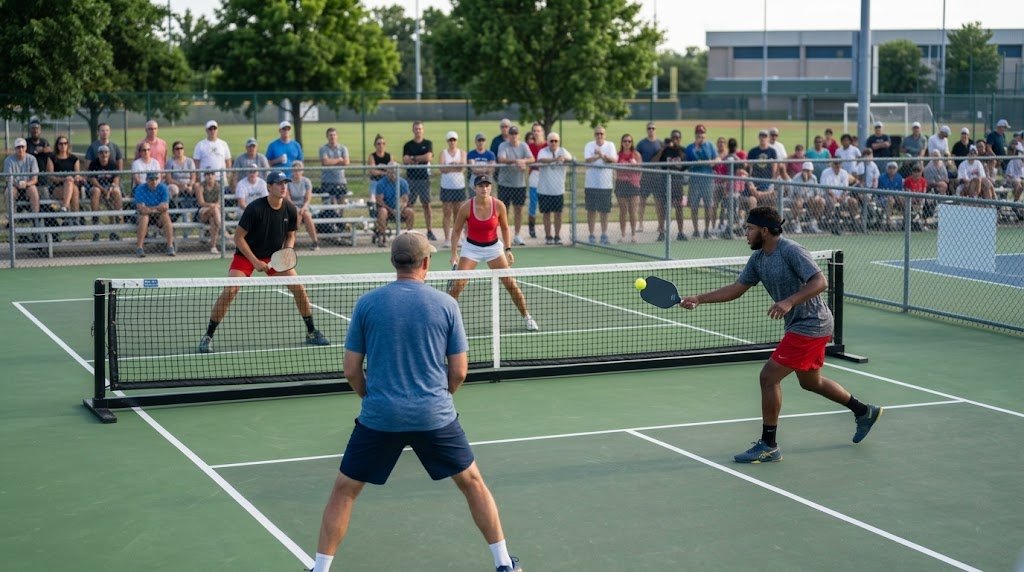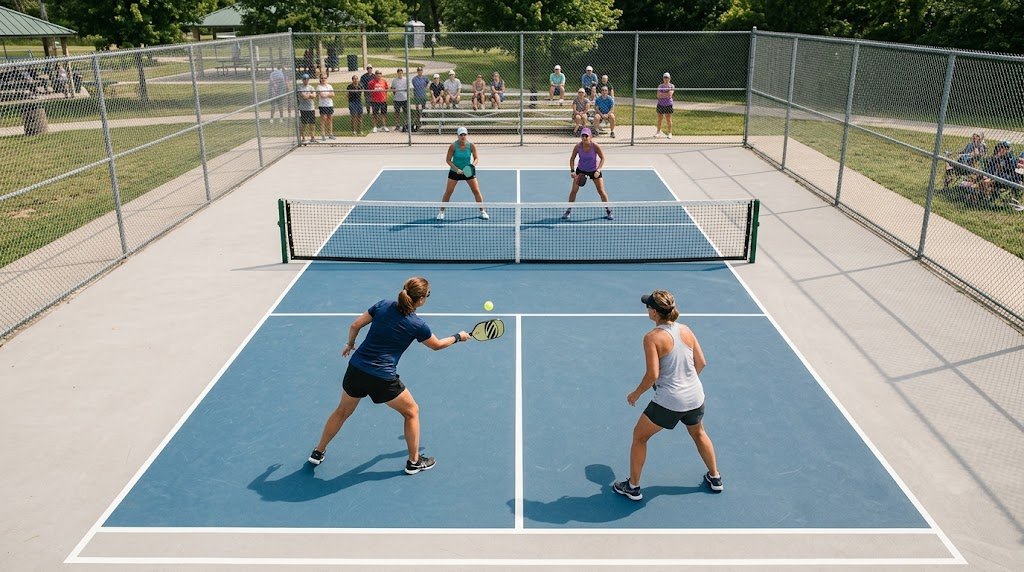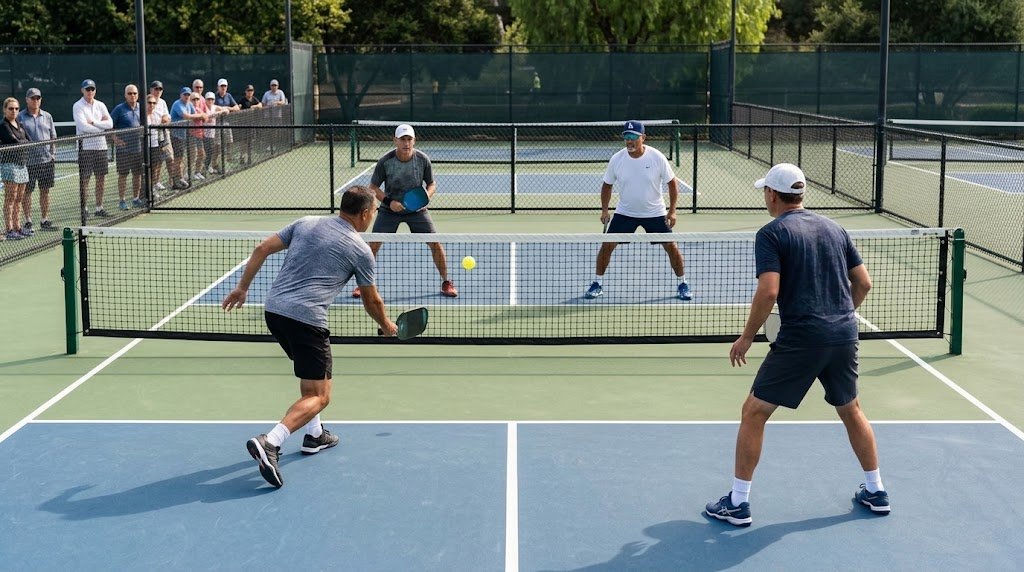

Juan Campos and David A. Pantoja Sr. didn’t just win—they imposed their will on the court at the $30,000 Proton National Tour by MPO Cash Prize Tournament in Corona. In a commanding display of senior men’s doubles 3.0 play, the duo delivered an 11–6 victory over Ren Caballero and Leo Artienda, turning the match into a masterclass of precision and pressure.
From the opening serve, Campos and Pantoja moved with a quiet confidence that belied the stakes. Their synergy was evident in every transition, every split-step, and every well-timed put-away. While Caballero and Artienda brought solid pre-match ratings—3.132 and 3.193 respectively—they were outmatched by the combined force of Campos (2.711) and Pantoja (3.351), whose blend of experience and court IQ proved decisive.
The Kitchen: Where Control Is Won
In pickleball, the kitchen—the non-volley zone—isn’t just a line on the court; it’s the battlefield where rallies are won or lost. Controlling the non-volley line means anchoring your team’s positioning just outside the kitchen, allowing you to volley aggressively without crossing into illegal territory. Stepping into the kitchen during a volley is a fault, and even a split-second misstep can gift a point to the opposition. The best doubles teams understand this boundary like a second skin, using it to bait opponents into overreaching or forcing them into deep, defensive positions.
Dinks—soft, low shots meant to land just over the net—are the bread and butter of kitchen warfare. They’re designed to draw opponents forward, forcing them to volley illegally or risk being pulled out of position. A well-placed dink can collapse an opponent’s court coverage, opening up the wings for a decisive cross-court volley. But dinks are risky: too short, and they’re easy targets; too deep, and they lose their disruptive edge. The key is timing and touch—qualities Campos and Pantoja demonstrated in spades.
Faults and Out-of-Bounds: The Hidden Traps
Faults are the silent assassins of pickleball. A foot fault on a serve, an illegal volley from inside the kitchen, or a ball that clips the line and lands out—all can flip momentum in an instant. Out-of-bounds shots, in particular, are psychological weapons. A deep, aggressive shot that lands just long can demoralize an opponent, forcing them to second-guess their positioning and timing.
In this match, the margin—11 to 6—suggests that Campos and Pantoja minimized their own errors while capitalizing on their opponents’. Whether through superior ball control, disciplined court positioning, or simply better luck with line calls, they turned potential faults into opportunities. The result wasn’t just about points; it was about consistency under pressure.
What the Scoreline Says
An 11–6 scoreline isn’t just a number—it’s a narrative. It speaks of dominance, of a team that dictated the tempo and never let their opponents find their rhythm. Unlike a nail-biter that hinges on a single lucky shot, this was a straight games win that felt inevitable from the first serve. Campos and Pantoja didn’t just survive the match; they controlled it.
For Caballero and Artienda, the loss is a data point, not a verdict. Their pre-match ratings suggest they’re competitive players capable of bouncing back. But on this day, they faced a duo that understood the nuances of the kitchen, the weight of a dink, and the fine line between aggression and fault. The result is a testament to the depth of senior doubles—and a reminder that in pickleball, as in life, the smallest margins often decide the biggest outcomes.