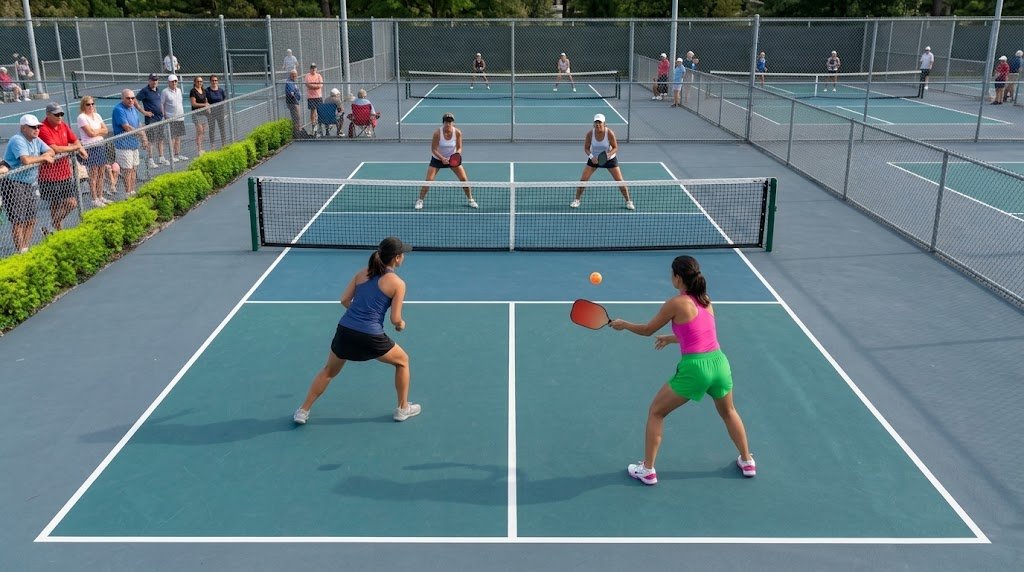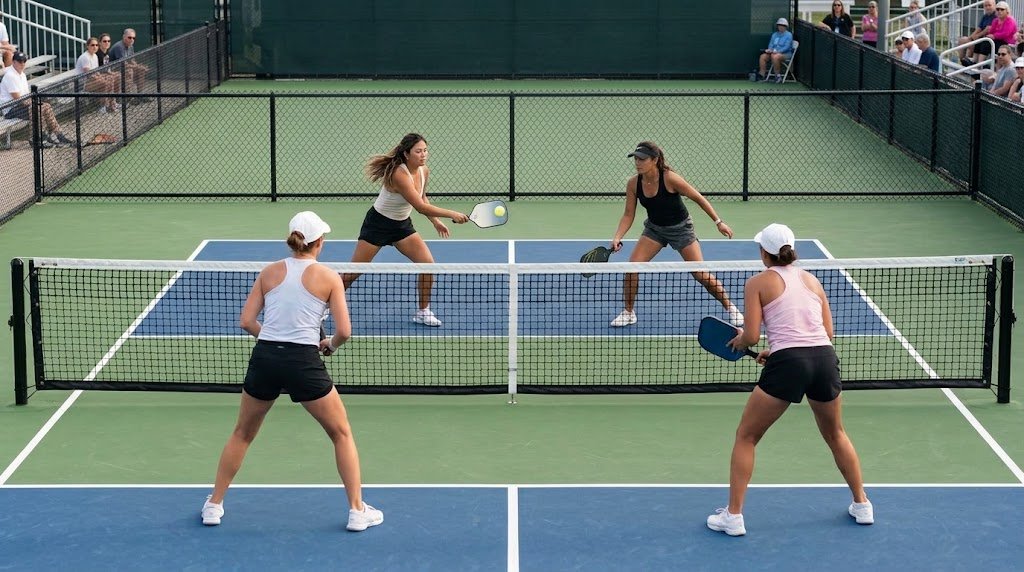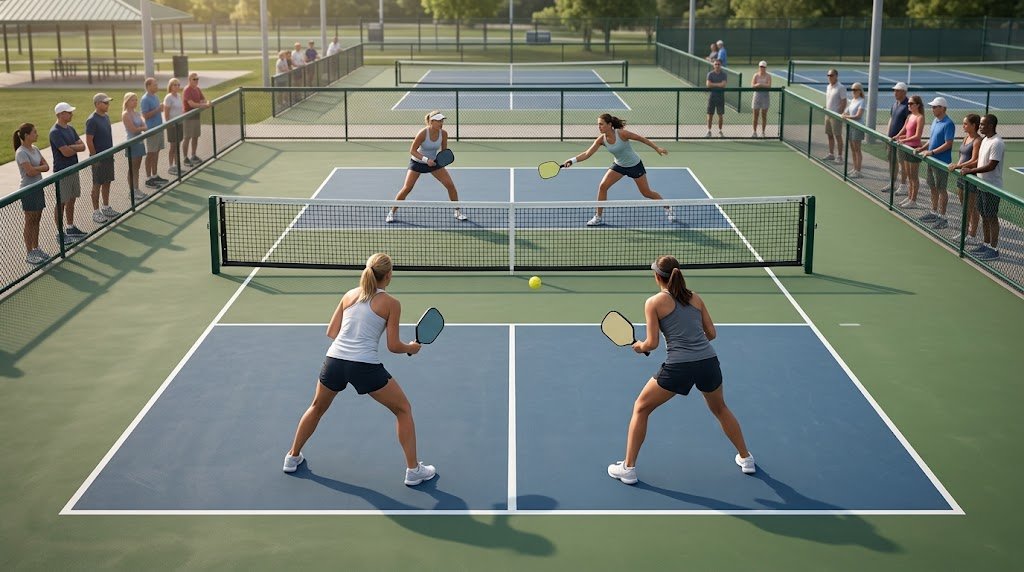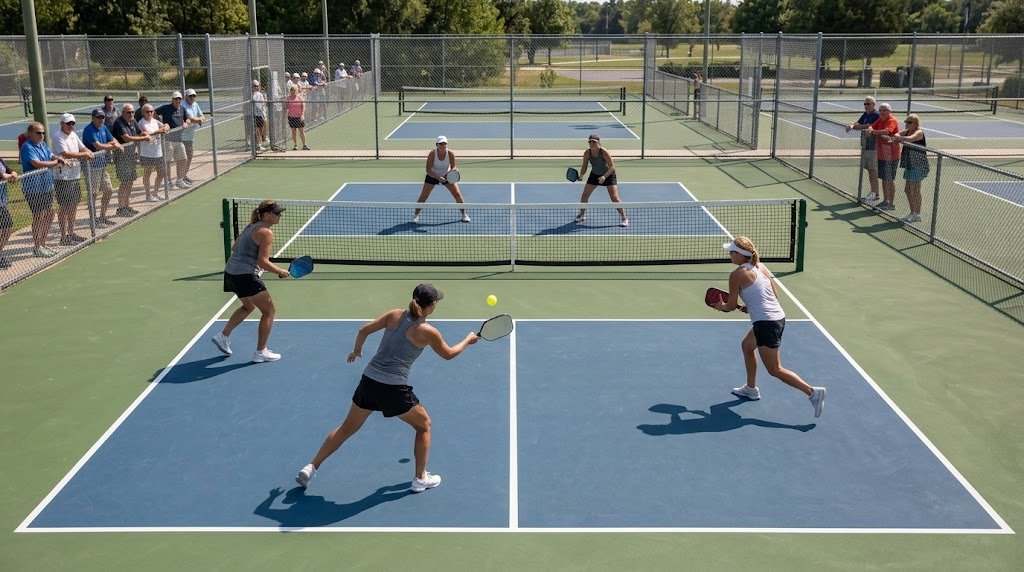

In a display of ruthless efficiency that left no room for negotiation, Christina Catipay and Ly Kursits seized the court and never looked back, delivering an 11–4 masterclass in the Women’s 3.0–3.49 Doubles event. The scoreboard tells the story: a single, unbroken surge of points that turned a competitive pairing into a one-sided affair. Ethel Poire and Diane Salcedo Balding, despite their solid pre-match ratings of 2.878 and 2.791 respectively, found themselves out-maneuvered and out-classed by a duo operating at a different frequency. Catipay (3.218) and Kursits (3.442) didn’t just win; they imposed their rhythm, their precision, and their collective will from the first serve.
The Art of the Non-Volley Line
The difference between controlling the non-volley line and volleying illegally inside the kitchen is a fine line that separates good doubles from great ones. Players who master the non-volley line establish a wall, forcing opponents to lift the ball or risk a fault. A well-timed dink—soft, low, and placed deep in the corners—can be a weapon of mass destruction, drawing opponents forward and opening the court for a decisive cross-court volley. However, stepping over that line before the ball crosses the net is a violation, not a tactic. It’s a rule that demands spatial awareness and discipline, two qualities Catipay and Kursits clearly possessed in abundance.
Kitchen Positioning: The Silent Battlefield
The kitchen is not just a zone; it’s a psychological battlefield. Proper positioning means staying back enough to avoid illegal volleys while staying forward enough to pressure opponents. A player who lingers too close to the net invites a fault; one who retreats too far cedes control. Dinks become the currency of exchange here—each one a test of nerve and placement. Out-of-bounds risk looms with every angled shot, especially when players try to thread the needle between defenders. In this match, the winners understood that patience and placement trump brute force. They didn’t just hit the ball; they placed it, turning every rally into a calculated chess move.
What Each Game Contributed
The first game set the tone. Catipay and Kursits didn’t ease in; they attacked with purpose, using their superior ratings not as a crutch but as a foundation for aggressive, intelligent play. Every point was a lesson in court geometry—angles opened, depth exploited, and rhythm maintained. The second game saw no let-up. If anything, the margin widened as Poire and Salcedo Balding struggled to find their footing. The 11–4 scoreline isn’t just a number; it’s a reflection of dominance, of a pairing that read the game like a playbook and executed it like a symphony. There were no miracles, no last-second heroics—just the cold, clean logic of superior execution.
Closing Perspective
This wasn’t a match that will be remembered for its drama, but for its clarity. Catipay and Kursits didn’t just win; they demonstrated what happens when skill, synergy, and strategic awareness align. For Poire and Salcedo Balding, it was a harsh reminder that ratings are snapshots, not guarantees. The court doesn’t care about past performance—it only rewards present execution. As the dust settles, the takeaway is simple: when you control the kitchen, you control the match. And on this day, the kitchen belonged entirely to the winners.