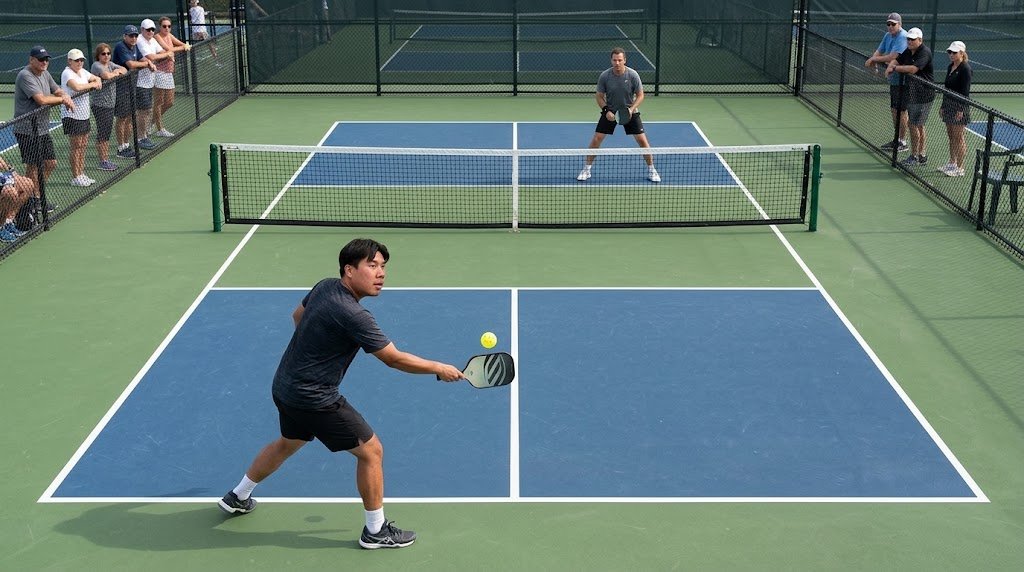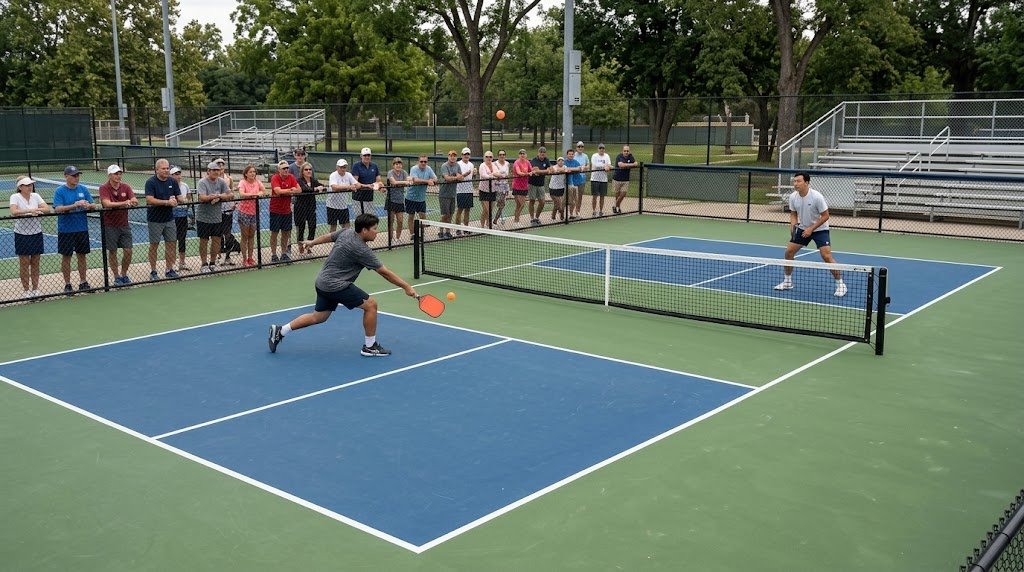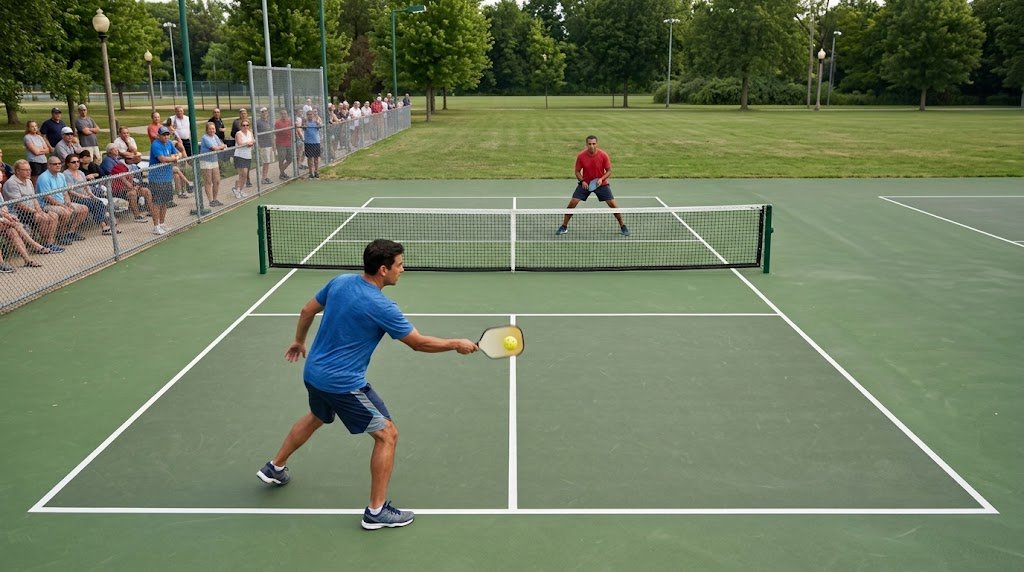

Brian Chen delivered a statement performance at the $30,000 Proton National Tour in Corona, shutting out Leon Esmas 11-0 in the Men's Singles Challenger. The lopsided scoreline reflected Chen’s command from the first serve, turning a pre-match ratings edge into a dominant display. Esmas entered with a 4.157 rating, slightly above Chen’s 4.01, but the numbers failed to predict the one-sided outcome that unfolded on court.
Chen’s precision and patience dictated the tempo, forcing Esmas into reactive positions early and often. While no specific rallies are recorded, the 11-0 margin indicates sustained pressure and minimal unforced errors from the winner. Each point built on the last, with Chen consistently converting opportunities whether through deep serves, aggressive third-shot drives, or patient exchanges that wore down his opponent’s rhythm.
The shutout wasn’t just about power—it was about control. Chen demonstrated an understanding of court geometry, keeping Esmas pinned behind the baseline or stretching him wide to open up the middle. By varying pace and placement, he limited the challenger’s ability to dictate exchanges, turning defensive recovery into offensive opportunity.
Kitchen Command and the Non-Volley Line
A key factor in Chen’s success was his mastery of the non-volley zone line. Controlling this area doesn’t mean volleying from inside the kitchen—it means positioning to take air balls just behind the line, cutting off angles, and responding quickly to dinks or drops. Legal play at the line requires both feet to be established outside the zone before volleying; stepping in during the motion constitutes a fault. Chen appeared to navigate this boundary with awareness, using the line as a launchpad for putaways without risking illegal incursions.
Esmas, meanwhile, struggled to establish consistent positioning near the line, often finding himself either too far back to challenge dinks or lunging forward in ways that risked faults or popped-up returns. The inability to neutralize Chen’s net presence left him perpetually on the back foot.
Dinks, Faults, and the Margin of Error
In pickleball, the difference between control and chaos often lives in the dink exchange—a soft, precise shot into the opponent’s kitchen designed to neutralize power and invite error. Chen’s ability to sustain these exchanges, when they occurred, likely forced Esmas into uncomfortable decisions: overextend and pop the ball up, or retreat and lose court position. While no specific dink sequences are documented, the shutout suggests Chen minimized his own unforced errors in these critical moments.
Faults—whether foot faults, service errors, or net contacts—can accumulate quickly in tight matches. Here, the absence of such errors from Chen, combined with Esmas’s struggle to maintain consistency, contributed to the growing gap. Out-of-bounds risk also looms larger when players are forced off balance; Chen’s shot selection appeared to keep Esmas moving laterally and vertically, increasing the chance of errant returns.
What the Score Tells Us
This wasn’t a match decided by a single break or lucky net cord—it was a cumulative victory. Game one wasn’t just a set; it was a declaration. Chen’s ability to win every point speaks to a level of execution that left Esmas without a foothold. The pre-match ratings hinted at competitiveness, but the result revealed a disparity in performance that day.
For Chen, the win is a confidence-builder—a reminder that precision, patience, and positional discipline can overcome even a slight ratings disadvantage. For Esmas, the loss offers a clear lesson: in pickleball, controlling the line and minimizing errors aren’t just strategies; they’re survival skills.
The shutout stands as a clean, unambiguous result—one that rewards attention to detail and punishes hesitation. In a sport where margins are measured in inches and seconds, Chen made sure there was no margin left to close.