
Rating Overturned in a Hurry
Andy Hernandez walked into the Men's Singles Challenger bracket at the $30,000 Proton National Tour by MPO - Cash Prize Tournament in Corona as the underdog on paper, and walked out having turned that paper into confetti. His 11–3 dismantling of Joey Ferro was the kind of result that makes tournament scorekeepers double-check their screens.
Ferro carried a pre-match rating of 3.724 — a healthy edge over Hernandez's 3.425 — and by the logic of snapshots, the higher number usually points to the favorite. Pickleball's singles format, though, is a ruthless sieve: there is no partner to absorb a cold streak, no one to reset the point when your third shot goes sideways. Hernandez made the rating gap look like a typo.
One Game, One Statement
A singles match to 11 is a compressed, high-stakes affair. Every point carries weight because there is nowhere to hide. Hernandez's 11–3 margin — an eight-point gulf — is not the sort of scoreline that happens by accident. It is the product of sustained control, the kind that gradually starves an opponent of rhythm until the scoreboard becomes a statement.
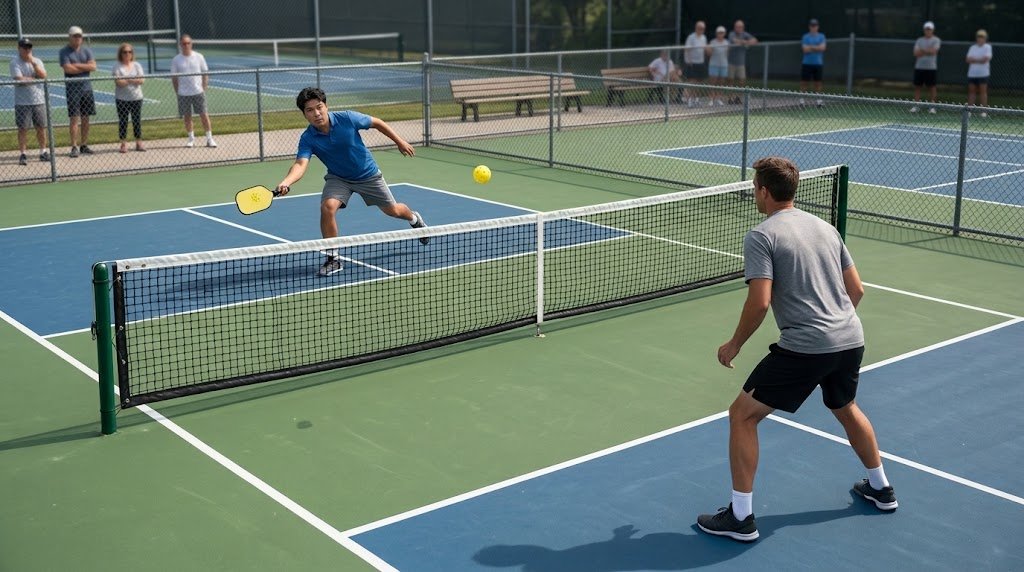
Ferro's three points were real, and they tell us the match was not a true shutout. But a lopsided result in singles often means one player is winning the battles that matter: the serve-and-return exchanges, the transition zone, the moments when a point collapses into a kitchen duel. Hernandez's victory reads as a match where the favorite never found the handle.
The Kitchen: Pickleball's Narrowest Battlefield
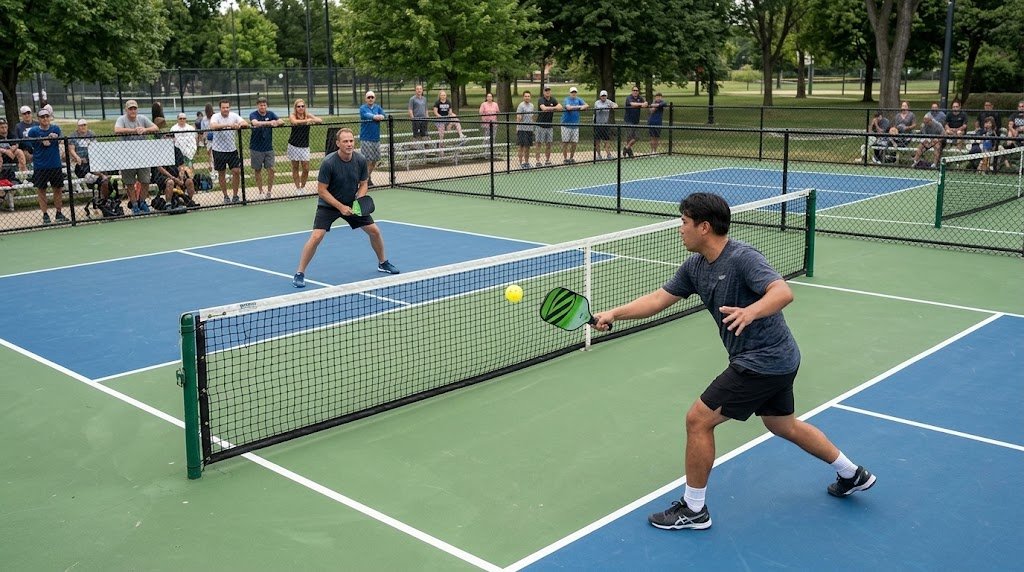
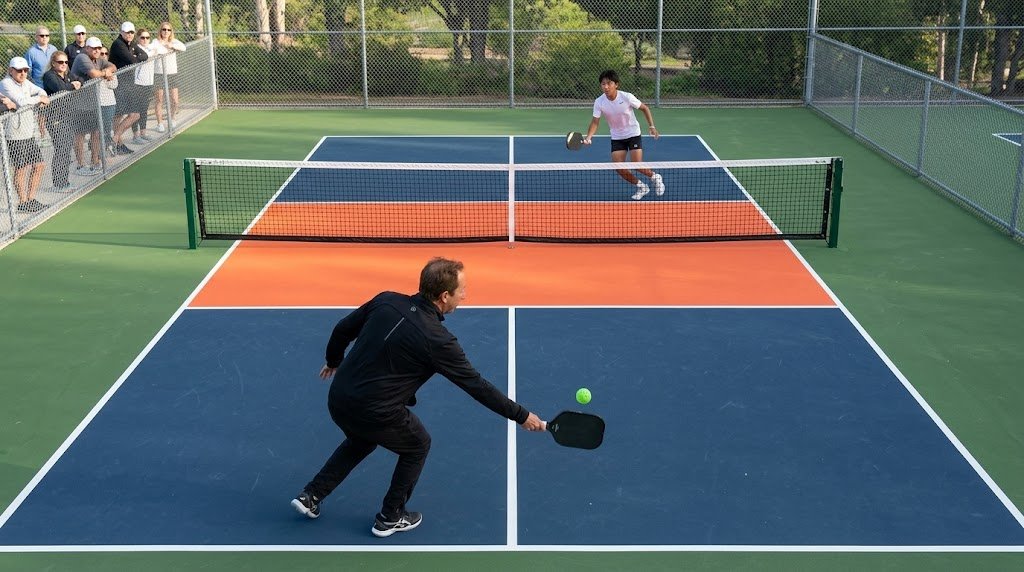
In singles, the non-volley zone — the kitchen — becomes an even sharper tactical tool. A player who controls the kitchen line can dictate the tempo of dink exchanges, forcing opponents to either lift the ball (inviting an attack) or attempt a low-percentage pass. Good kitchen positioning means staying just behind the line, ready to step in only after the ball bounces, keeping the paddle in front and the weight balanced.
Dinking is the patient art of the sport: soft, diagonal shots that test footwork and discipline. A common fault risk arises when a player steps on the kitchen line while volleying — hitting the ball out of the air before it bounces — which is illegal inside the non-volley zone. The distinction matters: standing at the line is fine; volleying from inside it is not. The difference between controlling the line and violating it can come down to a single inch, and in singles, where there is no partner to cover for you, that inch is everything.
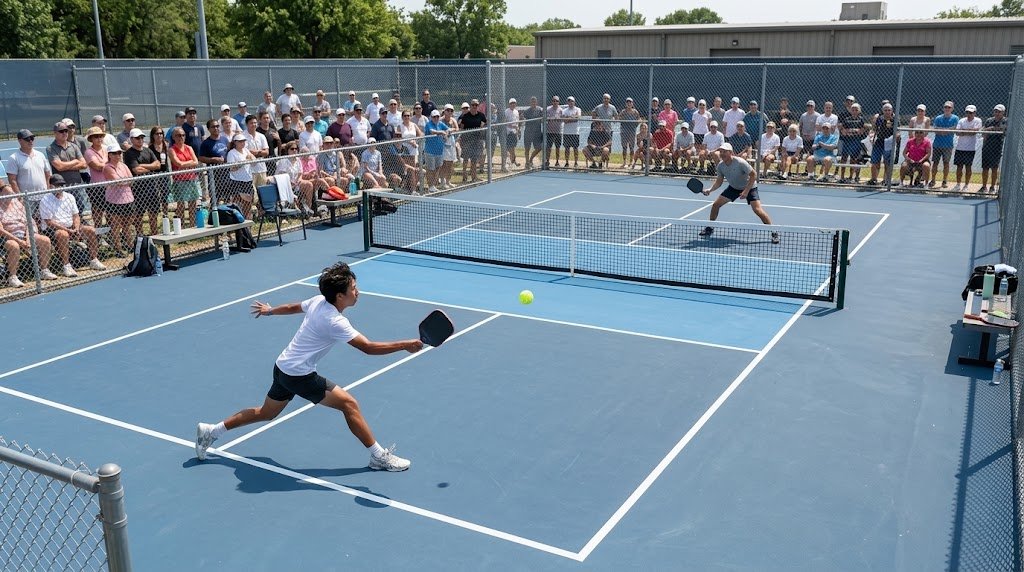
Out-of-bounds risk also climbs in singles. With no partner patrolling a sideline, players shoulder the full width of the court. An aggressive dink pulled too wide, a third-shot drop that sails long, a drive that catches the back line by a fraction — these are the margins that separate an 11–3 romp from a grind.
A Scoreline That Lingers
Hernandez's 11–3 win over Ferro is the kind of result that reverberates through a Challenger bracket. Pre-match ratings are snapshots, not prophecies, and Hernandez just provided a vivid reminder that the ball doesn't care about the numbers next to your name.
For Ferro, a 3.724 rating still stands as a marker of ability — one result does not erase a body of work. But on this day, in this format, Hernandez was the sharper player by a wide margin. An eight-point spread in singles is not a squeaker; it is a clearance. And in a bracket where every win extends your stay and every loss sends you packing, Hernandez just sent a message that no one in the Challenger field will want to receive.
Singles pickleball rewards the player who solves the puzzle fastest. On this day, Hernandez had the answer key.