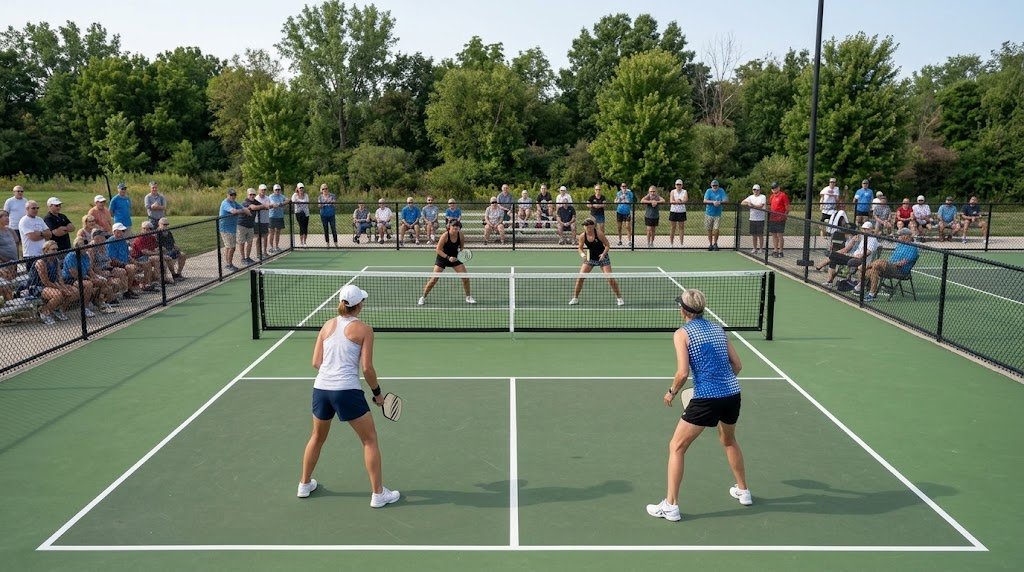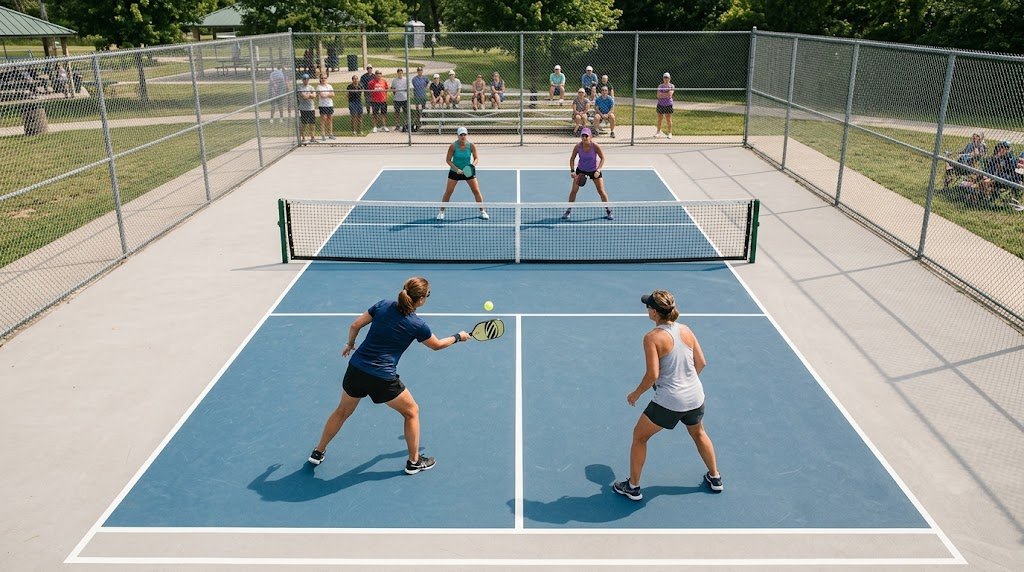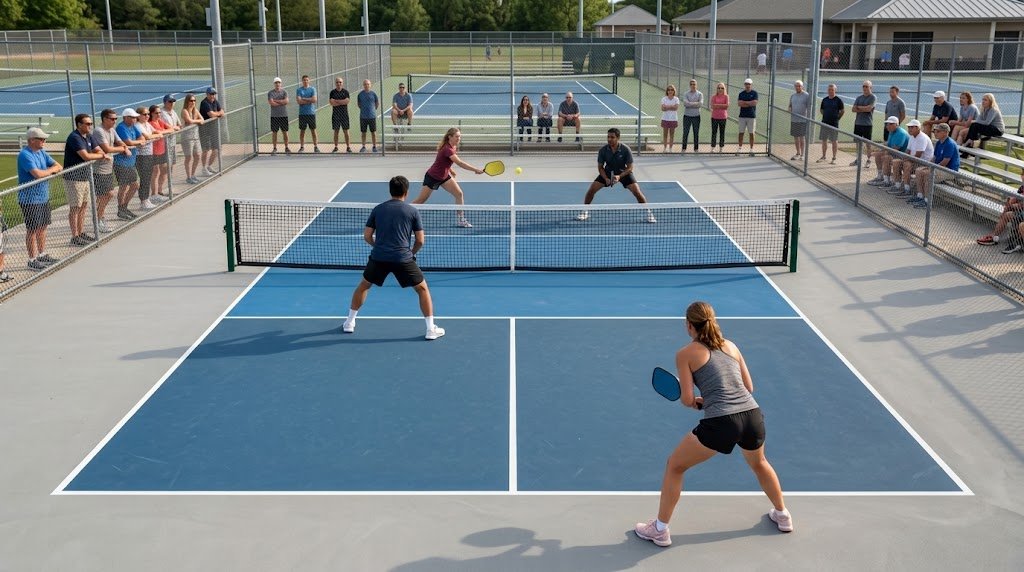


Janet Luo and Channing Wong didn't just win their mixed doubles opener at the NP California Open Classic Powered by Onix — they erased the opposition. The pairing posted a 15–0 shutout over Myra Nelle and Raj Borate in a single-game format, turning a 4.0+ skill bracket match into a masterclass in court control.
A scoreline that speaks volumes
Fifteen points to zero. In pickleball, that's not a win; it's an exclamation point. Luo entered with a 3.958 pre-match rating, Wong at 4.051. Their opponents — Nelle at 3.699 and Borate at 4.028 — carried comparable numbers on paper. The scoreboard told a different story. From the first serve, the winners imposed a rhythm that never relented, converting every opportunity and smothering any counter-punch before it could breathe.
Commanding the non-volley zone
Controlling the kitchen line is the engine of modern doubles. The team that plants itself at the non-volley line first, with balanced weight and paddle up, dictates the geometry of the point. From that position, players can compress time, angle volleys into the sideline seams, and force opponents into low-percentage passes. But the kitchen giveth and the kitchen taketh away: volleying while any part of the body touches the non-volley zone is a fault. The discipline to hover millimeters behind the line — toes kissed by the paint, never crossing — separates contenders from pretenders. Luo and Wong's rating profile suggests they understand this calculus; the 15–0 result suggests they executed it.
The dink game as a weapon
When power fails, the soft game prevails. A well-placed dink — an unattackable ball that lands in the opponent's kitchen — resets the rally and invites error. The best practitioners vary depth, spin and target, pulling opponents wide or jamming them at the hip. Patience becomes pressure. A team willing to dink 10, 12, 15 times in a single exchange often breaks the opponent's discipline, drawing a pop-up that turns into a put-away. While the source records no rally details, a shutout of this magnitude typically reflects sustained kitchen dominance and the ability to neutralize pace with touch.
Faults, boundaries and the margin for error
Every rally ends one of three ways: a winner, a forced error or an unforced fault. Serves that sail long, returns that kiss the net, volleys struck from inside the kitchen, balls that land beyond the baseline or sideline — each gifts a point. In a 15–0 sweep, the losing side's margin for error evaporated instantly. Nelle and Borate, rated 3.699 and 4.028 respectively, found no foothold. Whether the points came from winners or gifts matters less than the cumulative weight: zero on the board means zero breathing room.
Straight games, straight statement
The format yielded a single decisive game, but the message carries across any bracket. Luo and Wong converted a theoretical rating edge into absolute scoreboard dominance. Nelle and Borate exit early, but a 4.028 rating for Borate and a 3.699 for Nelle signal they'll regroup. For the winners, the shutout builds momentum without a wasted motion. In pickleball, as in any sport, 15–0 isn't just a score. It's a signal flare.