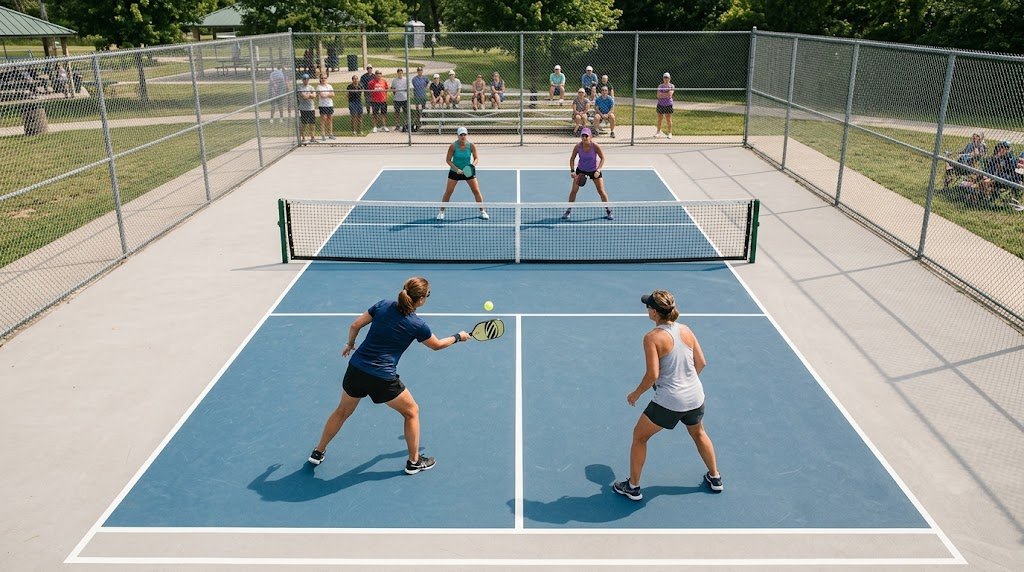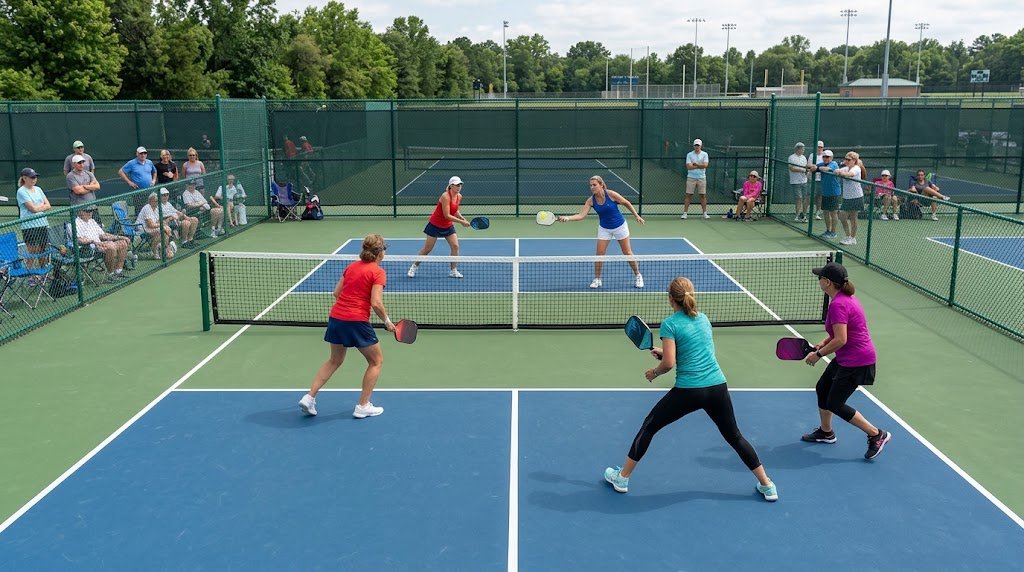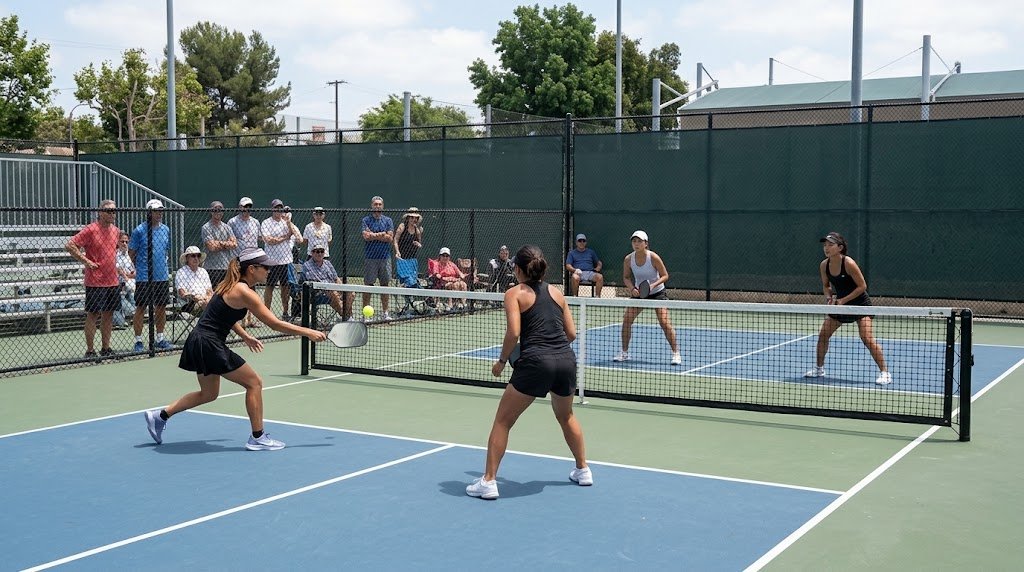

Linh Tieu and Aprille Montealegre left no doubt in the Women's 2.49-2.99 Doubles event, dispatching Manami Akiyama and Rika Numata 11–5 in a single, decisive game. The scoreboard shutout announced their arrival with authority, turning what could have been a feeling-out process into a masterclass in tempo control. Tieu entered the match with a pre-match rating of 2.844, a number that hinted at steady hands and court awareness, while Montealegre complemented her with aggressive net presence. Together, they converted that paper advantage into a clinical performance that never let the opposition breathe.
Command from the First Serve
From the opening rally, the winners dictated spacing and rhythm. Akiyama and Numata, both unrated heading into the event, found themselves chasing shadows as Tieu and Montealegre established early control of the non-volley line. In doubles, that seven-foot kitchen boundary is the fulcrum of every point. Teams that plant themselves just behind it, paddles up and weight forward, force opponents into defensive pops or risky drives. The victors did exactly that, shrinking the court laterally and cutting off cross-court angles before they could develop. When the losing side attempted to reset with soft drops, the winners met them with compact volleys that redirected pace into open lanes.
The Kitchen Chess Match
Controlling the non-volley line is not the same as volleying inside the kitchen. The rule is absolute: a player may not strike the ball out of the air while any part of a foot touches the non-volley zone or its boundary line. Doing so is a fault, plain and simple. But the art lives in the inches just behind that line. Elite doubles pairs hover there, baiting high contact points, then punching volleys downward with a wrist snap that keeps the ball low and unattackable. Dinking — those soft, arcing exchanges that barely clear the net — becomes a probe for impatience. A single misjudged dink that sits up becomes a put-away. Conversely, a well-disguised speed-up off the bounce can catch a drifting opponent leaning the wrong way. Out-of-bounds risk spikes when players press for winners from the baseline; the sideline and baseline margins shrink under pressure, and a fraction of an inch separates a winner from a fault. None of these specific sequences are recorded for this match, but they frame the strategic landscape every 2.5-level team navigates.
A Margin That Speaks Volumes
An 11–5 result in a single game to 11 is more than a comfortable win; it is a statement of readiness. The six-point margin reflects sustained execution: first-serve consistency, minimal unforced errors, and the ability to convert transition opportunities. At this rating band, matches often tighten around 9–9 or 10–8 as nerves fray. That this one never approached deuce territory suggests Tieu and Montealegre neutralized the variable that usually keeps games close — the serve-return-exchange sequence that turns into a grind. They likely won the majority of points on their own serve and broke often enough to keep the scoreboard ticking toward 11 without interruption. Akiyama and Numata will take the data point and adjust; every lopsided loss carries a blueprint for the next practice session.
What Comes Next
The bracket moves forward, and the winners carry momentum that cannot be manufactured. Straight-game efficiency preserves energy for deeper rounds, where matches stretch to two or three games and the kitchen chess grows more intricate. For now, the record shows 11–5, a clean line in the scorebook that says this duo knows how to start fast and finish clean. The next opponent will study the tape — or the memory — and prepare for a pair that treats the non-volley line like real estate they already own.