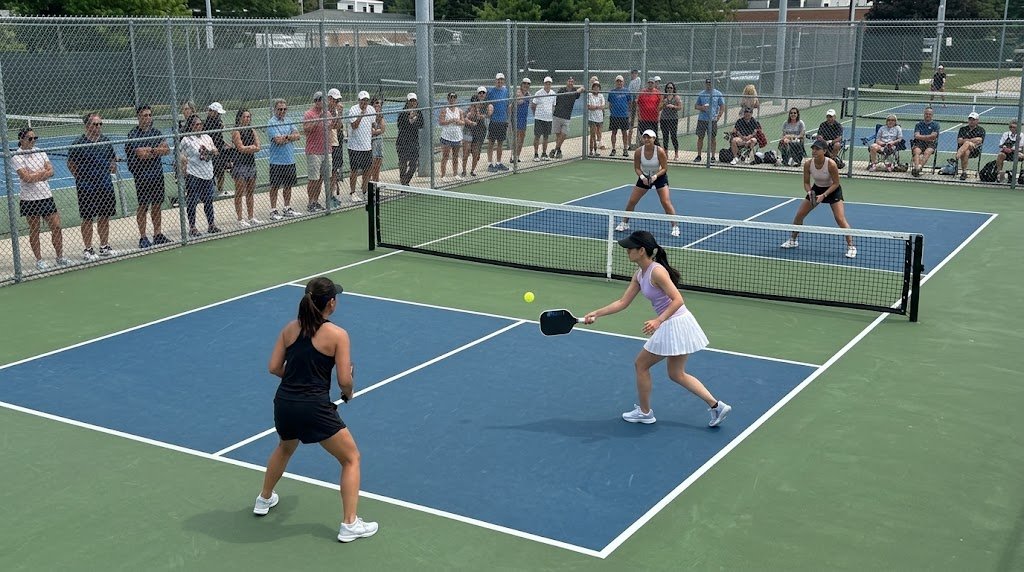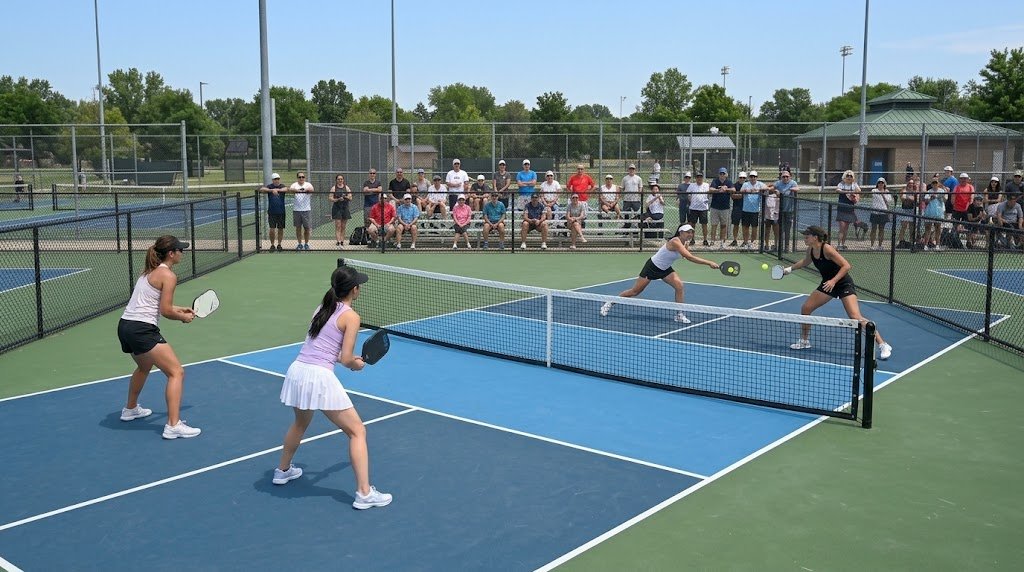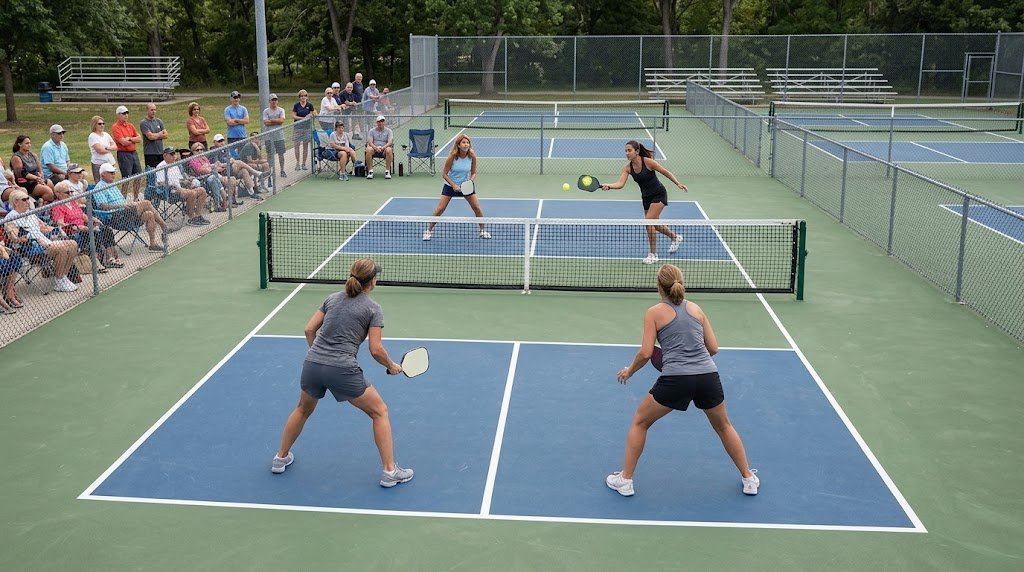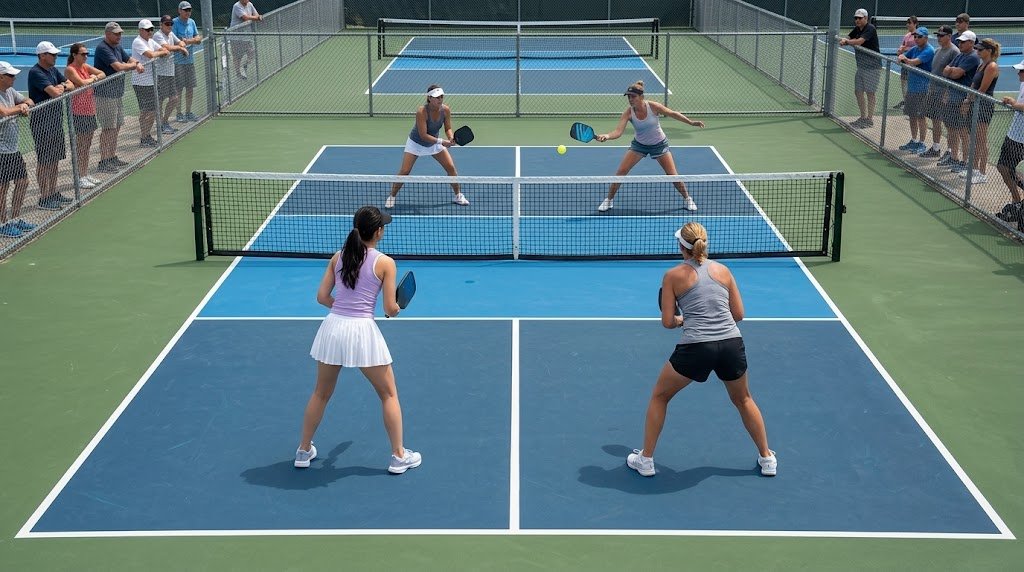


Kara Tran and Amy Li turned the court into a fortress on Sunday, handing Vikki Vander Woude and Gina Ezell an 11–0 shutout in Women's 4.0-4.49 Doubles. The scoreboard didn’t just reflect a win—it announced dominance. With every point, Tran and Li tightened their grip, transforming what could have been a competitive clash into a masterclass in control. No rally was gifted; no error was spared. The margin was total, the message clear.
The pre-match ratings told a story of near parity: Tran (3.531) and Li (3.9) faced off against Vander Woude (3.911) and Ezell (3.704). On paper, the numbers hovered in the same stratosphere. But on the court, Tran and Li operated like a well-oiled machine, each movement synchronized, each shot purposeful. Their synergy didn’t just bridge the rating gap—it erased it. This wasn’t a match decided by individual brilliance, but by collective precision.
Kitchen Control: The Silent battleground
In pickleball, the kitchen—the non-volley zone—is where matches are won or lost. Controlling the line means owning the rhythm. Players who master the non-volley line can force opponents into difficult decisions: attack from deep or risk a fault by volleying illegally inside the kitchen. A legal volley requires both feet to remain behind the line; even a toe crossing the line before contact constitutes a fault. Tran and Li, by all indications, understood this boundary not as a limit, but as a launchpad. Their ability to hover just outside the kitchen, dinking with surgical placement, would have forced Vander Woude and Ezell into reactive positions—always chasing, never dictating.
Dinks, those soft, low shots meant to land just over the net, are the kitchen’s currency. They’re designed to disrupt rhythm, to draw opponents forward and then expose the gap behind them. When executed with variation—speed, spin, depth—they become weapons. A well-placed dink can force a return that’s too high, too short, or too wide, opening the court for the next strike. In this match, the absence of any points for the opposition suggests that Tran and Li may have dominated the dink exchange, turning every kitchen interaction into a setup for their advantage.
Faults and out-of-bounds risks are the silent assassins of pickleball. A single misstep—a ball clipped the tape, a foot dragged mid-volley, a shot sailing long—can flip momentum. In a shutout like this, such errors were either nonexistent or immediately punished. The pressure of staying within bounds, both physically and rule-wise, is immense. Every shot must clear the net, every foot must stay legal. Tran and Li’s flawless execution suggests they treated each rally as a calculation: angle, pace, placement—all calibrated to avoid the margins where mistakes live.
The Anatomy of a Shutout
An 11–0 scoreline is not just a victory—it’s a statement. It says: we were ready, you were not. It reflects a complete absence of vulnerability. No unforced errors. No miscommunications. No lapses in focus. Each game contributed to the cumulative effect: the first game set the tone, the second reinforced it, and the third sealed the narrative. There was no letdown, no complacency. Just relentless execution.
This result also underscores the importance of doubles synergy. Tran and Li didn’t just play together—they moved as one. Their positioning likely followed the classic "one up, one back" or "side-by-side" formation, adapting as the rally evolved. When one moved, the other filled. When one attacked, the other covered the gap. This fluidity is what turns two good players into a great team. Vander Woude and Ezell, despite their ratings, may have struggled to find that same cohesion—perhaps due to unfamiliarity, perhaps due to being out-tacticked.
Beyond the Score
While the scoreline is lopsided, it’s not a reflection of inferior skill—it’s a snapshot of one day, one match, one configuration of form and focus. Pre-match ratings are just that: pre-match. They don’t capture chemistry, mood, or the intangible spark that ignites a partnership. Tran and Li may have found their rhythm at the perfect moment, while Vander Woude and Ezell may have been off their usual stride.
This win doesn’t define the players—it highlights a peak performance. It’s a data point, not a destiny. For Tran and Li, it’s a confidence booster, a reminder that they can dominate when everything clicks. For Vander Woude and Ezell, it’s a wake-up call, a chance to reassess, recalibrate, and return stronger. In pickleball, as in life, shutouts are rare, but they’re also instructive. They show what’s possible when preparation meets execution.
The court may be quiet now, but the echoes of this match will linger—in the minds of the players, in the notes of analysts, and in the expectations of future opponents. Tran and Li didn’t just win. They made a statement. And in pickleball, where every dink and volley carries weight, that’s everything.