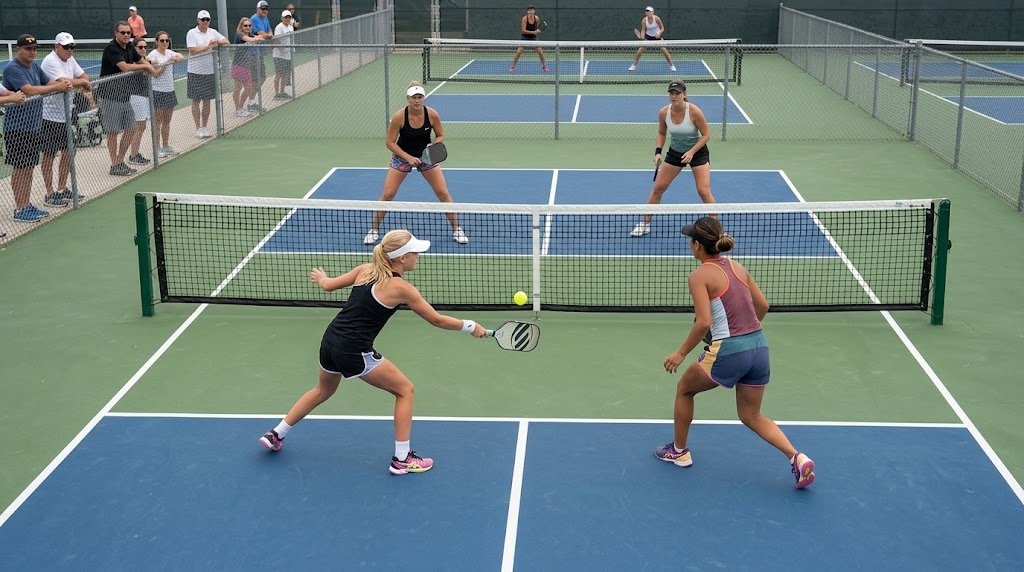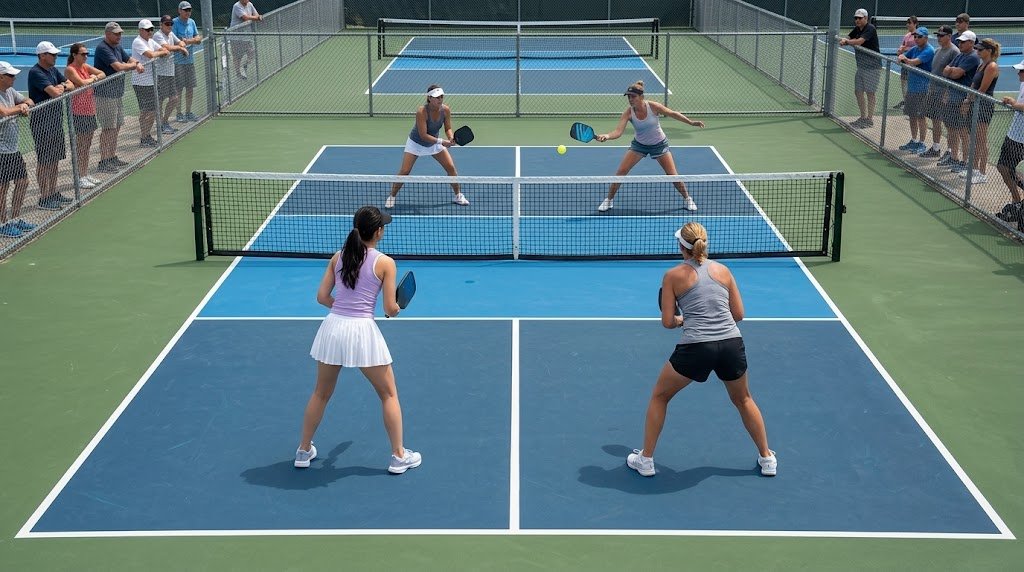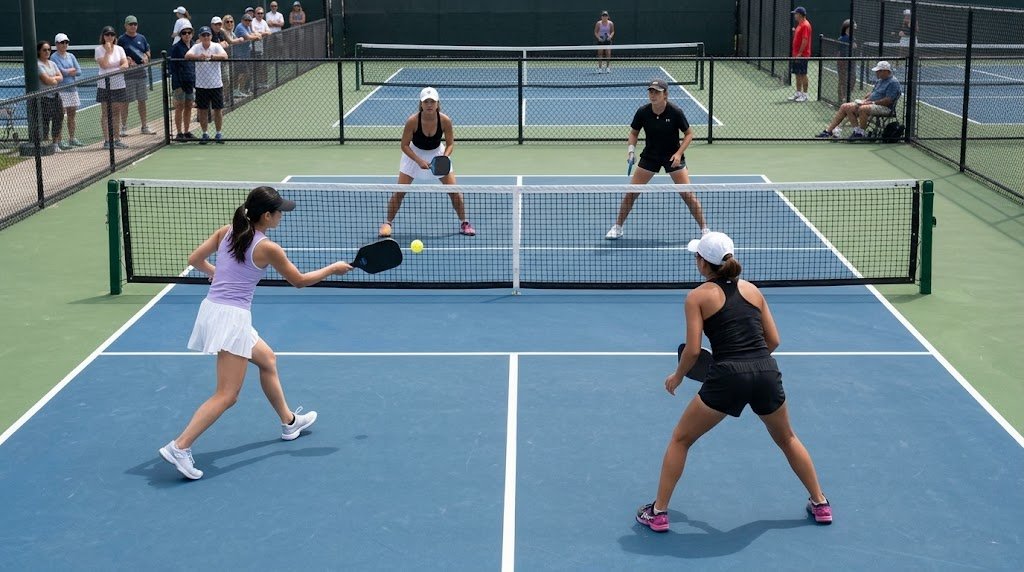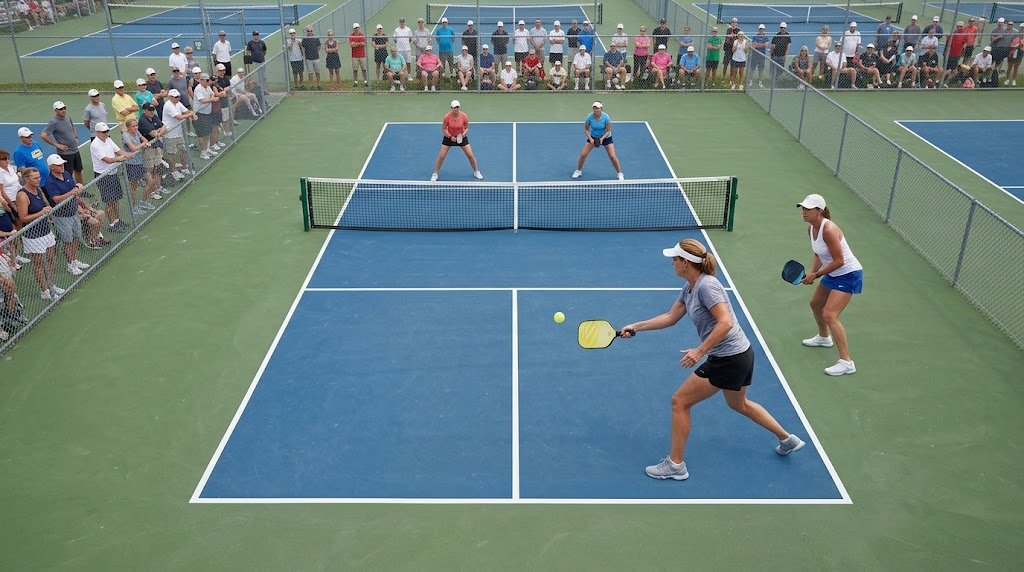

Vikki Vander Woude and Gina Ezell did not need a photo finish. They delivered one in the most decisive shape available, earning an 11–0 victory over Janelle Senden and Grace Malay in the Women’s 4.0-4.49 Doubles event on September 20, 2026.
That clean sheet of points is a scoreboard shutout, not a claim that every rally ended on their side. It is still a commanding result, and in pickleball terms, it reads like a serve that lands in the kitchen and leaves the returner reaching for the fence.
Vander Woude and Ezell collected the only points the box score records. Senden and Malay finished with zero. The 11–0 margin was not a narrow escape disguised as drama; it was the match’s defining fact.
The doubles pairing also brings an intriguing pre-match rating snapshot to the contest. Vander Woude carried 3.803, while Ezell was listed at 3.423. Senden’s pre-match rating was 3.299, with Malay at 3.643.
These figures are snapshots of the players’ listed ratings before the match, not current ratings or predictions about what might happen next. The pairing’s combined pre-match total was 7.226, compared with 6.942 for Senden and Malay, a 0.284 difference on that particular board.
In a 4.0-4.49 event, those numbers place the top-rated player, Vander Woude, within the stated 4.49 ceiling while leaving the rest of the pairing spread across the lower end of the listed range. Ratings can help frame a match, but they do not decide who wins a game. The 11–0 result belongs to the competitors whose names appear on the winning side of the recorded score.
A Shutout With Serious Bite
The numbers create a clean pre-match contrast: Vander Woude held the highest individual listed rating, while Ezell’s figure sat above Senden’s and matched Malay’s. That is enough to make the result feel like a strong statement, but not enough to turn the article into a ratings spreadsheet.
The more useful reading is that the winning team converted the match into a clean, one-sided record. An 11–0 score is a shutout. It does not mean the players never missed, never had a difficult ball, or played 11 rallies. It means the recorded point total was 11 to 0.
That distinction matters because pickleball can be quick, sharp, and deceptively close even when the box score is not. A point can hinge on a soft touch, a disciplined reset, or a simple refusal to make the easy mistake. None of those moments can be assigned to these players from the supplied record.
Kitchen Control and the Out-of-Bounds Line
For players watching the result, the most useful takeaway is positional rather than legendary. Controlling the non-volley line means getting to the kitchen line early enough to influence the exchange and take balls at a comfortable height. It is about court positioning and readiness, not about standing inside the kitchen and swinging.
The kitchen is the non-volley zone. A player may be there for a dink, a reset, or positioning, but cannot volley while inside that zone or from a volley motion that carries into it. That rule does not mean the kitchen is forbidden territory. It means the line between controlling position and volleying illegally is precise.
A controlled dink can pull an opponent forward and open space behind them. A drive can punish a ball that floats too high. A deep return can push the opposing team back and make the next shot less comfortable. Those are general pickleball ideas, not descriptions of what happened in this match.
Out-of-bounds risk is equally important. A ball that clips the sideline or sails long is out, even if it looks playable for a moment. The safest answer is often not the hardest shot, but the one that stays inside the court and keeps the point alive. In a lopsided result, that lesson is easy to miss, yet it is exactly where many points are won or lost.
Straight Games, Clear Finish
The recorded result is a two-game win, completed in straight games. The source does not provide a second score, so there is no additional game to compare or dramatize. What can be said is that the match’s recorded outcome was an 11–0 shutout, with Vander Woude and Ezell taking the points that counted and Senden and Malay finishing with none.
That is not a nail-biter. It is a result with teeth: a team that made the scoreboard do its work and left the losing side with no recorded points. For pickleball fans, the takeaway is simple. Control the kitchen position, keep the dinks honest, respect the boundaries, and never confuse a clean sheet of points with a collection of invented rallies.
Vander Woude and Ezell’s 11–0 line is the headline, but the larger lesson is the one that travels beyond this event: pickleball rewards disciplined positioning, smart shot selection, and the patience to keep the ball in play. In a match where the margin was as clear as the result, that is a winning formula with plenty of bite.