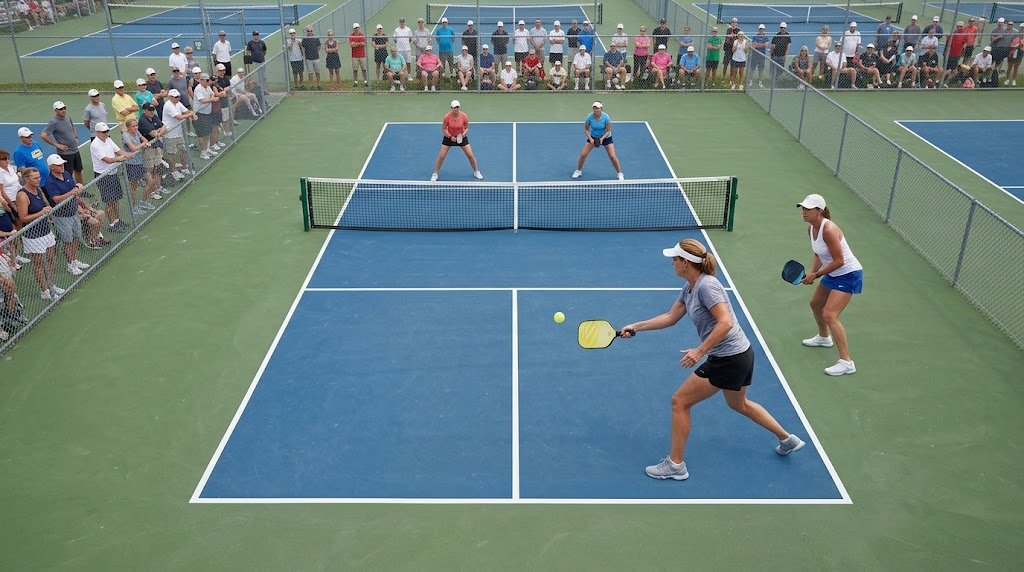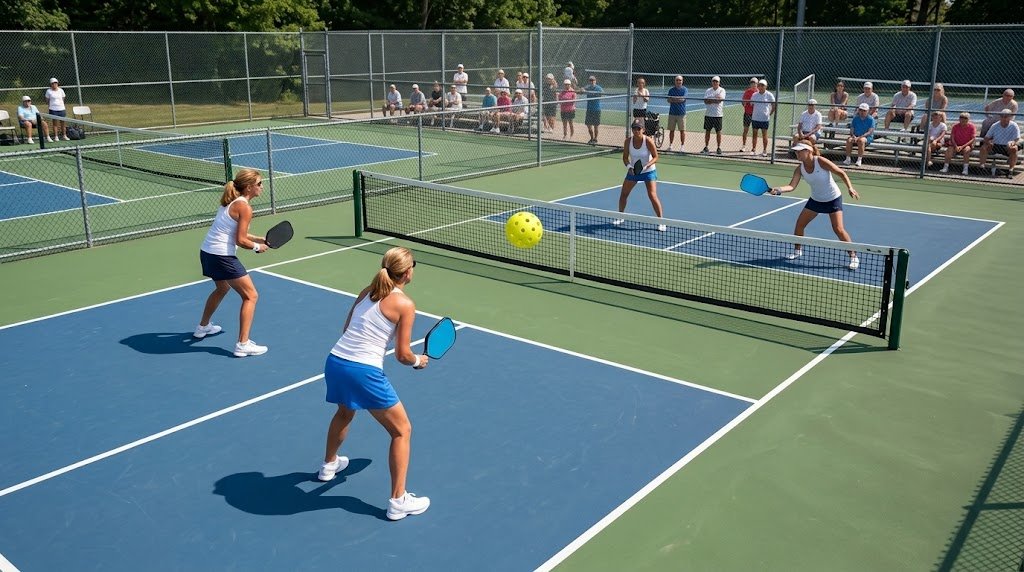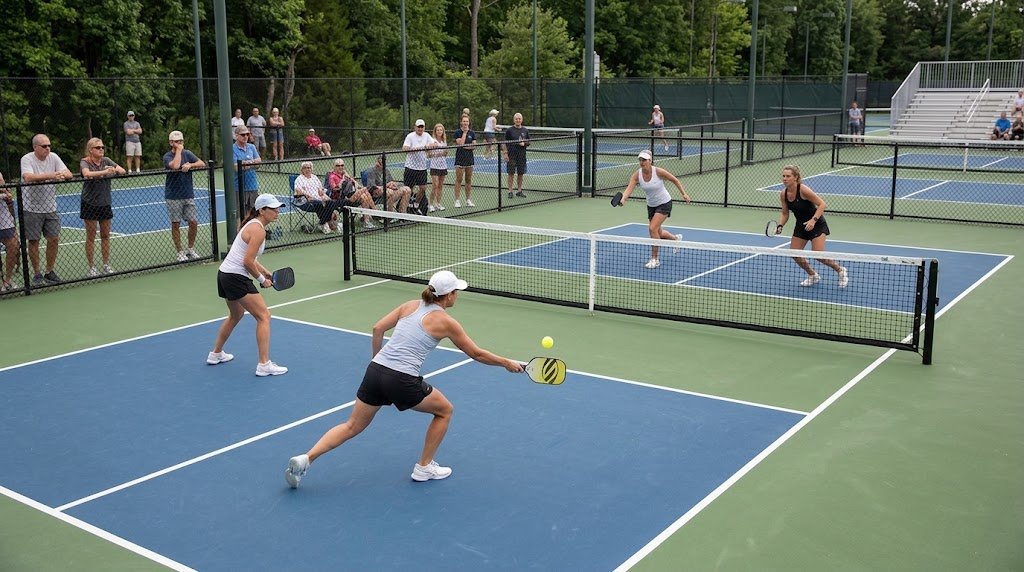
Julie Ree and Debbie Thai turned up the heat in the Women's 4.0-4.49 Doubles, dismantling Nikki Choi and Rebecca Tan 11-4 in a commanding performance that highlighted their sharp net play and consistent serving. From the first serve, the winning duo established control, mixing aggressive drives with soft, unreturnable dinks to keep their opponents guessing. Choi and Tan, despite strong pre-match ratings near 3.8, struggled to find rhythm against Ree and Thai’s relentless pressure, dropping serve early and never recovering the momentum.
The opening game set the tone as Ree and Thai raced to a 5-0 lead, capitalizing on unforced errors and well-placed third-shot drops. Their ability to transition from baseline to net with precision disrupted Choi and Tan’s timing, forcing them into defensive positions where lobs and drives came up short. By the time the score reached 8-2, the match had effectively been decided, though Ree and Thai maintained focus, closing out with a series of controlled volleys and smart court coverage.
While the scoreline reflects a clear advantage, it’s important to note that ratings reflect a pre-match snapshot and do not guarantee outcomes. Ree’s 3.764 and Thai’s 3.441 combined for a balanced, experienced pairing, whereas Choi’s 3.829 and Tan’s 3.81 suggested a formidable challenge on paper—one that didn’t translate to sustained resistance in this encounter. Credit to the winners for executing when it mattered, turning early opportunities into a decisive edge.
Mastering the Kitchen Line
Controlling the non-volley zone remains one of the most critical skills in doubles pickleball. Teams that establish presence at the kitchen line can cut off angles, reduce reaction time for opponents, and turn defense into offense with quick hands. Effective dinking—soft, controlled shots just over the net—forces opponents to lift the ball, creating opportunities for putaway volleys. However, players must stay behind the line unless the ball has bounced; stepping in early to volley constitutes a fault, even if the shot seems harmless. Discipline here separates consistent winners from those who gift points through avoidable mistakes.
Minimizing Risk, Maximizing Pressure
Faults often creep in when players chase low balls or overreach for dinks, leading to pop-ups or netted shots. Similarly, attempting aggressive volleys from behind the line without proper footwork increases the chance of hitting out of bounds. Smart players balance aggression with patience, using third-shot drops to neutralize opponents’ advance and then moving forward in unison. In this match, Ree and Thai demonstrated that balance repeatedly—keeping Choi and Tan back with deep serves and precision drops, then punishing any loose return with decisive volley placement.
The result wasn’t just about power; it was about patience, positioning, and picking the right moments to strike. Ree and Thai didn’t need fireworks to win—they needed consistency, and they delivered it in spades. For Choi and Tan, the loss offers a clear takeaway: even highly rated teams must translate skill into tactical execution, especially when facing opponents who control the tempo from net to baseline. As the scoreboard shows, sometimes the most convincing victories are built not on drama, but on dominance.