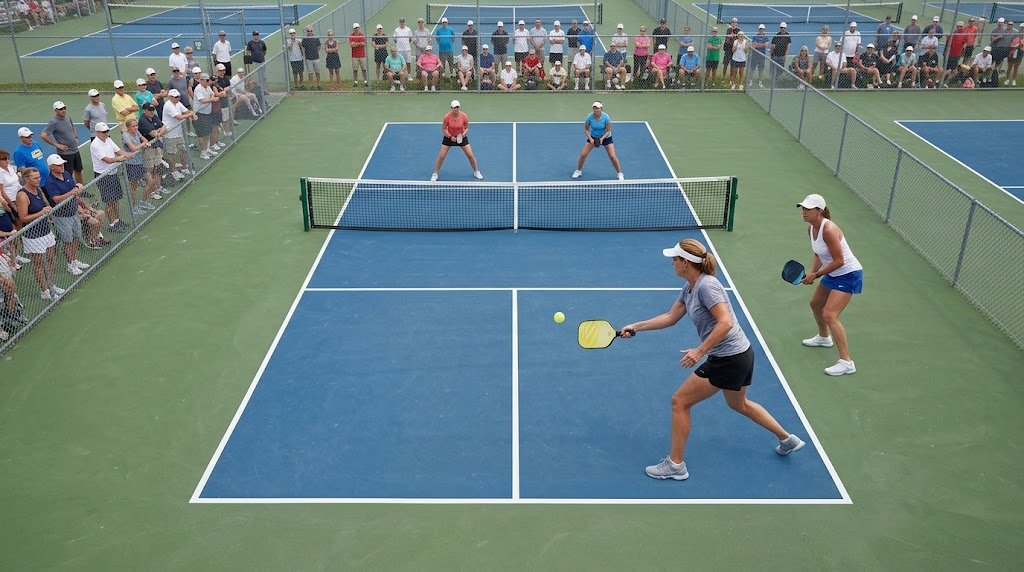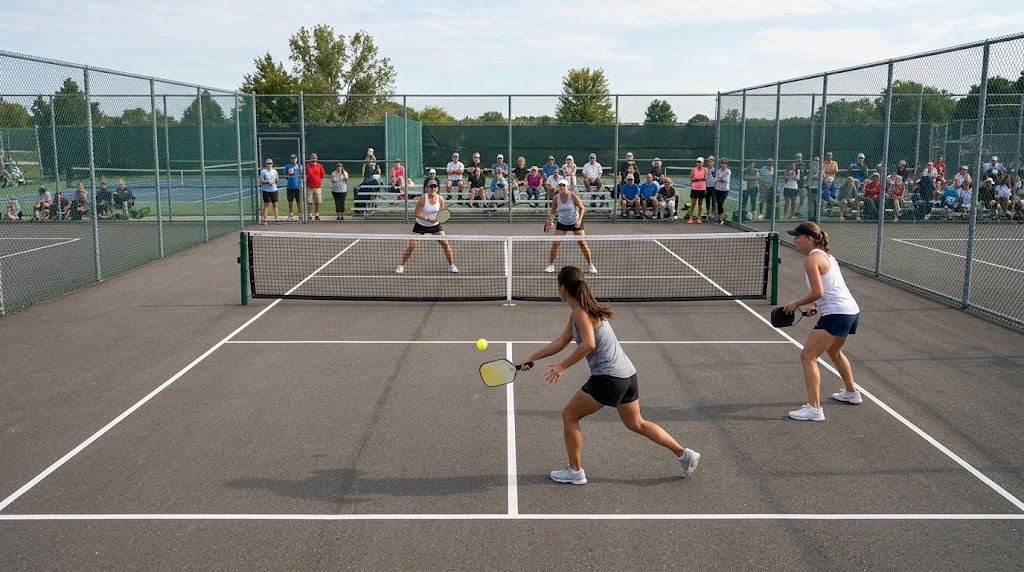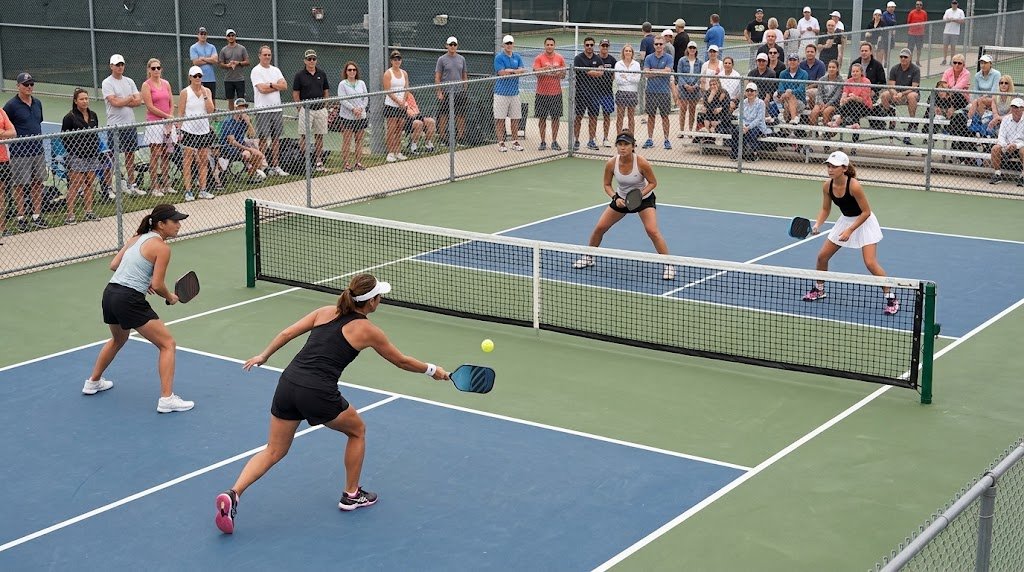

Emmaline Neville and Brooklyn Lee delivered a commanding statement win, defeating Julie Ree and Debbie Thai 11–10 in Women's 4.0-4.49 Doubles on September 20. The result was recorded as a two-game sweep, with the winning side's combined pre-match rating of 7.424 edging past the losing pair's 7.143. On paper, that narrow margin made the court a fascinating chessboard, and the scoreboard confirmed it as a tight contest worth every point.
Rating Snapshot, Not a Crystal Ball
Before a single serve was struck, the pre-match ratings framed a near-equality that rarely stays quiet for long. Neville at 3.748 and Lee at 3.676 brought a balanced duo to the line, while Ree at 3.749 and Thai at 3.394 offered a contrasting mix. Pre-match ratings are a snapshot of form and history, not current ratings or a forecast of future changes. They set expectations, but on a given day the paddles decide what happens next. In a format this competitive, even a single rating point can separate confidence from caution.
The Margin That Made It Meaningful
The 11–10 margin is the kind of gap that keeps both teams honest. Every point carried weight, and the scoring stretched the drama across the whole match rather than handing it away early. A two-game win at this level reads as a straight-games statement, where the winners stayed composed and the losers kept pulling them back. The closeness of the contest meant each shift in momentum mattered, turning what could have been a routine encounter into a genuine test of nerve and consistency.
Doubles Context and Team Dynamics
In doubles, compatibility is as vital as individual skill, and this pairing reflected that truth. Neville and Lee arrived as a synchronized unit, blending steadiness with flair, while Ree and Thai had to solve a new puzzle mid-match. The doubles format magnifies strengths and exposes gaps, forcing partners to communicate, cover angles, and trust each other's positioning. A well-drilled team can outplay a marginally more talented pair simply by moving as one, and this result pointed to that kind of cohesion.
Kitchen Positioning and the Art of the Dink
Winning rallies often comes down to who owns the space around the non-volley line. Controlling that area means being ready to punch volleys at the right moment while staying just outside the kitchen to avoid a fault. Dinks are the quiet weapons of pickleball, soft shots that arc over the net and force opponents to lift, creating openings for the next strike. Executing them well requires touch and timing, and a well-placed dink can turn a rally from a standoff into a statement.
Faults and Out-of-Bounds Risk
Every serve and return carries the risk of a fault or an errant shot, and the line between success and error is drawn in inches. Out-of-bounds shots hand points to the opposition, while stepping inside the kitchen and volleying illegally turns a promising sequence into a gift. Staying disciplined with footwork and contact point makes all the difference, especially when the pressure rises and the scoreboard tightens.
A Satisfying Close and What It Says
For Neville and Lee, the win lands as a clear confirmation of their pairing's strength, even against a highly rated opponent. For Ree and Thai, the 10-point effort shows a team that stayed in the fight and left everything on the court. A lopsided result can feel like a statement, but a 11–10 margin is a reminder that progress, precision, and poise under pressure are what separate the contenders from the rest. In a format this tight, every point earns its place in the story, and both teams wrote memorable chapters on the same stage.