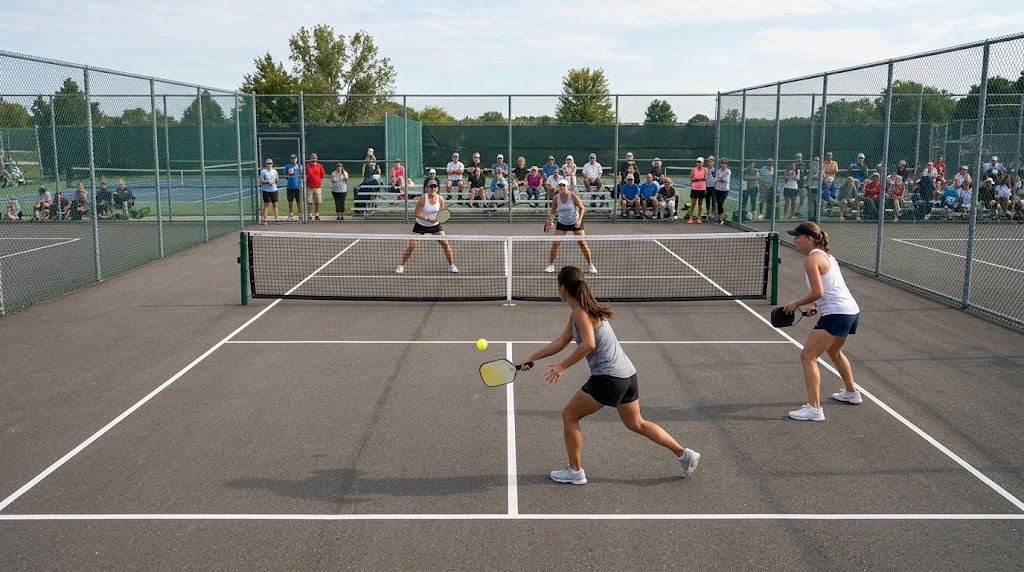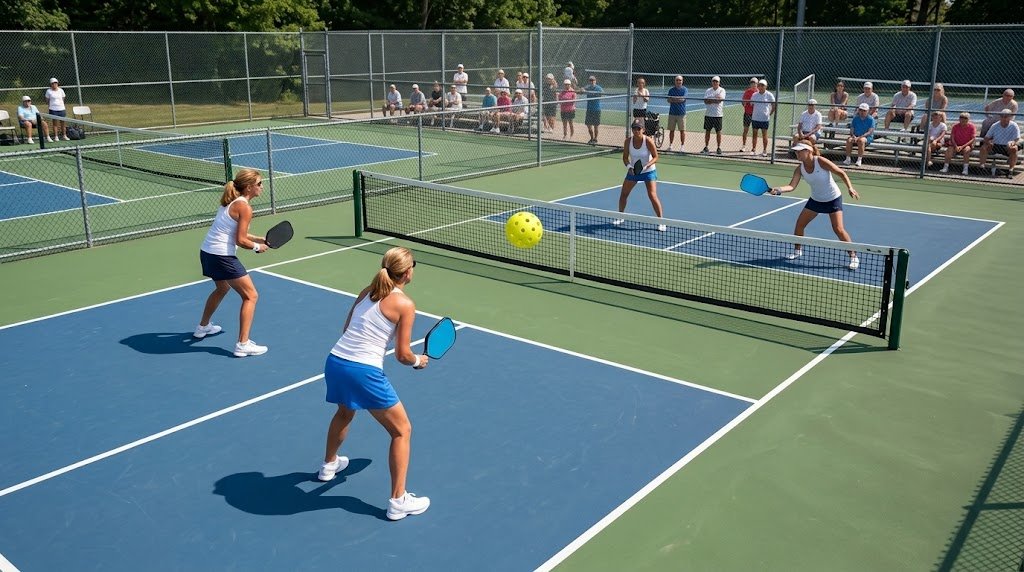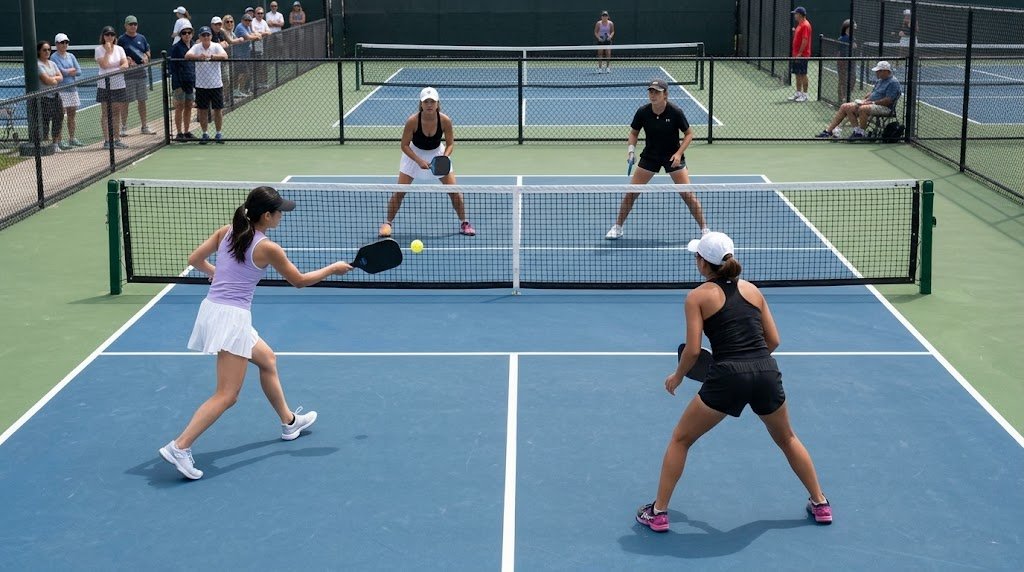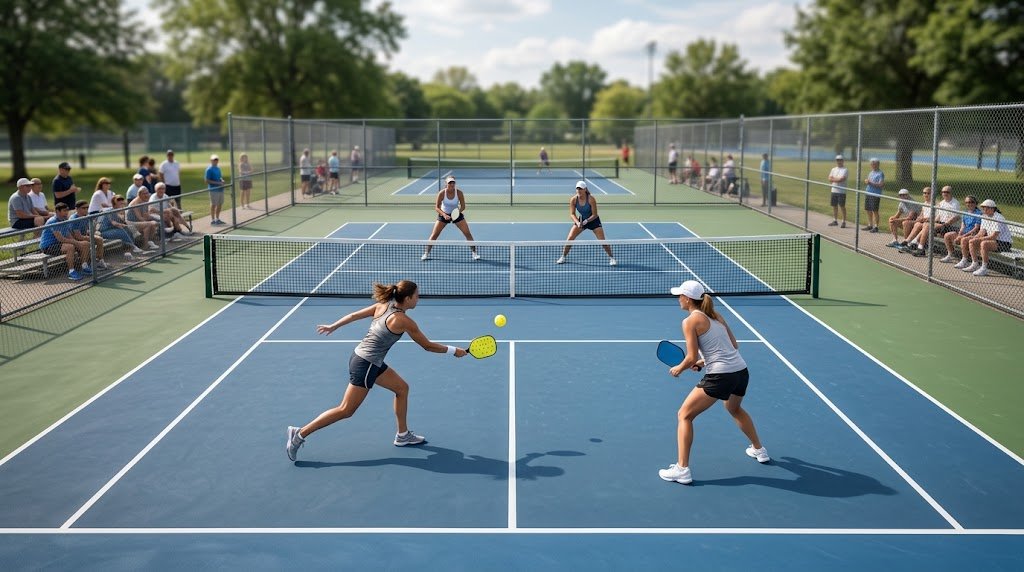

Debbie Beliveau and Barbara Jones turned their Women's 4.0-4.49 Doubles match into a decisive straight-games statement, beating Julie Ree and Debbie Thai 11–1 on Sept. 20, 2026.
The recorded result, attributed through the match data, was a 10-point win. In an 11-point game, that is a scoreboard shutout and a clear statement of control. Ree and Thai won one point; Beliveau and Jones supplied the other 10. There was no late-match suspense in the numbers, so the proper read is commanding rather than dramatic.
The pre-match ratings offered a useful snapshot of the field, not current ratings or a prediction of future movement. Beliveau entered at 4.185 and Jones at 4.010, while Ree checked in at 3.882 and Thai at 3.748. The winners held a 0.303 rating edge when the two pairs were compared by their first-listed players, and a 0.287 edge when the second-listed players were compared. Those figures framed Beliveau and Jones as the higher-rated pairing on paper; the 11–1 result supplied the on-paper-to-scoreboard payoff.
One game, one message
Every point mattered because this was a single-game event. Beliveau and Jones did not need a second game to settle the match, and Ree and Thai did not get a reset opportunity. The winners reached the target score after dropping only one point, completing the job without a scoreline that suggested a tight contest.
That does not make the losing side's one point meaningless. It means the match record shows a narrow foothold inside a much larger victory. The distinction matters: 11–1 was not a nail-biter, and it should not be dressed up as one. It was a clean, forceful win built around a double-digit margin.
Positioning and patience
The kitchen is where doubles often turns from athletic movement into a positioning puzzle. Controlling the non-volley line means establishing a strong, balanced presence near that boundary, ready to answer soft shots and protect angles. It does not mean standing inside the kitchen and smashing everything. A player may volley outside the non-volley zone, but volleying illegally inside the kitchen is a fault. The supplied match record does not document any specific violation, so this is general pickleball analysis rather than a claim about what happened here.
Dinks are the soft-touch shots that make that line valuable. A well-placed dink can keep the receiving team from attacking and can create a more comfortable next ball. Miss the target, though, and the same shot can sit up or drift long, handing the opposition a chance to finish the point. Out-of-bounds risk rises when players chase extra pace or angle instead of choosing a safe target.
In any doubles match, the best kitchen position is usually the one that keeps both partners connected: neither player should be so wide that the middle opens, and neither should be so aggressive that a foot-fault question enters the play. That general principle helps explain why line control is so valuable, but it does not identify a particular rally, fault or tactic from this match.
What the result says
The doubles-team context sharpened the win. Beliveau and Jones combined two pre-match ratings above 4.0, while Ree and Thai arrived below that mark. The pairing did not merely outlast its opponents over several games; it finished the only game with room to spare.
The 11–1 scoreline also kept the historical snapshot from becoming a forecast. Pre-match ratings describe the players at one point before play; they do not guarantee a result, and one match does not establish a permanent hierarchy. What this result does establish is simpler and more immediate: Beliveau and Jones converted their higher-rated starting point into a 10-point margin, while Ree and Thai left the court searching for answers after a single-game loss.
For the winners, the performance was a satisfying blend of preparation and execution. For the challengers, the lone point was proof that the game was not untouched, even if the broader scoreboard told a dominant story. In a sport where the smallest margins can decide a rally, this one was decided by a margin large enough to speak for itself.