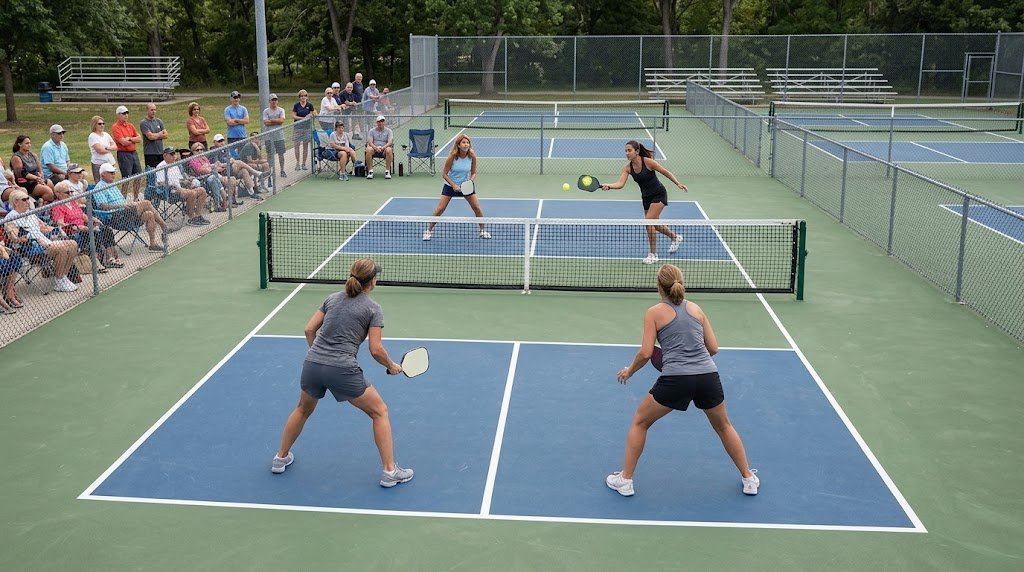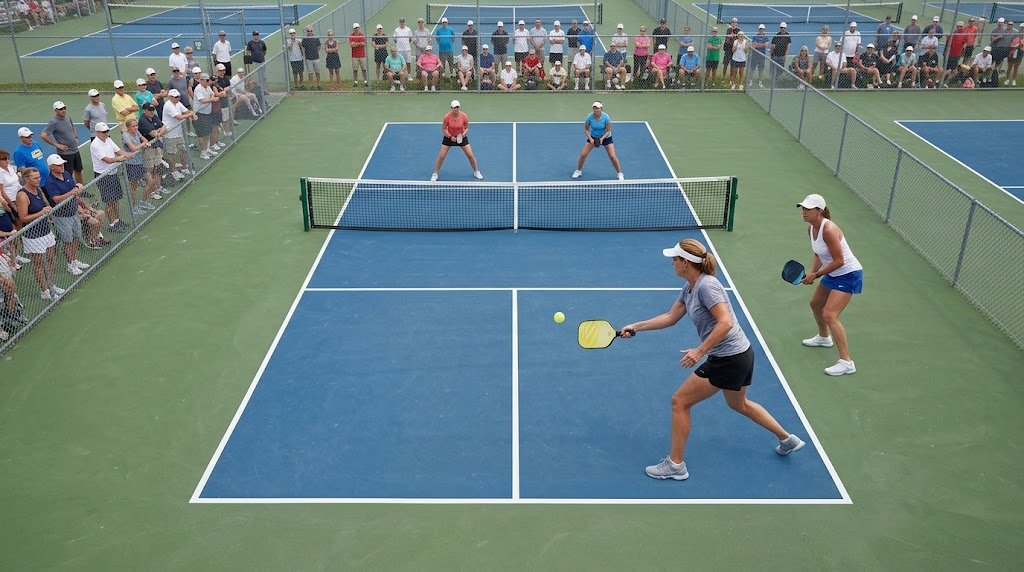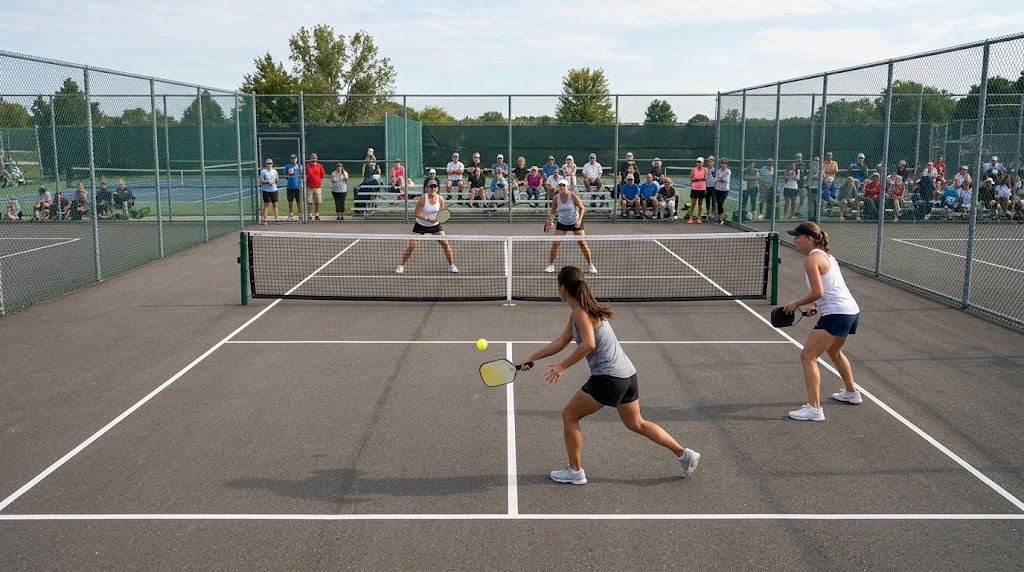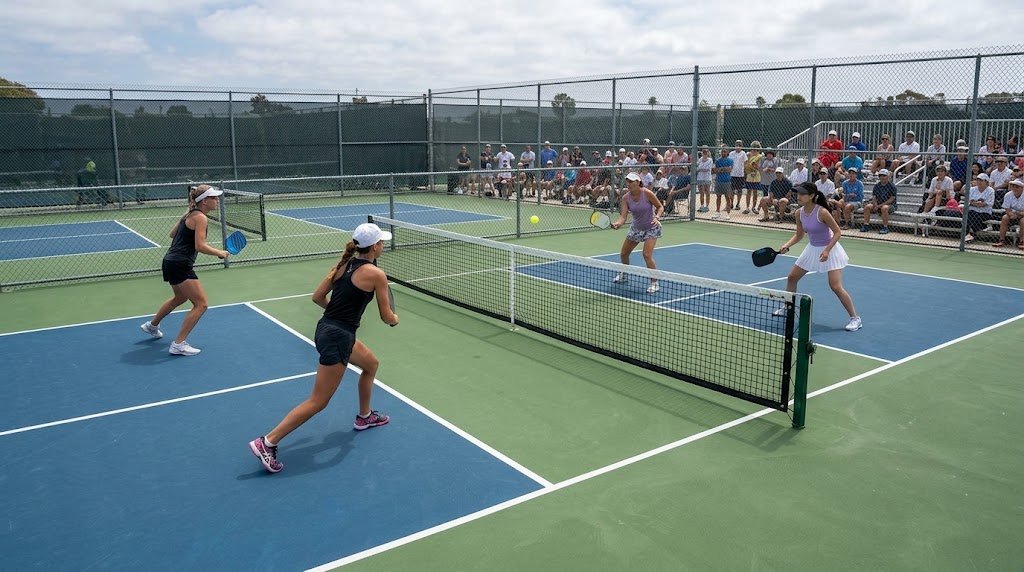


The scoreboard at 11–6 does not tell the whole story, but it certainly sets the tone: Kara Tran and Amy Li played with the kind of steady dominance that leaves little room for argument in Women's 4.0-4.49 Doubles. While pre-match ratings can offer a snapshot of player strength, they never dictate the outcome on the court. Here, Tran (3.58) and Li (4.00) simply executed better, closing out the recorded result against Emmaline Neville and Brooklyn Lee, who finished with a score of 6. For Tran and Li, this straight-games victory serves as a confident entry into the season, a reminder that adaptability and pace control are just as vital as raw power.
Setting the Table
In pickleball, the first few points of a match are often about reading the room, or rather, the court. The opposing pair, led by Neville (3.80) and Lee (3.728), clearly established a competitive presence early. Holding a score of 6 is no small feat; it indicates a team that was able to maintain rhythm and find pockets of success despite facing a high-contrast opposition. Yet, the final margin reveals that the Tran-Li pair managed to shift the momentum decisively. They didn't just win; they controlled the tempo, ensuring that the momentum of the match stayed firmly in their hands. This is the hallmark of a team that understands the difference between surviving a rally and owning it.
Mastering the Kitchen Zone
When analyzing any close or competitive doubles match, the kitchen—or non-volley zone—becomes the tactical heartbeat of the game. Controlling this area is less about aggression and more about precision. A key general principle is that players must stop before stepping into the kitchen to hit a shot that touches the net or bounces off the paddle. If a player volleys inside that zone, it is an immediate fault, regardless of whether the ball is in or out.
This distinction is critical for players looking to improve their consistency. Simply waiting for the ball to drop too deep can lead to rushed volleys and unforced errors. The difference between a controlled rally and a chaotic scramble often hinges on a player’s ability to respect the 7-foot line. By maintaining proper positioning, teams can keep their opponents off balance, forcing them to hit difficult angles from behind the line. While we cannot comment on specific footwork errors in this match, the result suggests that the winning pair managed these nuances with superior discipline.
Dinks and Danger Zones
A common question in doubles analysis is the role of the dink. The soft, floating shots that keep the ball low over the net are not just defensive maneuvers; they are offensive tools. A well-placed dink forces the opponent to move off their feet, widening their stance and making their next volley vulnerable. However, the risk of an out-of-bounds shot increases when players rush a dink under pressure.
In a match of this nature, where one team held a significant scoring edge, it is likely that the Tran-Li duo was able to afford a higher risk with their shots, confident in their ability to recover from minor errors. Conversely, the opposing team had to play a more calculated game, knowing that a single misjudgment on a dink could hand over points without the pressure of a break. This dynamic illustrates why the 11–6 scoreline is not just a matter of who hit the ball harder, but who managed the pressure of the net game most effectively.
Final Perspective
This result is a clear statement of intent for Tran and Li. Entering the match with a combined rating slightly below their opponents on paper, they proved that historical data is just a starting point, not a finish line. Their ability to close out the game suggests a team that thrives on execution over expectation. For Neville and Lee, the 6 points earned are a foundation to build upon, offering valuable data on how to counter such dominant play in future encounters. The court has spoken, and in this instance, the message was one of clean, commanding performance. As the season progresses, this kind of straight-games win provides the momentum needed to face tougher opposition, serving as a reminder that in pickleball, consistency is the ultimate weapon.