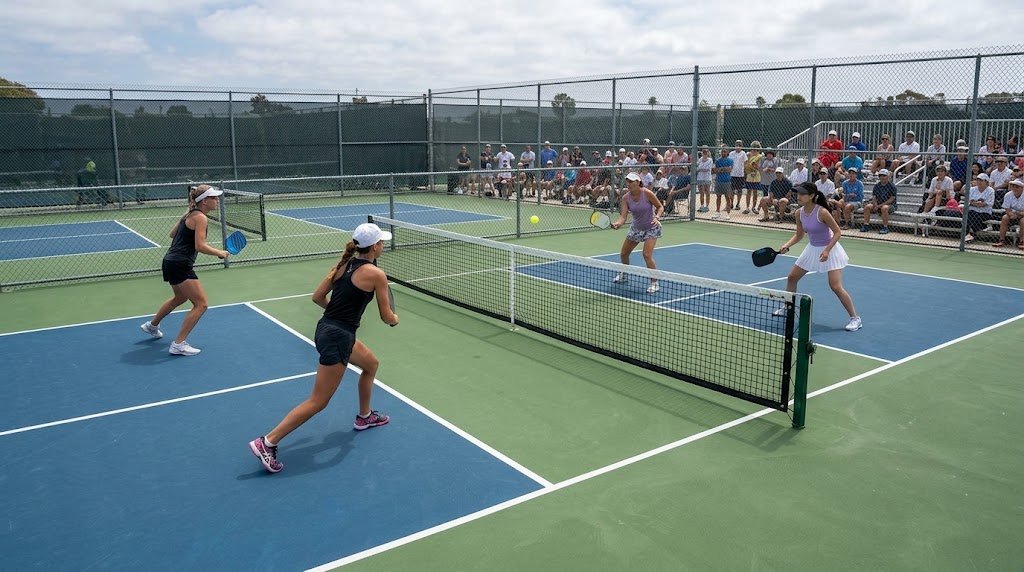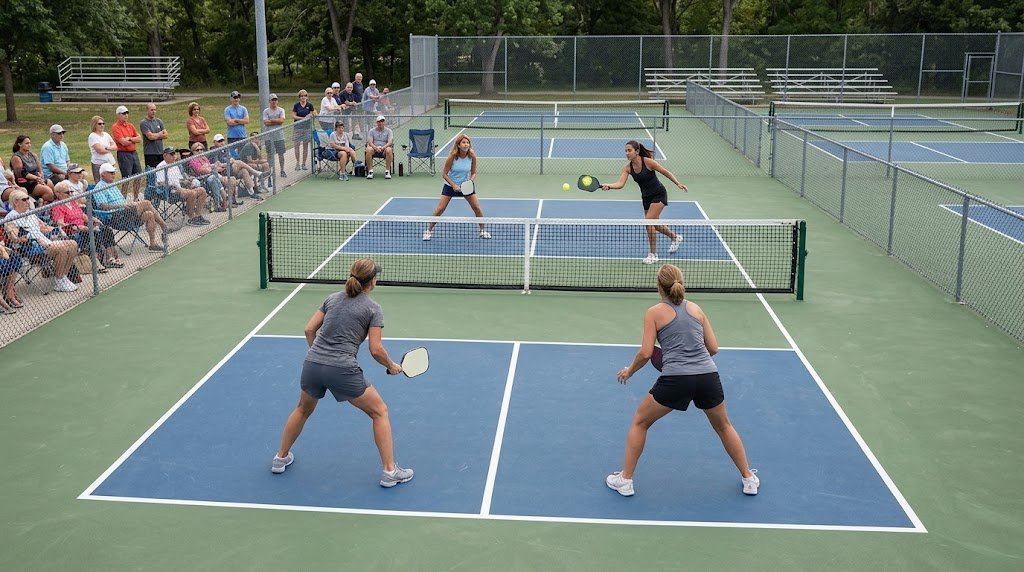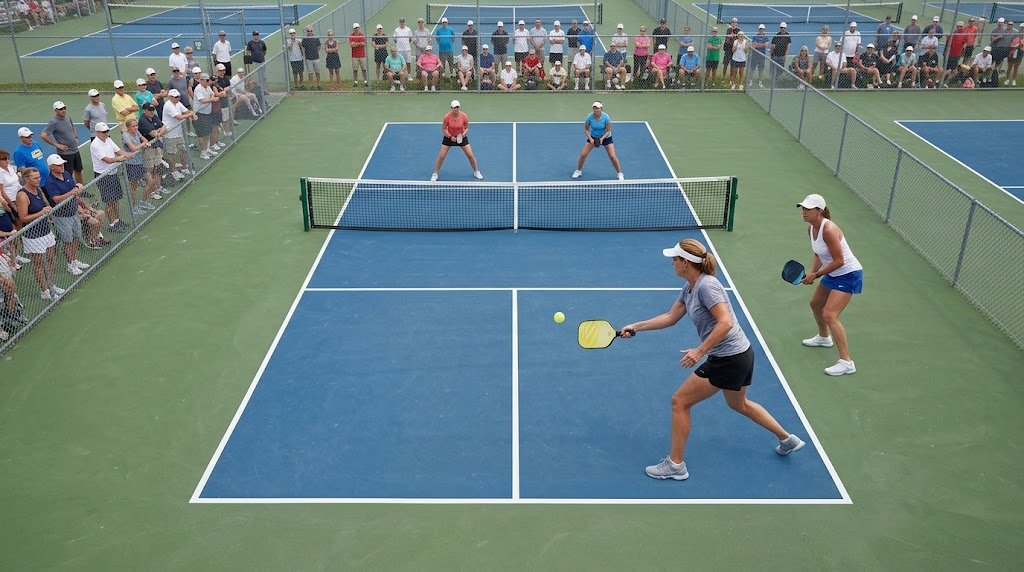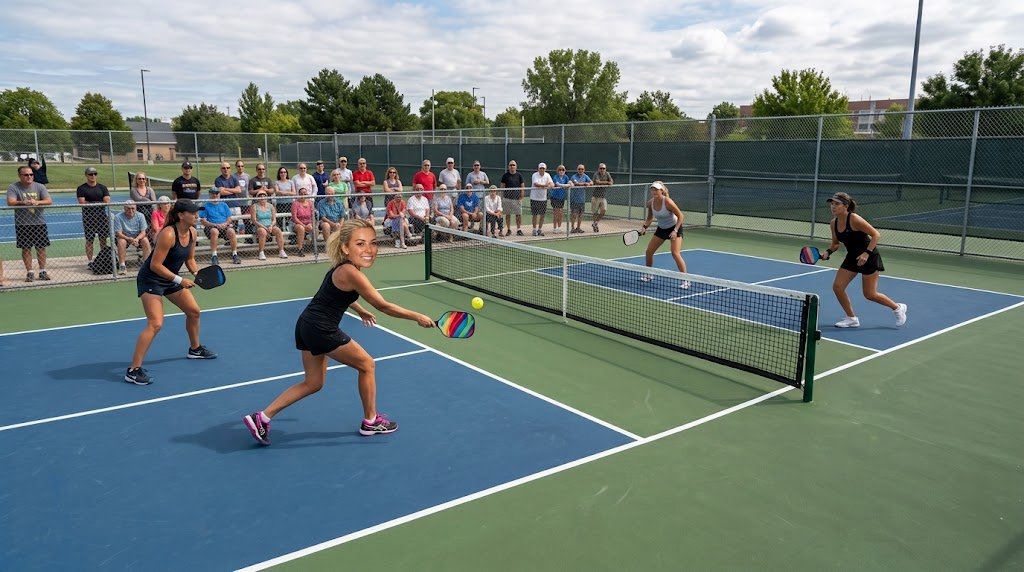


The bracket just got a whole lot more interesting. In a recorded result from the Women's 4.0-4.49 Doubles event on September 20, 2026, the duo of Emmaline Neville and Brooklyn Lee secured a decisive straight-games victory over Debbie Beliveau and Barbara Jones. The scoreboard tells a story of immediate momentum and sustained pressure, finishing with a final tally of 11–7. For the losing pair, this result underscores the razor-thin line that separates the 4.0 tier from the established 4.5 bracket, but for Neville and Lee, it is a significant step in their competitive narrative.
A Snapshot of Potential
To understand the weight of this 11–7 margin, one must look at the pre-match ratings that set the stage for this encounter. Debbie Beliveau entered with a rating of 4.13, while her partner Barbara Jones held a 3.951. These are solid numbers that suggest seasoned experience and consistent performance within the upper echelons of the 4.0 level. On the other side of the net, Emmaline Neville and Brooklyn Lee came in with pre-match ratings of 3.781 and 3.709, respectively.
On paper, the data suggested a competitive match where experience would likely counterbalance raw aggression. Yet, the single-game format of the recorded result leaves no room for adjustment or redemption. This was not a best-of-three affair where a shaky first game could be erased by a rally-heavy second. It was a pure test of immediate execution. The fact that Neville and Lee took the game by four points indicates they did not just win; they dominated the key moments of the rally exchange. The gap between their entry ratings and the outcome serves as a reminder that current form often overrides historical averages in the fast-paced world of pickleball doubles.
Reading the Rhythm
An 11–7 scoreline is not a chaotic blowout, but it is a commanding statement. It suggests that the winning pair established a rhythm early and maintained control throughout the points. In this tier, where the margin for error is measured in millimeters, a four-point cushion implies that the opponents, Beliveau and Jones, likely faced consistent pressure that limited their ability to construct extended rallies. While we do not have play-by-play details of specific rallies, the scoring margin points to a match where the winners were able to dictate the pace.
When a match ends in straight games, the interpretation is straightforward: one team was able to execute their game plan with less error than the other. The psychological pressure of knowing the match is on the line from the start can intensify decision-making. For the lower-rated team, the victory likely stems from a willingness to take calculated risks that forced errors from their opponents, rather than relying on sheer consistency.
The Kitchen Debate
Regardless of the specific tactics used in this recorded result, the architecture of this match undoubtedly revolved around the kitchen. The non-volley zone, often colloquially called the kitchen, is the most critical strategic space in pickleball. Understanding its rules is the difference between a competitive shot and a game-ending fault.
Controlling the non-volley line is an art form. It involves positioning yourself where you can intercept dinks—soft, gentle shots that float over the net—or advance to the net to put the opponent on the defensive. However, there is a distinct legal difference between standing near the line and stepping into the zone illegally. If a player steps into the kitchen and hits a ball before it bounces, it is a fault. This is known as volleying illegally inside the kitchen. It does not require touching the ball with a toe; the entire body, including clothing, must remain outside the lines when striking a volley.
For pairs like Beliveau and Jones, whose ratings suggest they have spent time in this zone, the risk of out-of-bounds errors is a constant calculation. When hitting at the ceiling of the net to drive opponents back, the slight dip in the ball’s trajectory can send it past the back boundary. General analysis suggests that players must constantly weigh the power of a drive against the risk of pushing the ball out of bounds. In a 11–7 match, those inches of judgment likely tipped the balance in the final several points.
This result stands as a clear indicator that the women's doubles division is crowded and unpredictable. Neville and Lee have proven they can compete at the highest level of the 4.0 bracket, and their opponents have been given a clear assignment for future meetings: tighten the kitchen positioning and reduce unforced errors. The pickleball ladder is steep, but it is also wide enough for upsets, and this match proved just how wide.