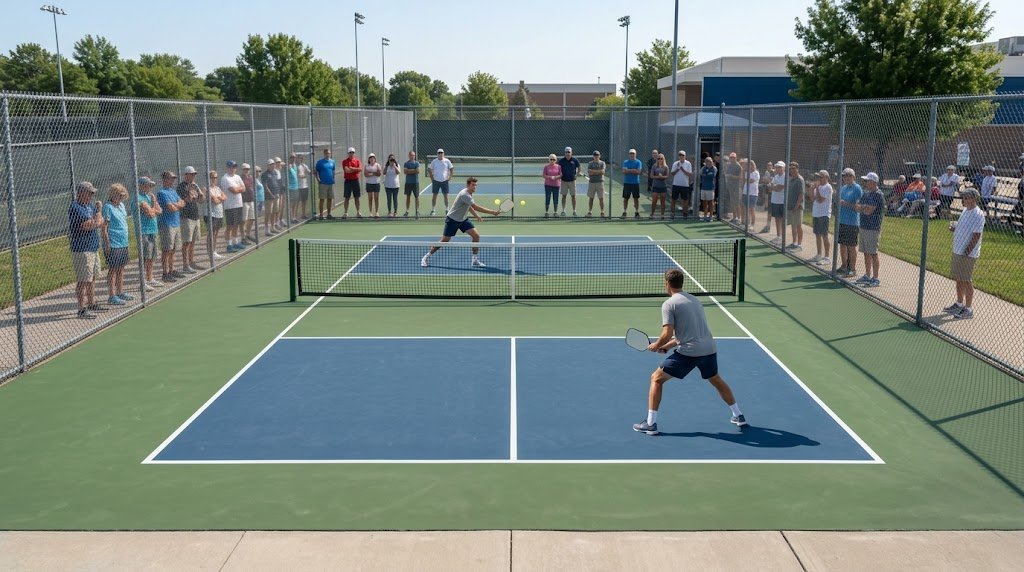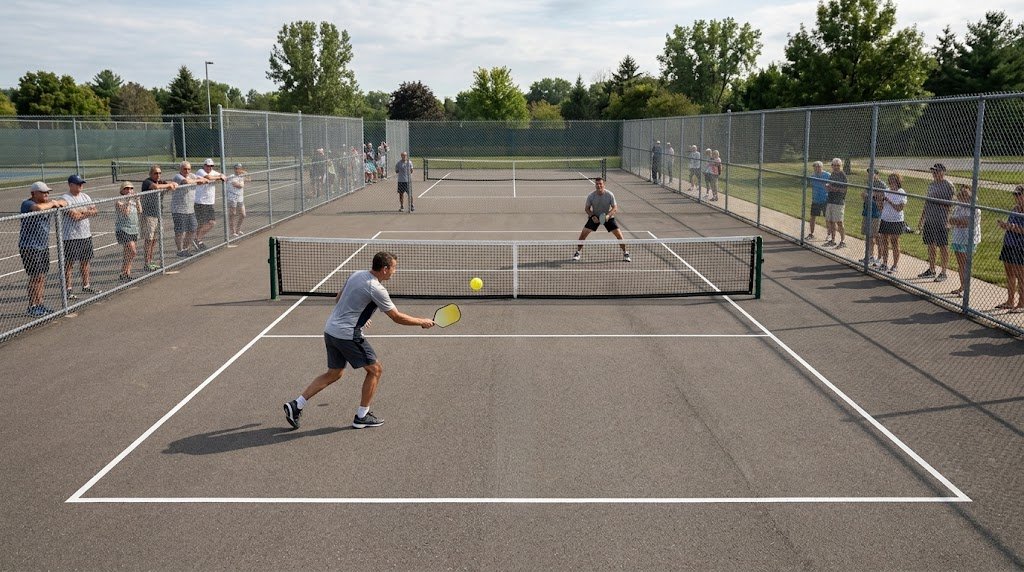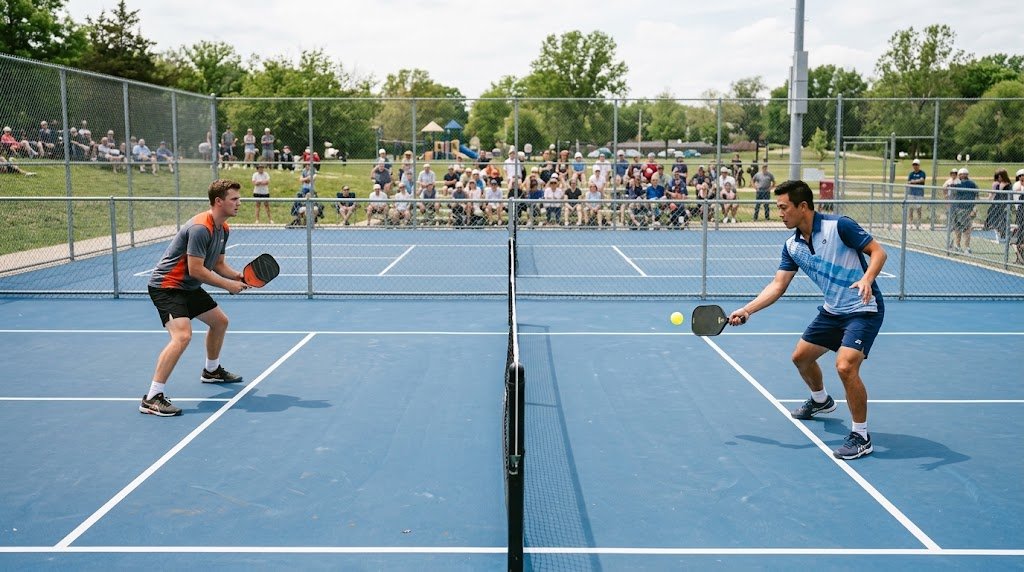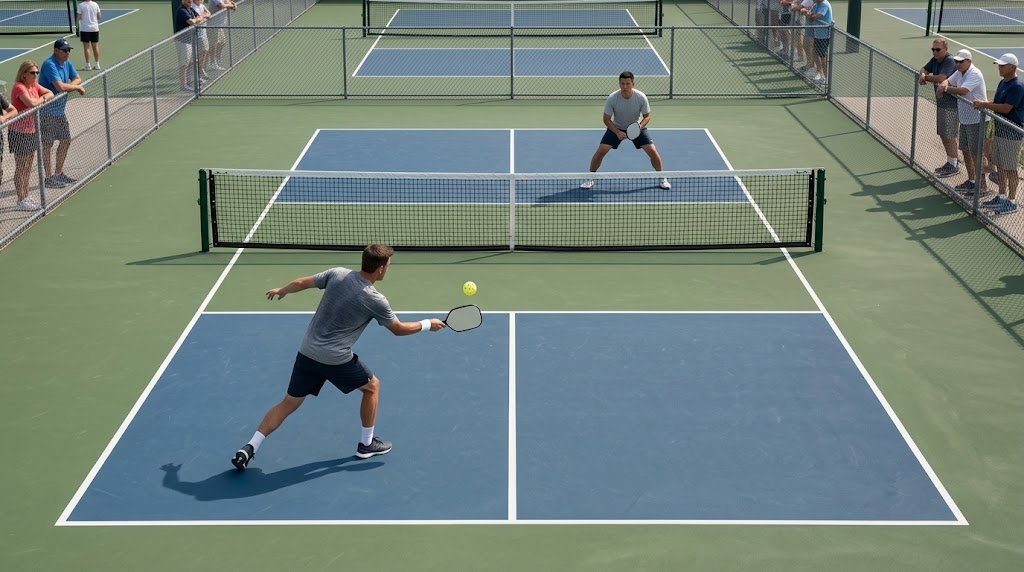
Alan Kim entered the WPA Long Beach Open - Open Men's Singles with a measurable edge, and he converted it into one of the most commanding scorelines of the day. When the recorded game ended 11–1, the margin spoke with mathematical clarity: Kim's pre-match rating of 4.135 sat comfortably above Brock Beamish's 3.968, and the gap showed up on the scoreboard. For a singles draw built on precision and pace, this was a statement that the higher-rated player did not just win but overwhelmed. The one documented game stands alone as a decisive result, offering a vivid portrait of how elite-level margins can open wide when confidence and calibration align.
The Rating Gap Made Visible
Pre-match ratings are snapshots, not forecasts, yet they framed this matchup before the first serve. Kim carried the higher mark, a 4.135 that signaled established consistency at the top tier of the amateur-to-pro spectrum. Beamish, listed at 3.968, remained a credible competitor whose presence justified the matchup on paper. Still, more than three points separated them on the rating board, and in a format where every point compounds, such margins tend to widen rather than shrink once rhythm takes hold. What unfolded was a performance that gave the scoring margin real texture rather than leaving it abstract.
Eleven and the Art of the Statement Win
An 11–0 result demands attention, and Kim delivered it with a clinical display that never needed embellishment. In singles, where each player covers the full width of the court alone, sustaining an error-free run at this level requires extraordinary focus. The recorded game ended with straight-set finality; there was no second contest needed, no suspense about whether momentum might turn. Kim's 11–1 output against Beamish's single point painted a picture of a player operating at full throttle while keeping the return game firmly contained. The word shutout applies cleanly here, and it honors the achiever without diminishing the opponent's effort.
Reading the Kitchen From the Sideline
Even without access to rally-by-rally data, a result like this naturally raises questions about how points are built. General pickleball analysis offers useful context. Kitchen positioning sits at the heart of modern play: controlling the non-volley line puts a player in position to intercept short balls and apply pressure, while stepping inside that line to volley constitutes an illegal kitchen fault. Understanding that boundary distinction separates smart net play from avoidable errors. Dinks function as the patient side of the sport, using soft arcs to draw opponents forward and create openings. Out-of-bounds risk compounds on every long rally, because the farther a ball travels, the narrower the margin becomes between a living shot and a fault. These principles remain universal observations, not attributions to either player on this day.
A Result That Sets the Tone
The WPA Long Beach Open - Open Men's Singles rewards forms that translate preparation into presence, and Kim's 11–1 finish did exactly that in the only recorded game. Beamish's 3.968 rating reflected genuine capability, but Kim's 4.135 proved the better match for this occasion, and the scoring margin confirmed it without ambiguity. For fans following the event, this singles result offers a clear reference point: when rating and execution move together, the lead can snowball quickly and stay snowballed. The evening belonged to Kim, and it did so with the kind of emphatic clarity that lingers well beyond the final score.