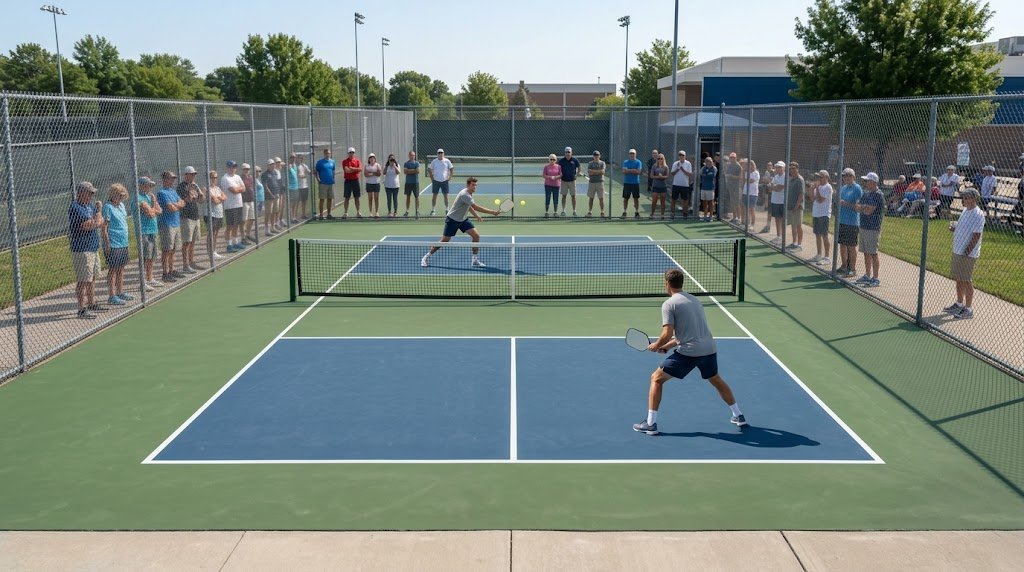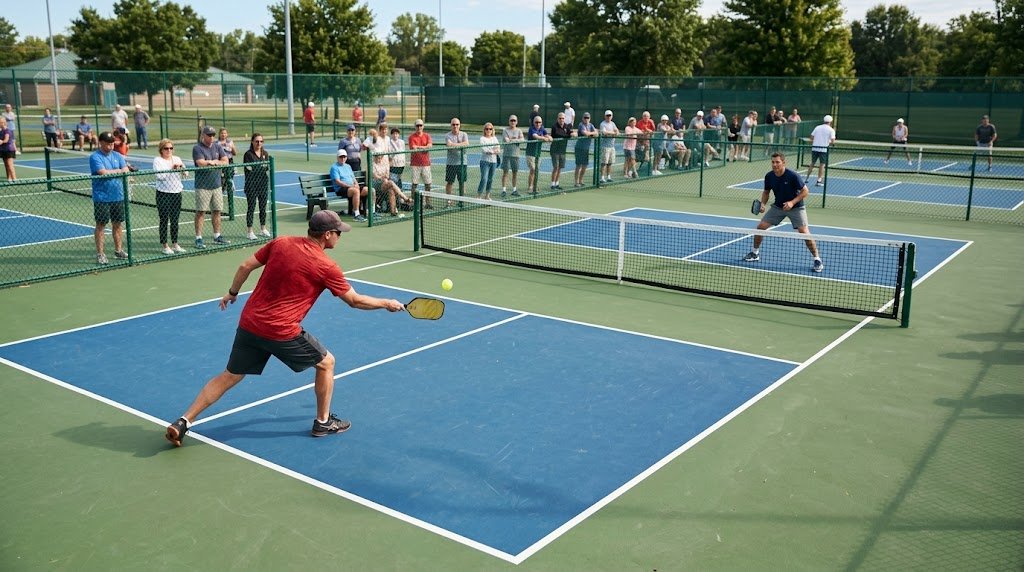
Alan Kim came ready to dominate at the WPA Long Beach Open, and he delivered just that. Facing Brandon Freed in the Open Men's Singles bracket, Kim turned in a commanding 11–1 victory that left little doubt about who controlled the pace from the first serve. The scoreline reflects more than just points—it signals a player in sync with his game, executing with precision and purpose.
Kim’s pre-match rating of 4.167 suggested he entered as the favored competitor, and he validated that expectation with a performance marked by consistency and control. Freed, rated 3.697, fought for every point but struggled to find rhythm against Kim’s steady pressure. The single point Freed earned came late in the game, a hard-fought rally that briefly interrupted Kim’s momentum—but it was merely a footnote in an otherwise dominant display.
What stood out was Kim’s ability to dictate exchanges without overextending. He kept the ball low, forced Freed into defensive positions, and avoided unforced errors that could have invited a comeback. While no specific rallies are recorded, the lopsided margin implies Kim maintained superior court positioning and shot selection throughout. His serve was effective, his returns aggressive, and his transitions smooth—hallmarks of a player who understands how to win not just points, but the psychological edge.
Kitchen Command and Smart Net Play
In pickleball, controlling the non-volley line often decides close matches—and in this one, it may have decided the outcome before the midpoint. Staying just behind the kitchen line allows players to cut off angles, react quickly to dinks, and volley with authority without risking a fault. Stepping into the zone to hit a volley, however, is illegal—a distinction Kim appeared to respect, choosing instead to pressure Freed with placement rather than reckless aggression.
Dinks, when used effectively, can neutralize power players and extend rallies on favorable terms. Though we don’t know how many dinks were exchanged, Kim’s ability to win points decisively suggests he wasn’t relying on prolonged soft games—but when he did engage at the net, he likely did so with patience and precision. Avoiding faults, especially foot faults on serves or illegal kitchen volleys, keeps pressure on the opponent and minimizes self-inflicted setbacks.
Reading the Score: What the Margin Tells Us
An 11–1 result isn’t just a win—it’s a declaration. In singles play, where every point rests on one player’s shoulders, such a margin indicates sustained superiority. Freed managed to stay in the game long enough to score once, a testament to his resilience, but Kim answered each challenge with another point, never allowing doubt to creep in.
Each game contributes to the narrative, and in this single-game match, the progression matters. Early points likely set the tone, with Kim asserting control through deep serves and aggressive third-shot drives. Midway, Freed may have found brief success—earning his lone point—but Kim responded with a run that sealed the outcome. There were no comebacks, no dramatic reversals—just steady, unyielding advancement toward victory.
This wasn’t a match defined by flash or controversy. It was defined by execution. Kim didn’t need to invent brilliance; he simply played his game better than his opponent could handle that day. For Freed, the loss offers a clear benchmark: competing at this level requires not just skill, but the ability to withstand relentless pressure.
As the tournament continues, Kim’s performance sends a message—to rivals, to observers, and to himself: he’s not just participating. He’s arriving.