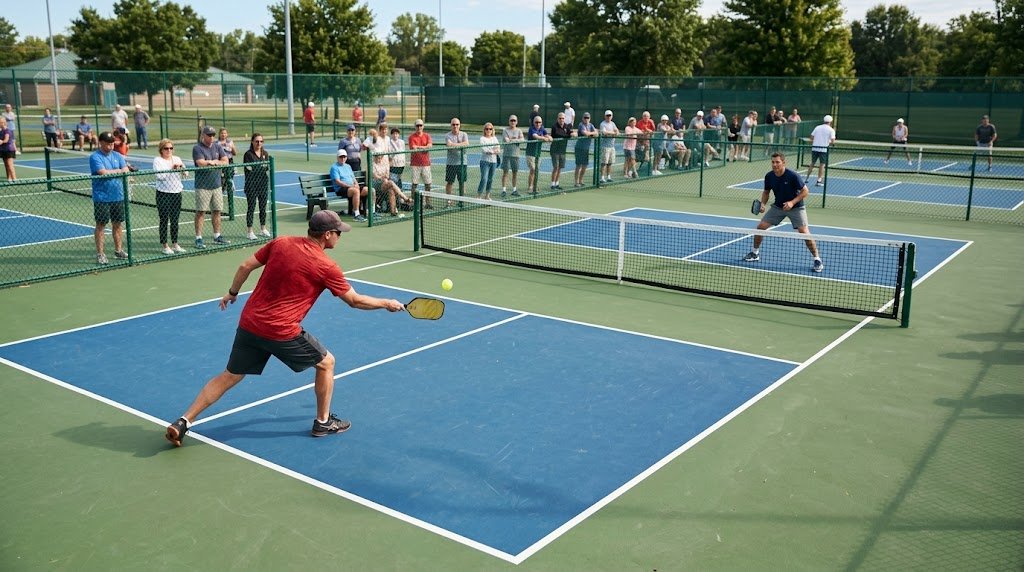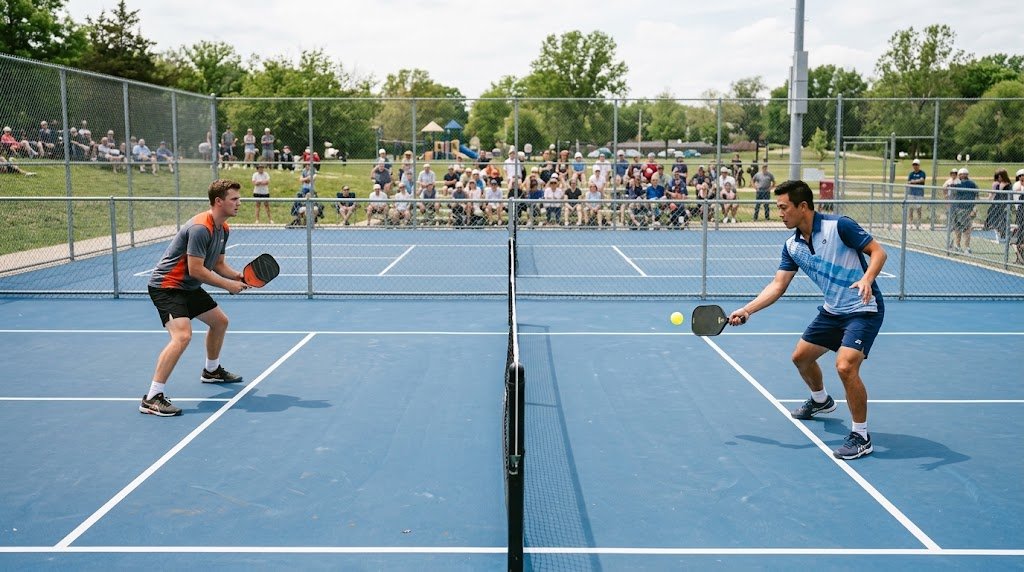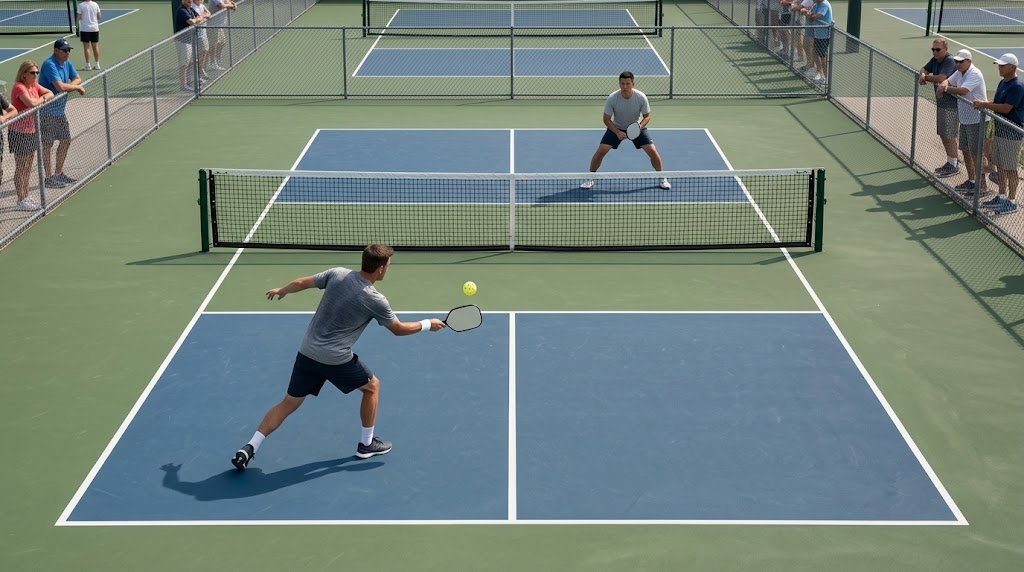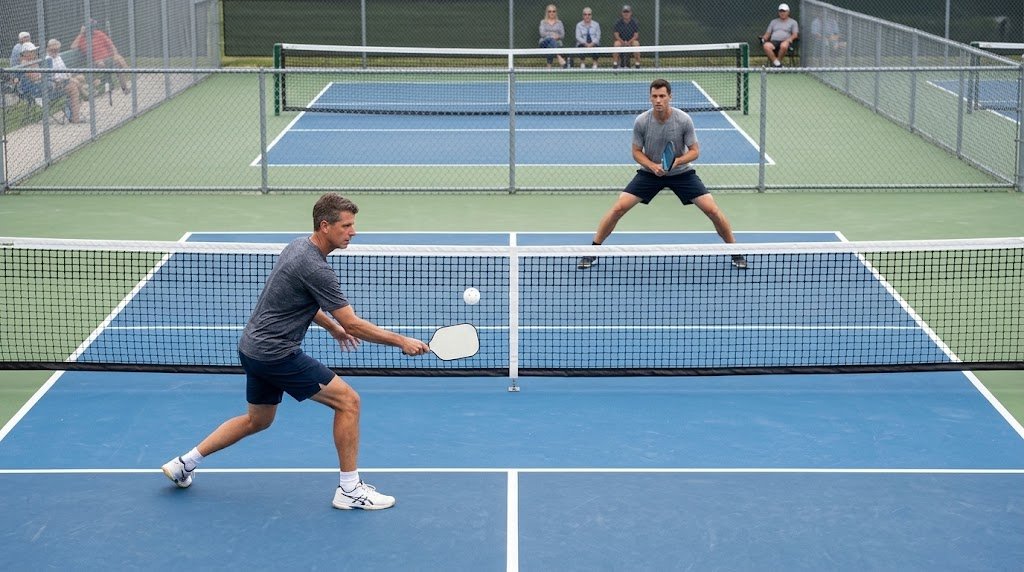

Donald Natch delivered a masterclass in pacing and precision Monday, dispatching Brandon Freed 13–11, 11–0 in the Open Men's Singles bracket at the WPA Long Beach Open. The scoreline tells the story of two distinct chapters: a tight, tactical opening frame that hinged on two extra points, followed by a second-game shutout that left no doubt about who controlled the court.
Natch entered with a pre-match rating of 4.119, a full half-point above Freed's 3.613. On paper, the gap suggested a comfortable margin. In practice, the first game proved anything but a formality. Freed matched Natch blow for blow, forcing a 11–11 deadlock before Natch secured the final two points to close it 13–11. That early resilience from Freed signaled he would not simply roll over, but it also revealed the razor-thin margin that separates a competitive set from a runaway.
The Turning Point
The second game flipped the script entirely. Natch came out sharper, his returns heavier and his court positioning tighter. Freed, meanwhile, could not find an answer. The 11–0 scoreline is not merely a shutout; it is a statement. In singles, where every inch of court must be covered by one player, a clean sheet speaks to total dominance — serve placement, return depth, and the ability to dictate tempo without offering a single free point. Natch did not just win the game; he erased the memory of the first-game struggle.
Kitchen Command and the Non-Volley Line
Controlling the non-volley zone line — the kitchen — is the fulcrum of modern pickleball. A player who plants themselves just behind the line can cut off angles, volley with authority, and force opponents into defensive pops. But the kitchen giveth and the kitchen taketh away: volleying while any part of the body touches the zone is a fault, and momentum carrying a player into the kitchen after a volley is equally illegal. The discipline to attack from the line without crossing it separates contenders from pretenders. In singles, that discipline is amplified; there is no partner to cover the sideline when a player overcommits.
Dinks, Faults, and the Out-of-Bounds Tightrope
The dink — a soft, arcing shot that lands in the opponent's kitchen — is the primary tool for neutralizing power and manufacturing errors. Executed well, it forces a low contact point and invites a weak return. Executed poorly, it floats into the strike zone or sails long. The out-of-bounds risk is ever-present: a dink aimed too close to the sideline can drift wide, while a defensive lob pushed too deep kisses the baseline. Faults, whether foot faults at the kitchen or service errors, are unforced gifts. In a match where every point is a solo endeavor, minimizing those gifts is often the difference between 11–0 and 11–9.
Singles Geometry
Singles pickleball is a geometry problem played at sprint speed. The server must target corners to stretch the returner; the returner must drive deep to buy time to reach the kitchen line. Once both players settle at the line, the court shrinks — cross-court dinks become high-percentage plays, down-the-line winners become high-risk gambles. Natch's second-game dominance suggests he solved that geometry early, consistently forcing Freed into the low-percentage shots that evaporate under pressure.
The final line reads 13–11, 11–0 — straight games, but two different matches. Freed earned his 11 points in the opener; Natch earned the rest. In a sport where momentum shifts on a single mishit, the ability to turn a competitive first set into a second-game vacuum is the hallmark of a player peaking at the right moment. Natch advances. The scoreboard, for once, tells the whole truth.