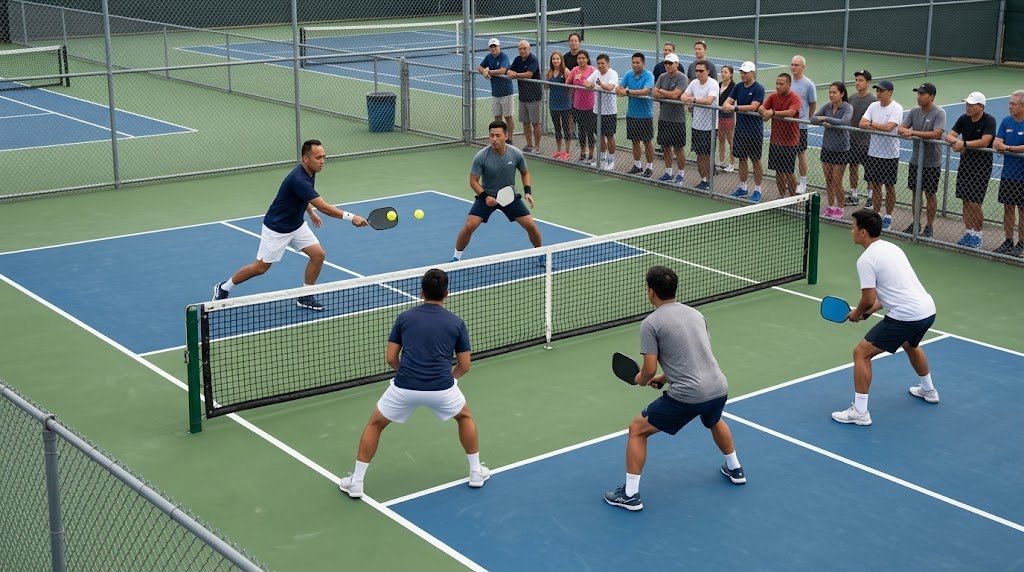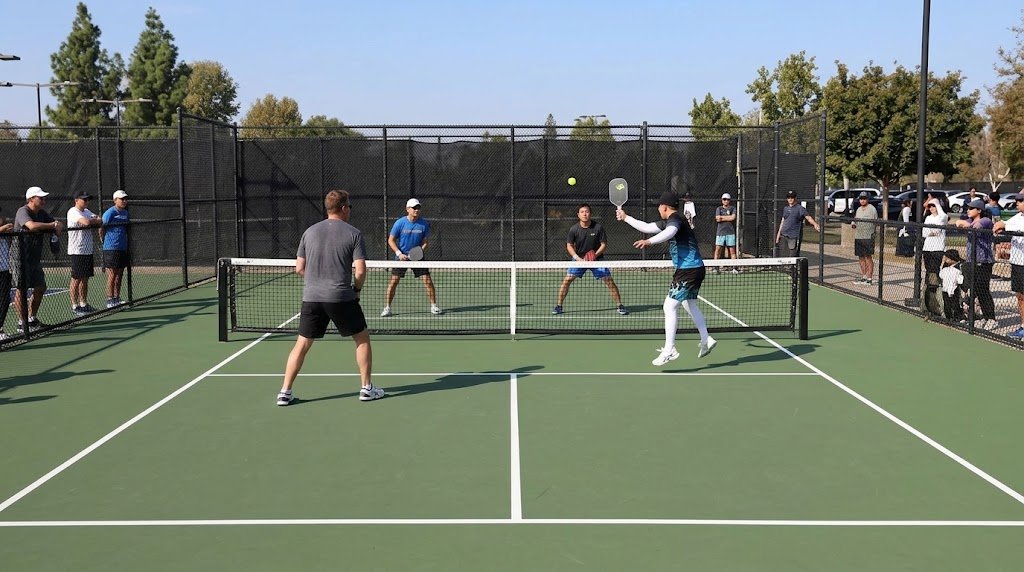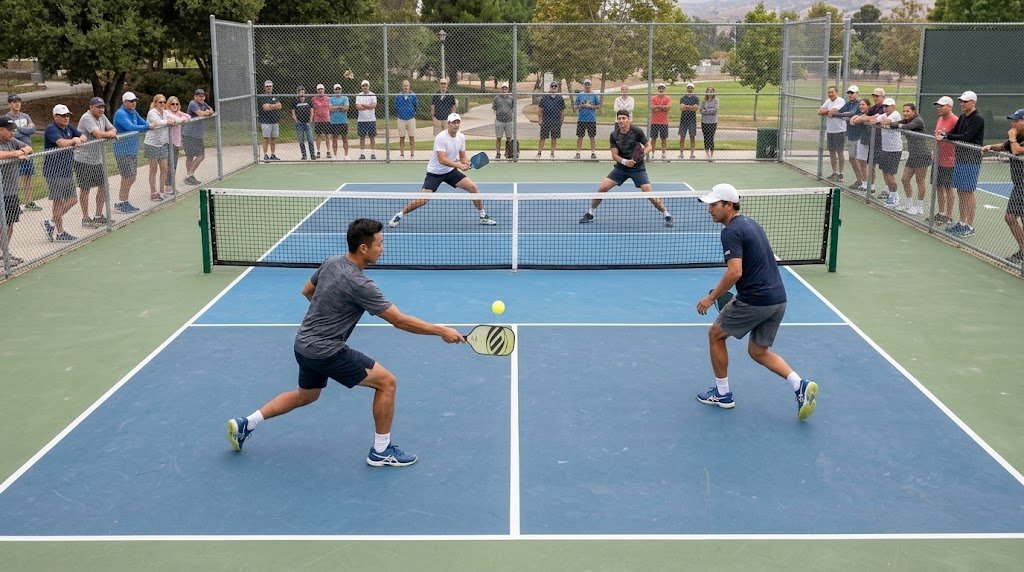


Kitlong Lai and Daryl James Bulaon opened their Men's 3.5-3.99 Doubles campaign with a commanding 11–5 victory over Joshua Gonzales and Benjamin Vu, turning a matchup of closely rated teams into a one-sided showcase of court control. The winning duo entered with a combined pre-match rating of 6.73 against their opponents' 6.69, a razor-thin margin on paper that evaporated the moment play began. Lai, carrying a 3.644 rating, and Bulaon, rated 3.086, never trailed, dictating tempo from the first serve and refusing to relinquish the initiative.
A Fast Start and a Steady Grip
The opening exchanges set the tone. Lai and Bulaon moved in lockstep, establishing position at the non-volley line early and forcing Gonzales and Vu into a reactive posture. In doubles, the team that controls the kitchen line controls the geometry of the point; by planting themselves at the net, the winners cut off angles and compressed the time their opponents had to respond. The five-point margin reflects not just a scoring gap but a sustained territorial advantage. Gonzales (3.47) and Vu (3.221) found few openings to reset or counterattack, and the scoreboard tells the story of a match where one side imposed its will from start to finish.
The Kitchen Line: Command Without Crossing
Holding the non-volley line is the sport's most potent positional weapon. A team anchored there can volley downward, erase the bounce, and dictate pace. But the rule is precise: a player may not volley the ball while any part of the body touches the kitchen, nor may momentum carry them into it after a volley. The distinction between legal pressure and a fault is a matter of inches and timing. Effective teams hover at the line, paddles up, weight forward, ready to punch or drop without ever breaking the plane. When that discipline slips—when a player lunges for a high ball and a toe drags the painted zone—the point evaporates instantly. Lai and Bulaon's clean execution in this zone, inferred from the lopsided result, suggests a high level of spatial awareness.
Dinks, Resets, and the Risk of the Out Ball
The soft game is where matches are often decided. A well-placed dink forces an opponent to hit up, creating an attackable ball. The risk, however, is twofold: a dink that sits too high invites a put-away, while one pushed too wide or deep sails out of bounds. The sideline and baseline are unforgiving judges. Smart doubles pairs use crosscourt dinks to widen the court, then redirect down the line when the defense shifts. They also recognize the "out ball" trap—a drive that looks attackable but is drifting long—and let it pass for a free point. In this match, the scoring pattern hints that the winning side managed those margins better, either by drawing errors or by declining to chase balls that were destined to land out.
Straight Games, Clear Statement
No second game was needed. The single-game format produced a definitive result, and the 11–5 final line reads like an exclamation point. For Lai and Bulaon, it is an efficient entry into the bracket—energy conserved, confidence banked. For Gonzales and Vu, the margin serves as data: a reminder that rating parity does not guarantee competitive parity on a given day. The kitchen was won, the dinks were disciplined, and the scoreboard shut the door. In pickleball, as in any racquet sport, the most convincing victories are the ones that leave no doubt.