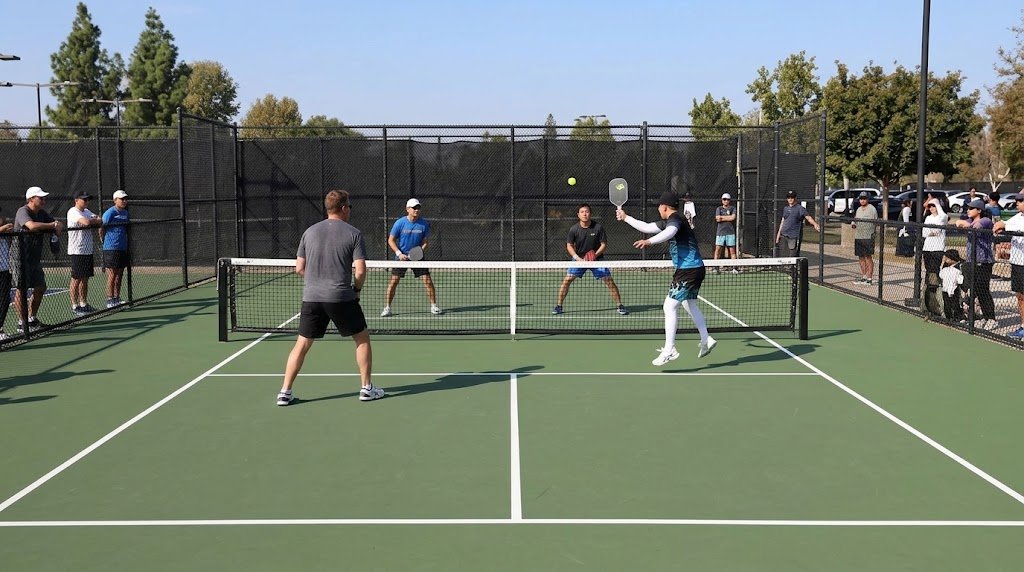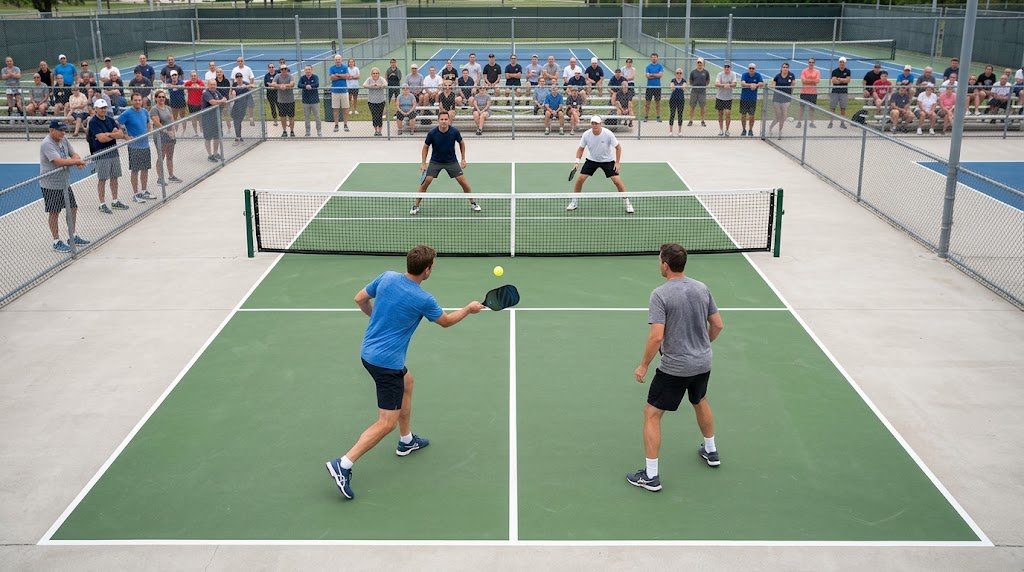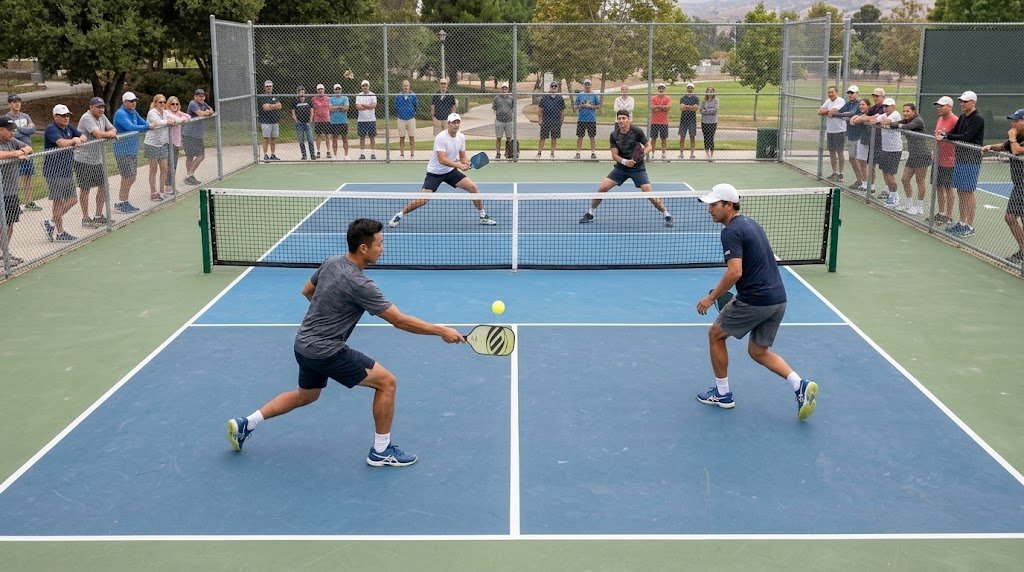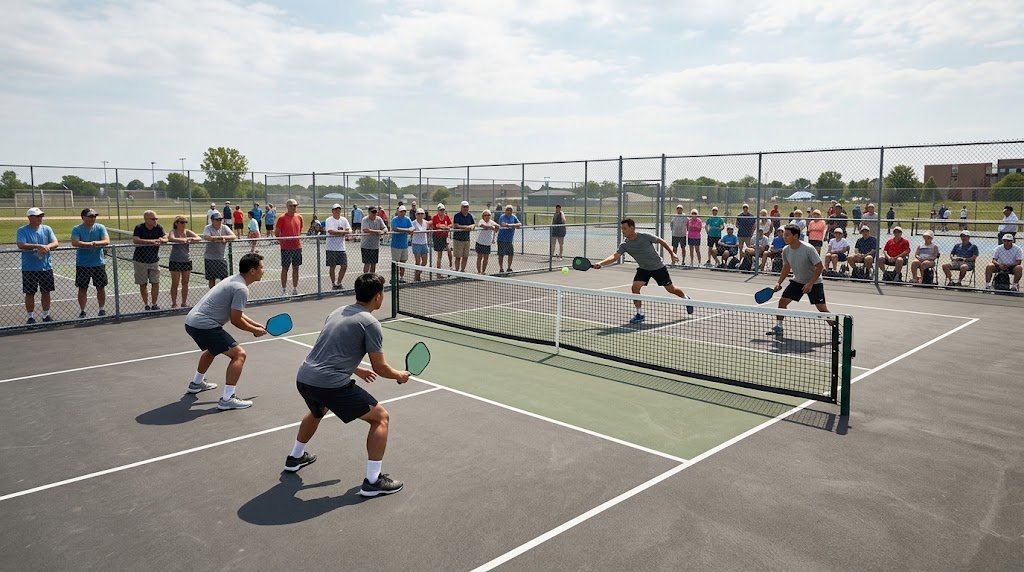


kitlong lai and Daryl James Bulaon made the scoreboard do the talking in the Men's 3.5-3.99 Doubles: an 11-0 doubles win over Glenn Chen and Jeff Chang. The game was a clean shutout, not a nail-biter, and the margin leaves no need to dress it up. They won the only recorded game, took the match in straight games and finished with a two-game lead.
A One-Game Sweep, Not a Novella
The verified result contains one game, so there is no second-game arc to inflate into a comeback, let alone a championship run. Lai and Bulaon won that game 11-0 and completed the match with a 2-0 game advantage. That is the whole scoreboard story, and it is enough: a commanding shutout in a two-player-per-side setting.
The pre-match ratings add useful context without turning this into a prophecy. Lai entered at 3.789 and Bulaon at 3.21, while Chen and Chang each carried 2.949. Lai's number sat 0.840 above Chen's and 0.840 above Chang's; Bulaon's stood 0.261 higher than each of theirs. Those figures describe the recorded snapshot, not current ratings or a forecast of where anyone will land later.
The Math Behind the Shutout
The score's most dramatic feature is the absence of a counter. Lai and Bulaon supplied 11 recorded points; Chen and Chang supplied none. In a game to 11, that means every counted point landed on one side of the doubles net. It does not establish how many exchanges occurred, whether a rally was won by a fault or an out-of-bounds ball, or how many points a player individually collected.
That distinction matters. A shutout is a game-level result, not a tally of rallies or a player-stat line. It says the opponents did not reach the scoreboard in the recorded game. It does not say the winners hit 11 winners, that the losers committed 11 errors, or that every point was a finished rally.
Kitchen Control Is Not Kitchen Trespassing
From a general pickleball perspective, the clean score makes the kitchen area look especially important. Controlling the non-volley line means arriving early enough to use the short, patient dink game and take time away from an opponent who is still deep behind the line. A player who reaches the line first can turn a neutral exchange into a more demanding one for the team still waiting farther back.
That is different from volleying illegally inside the kitchen. A legal volley is struck before the ball bounces, but the player must not volley while standing in the kitchen or from the kitchen's immediate area. Merely being near the non-volley line, or moving into position after a bounce, is not automatically a fault. The recorded score does not document any specific violation, so there is no basis to label a particular point that way.
The same caution applies to out-of-bounds risk. Dropping a shot beyond the sideline or baseline can give the opposing team a point, but an out-of-bounds result is not the same thing as a kitchen violation. It is also not proof that a player tried to hit an impossible winner. In a lopsided result, the score alone cannot tell us whether a point ended at the line, in the kitchen zone or elsewhere.
A Shutout With Room to Grow
For Chen and Chang, the lesson is not that they were overwhelmed in a dramatic duel; the record shows a one-sided game. The useful takeaway is more practical: in doubles, the side that controls space can make the other side play from behind. For Lai and Bulaon, the takeaway is equally clear. Their pre-match ratings were a snapshot, but the 11-0 result showed that their team could turn that numerical edge into a complete game.
The closing picture is simple and satisfying: two players, one clean score, and a shutout that left no doubt about who won the recorded game. In pickleball, a 11-0 is not just a number. It is a scoreboard that has packed its bags, walked to the kitchen line and refused to come back.