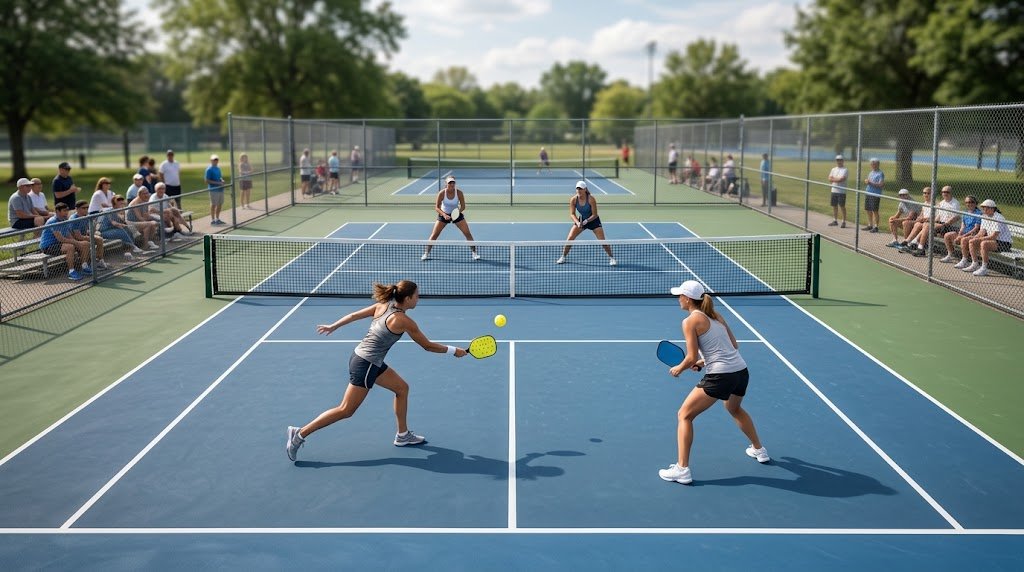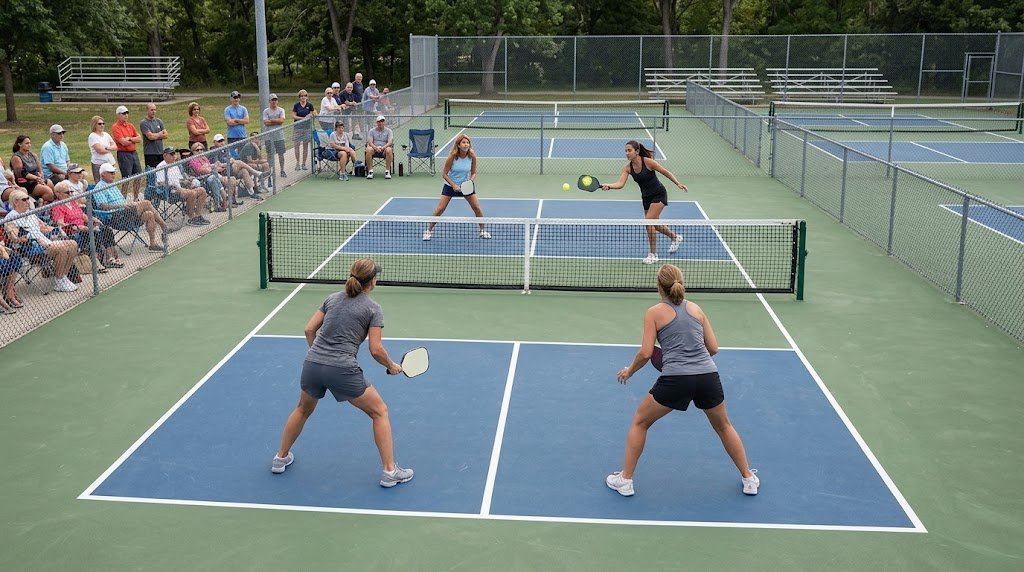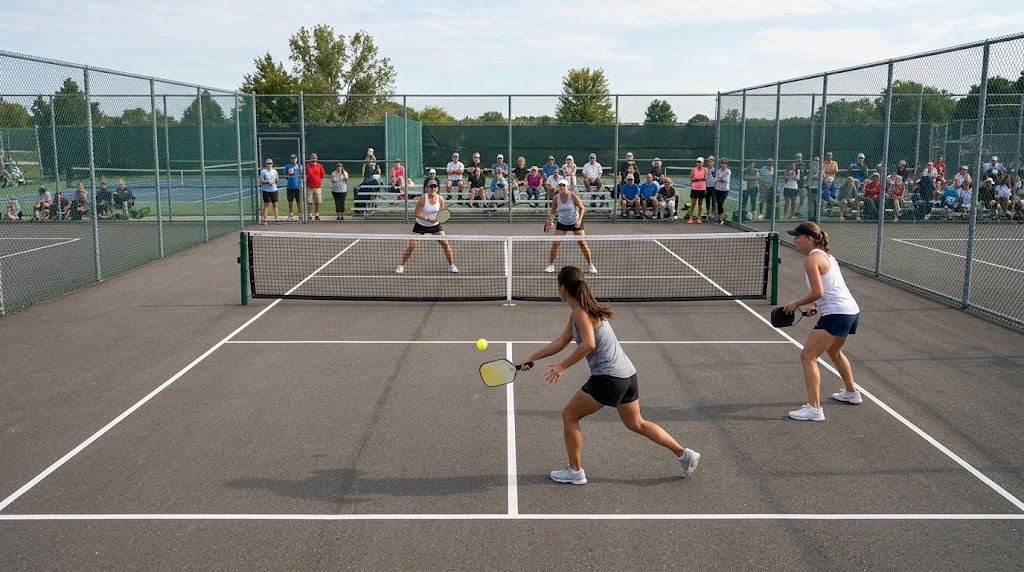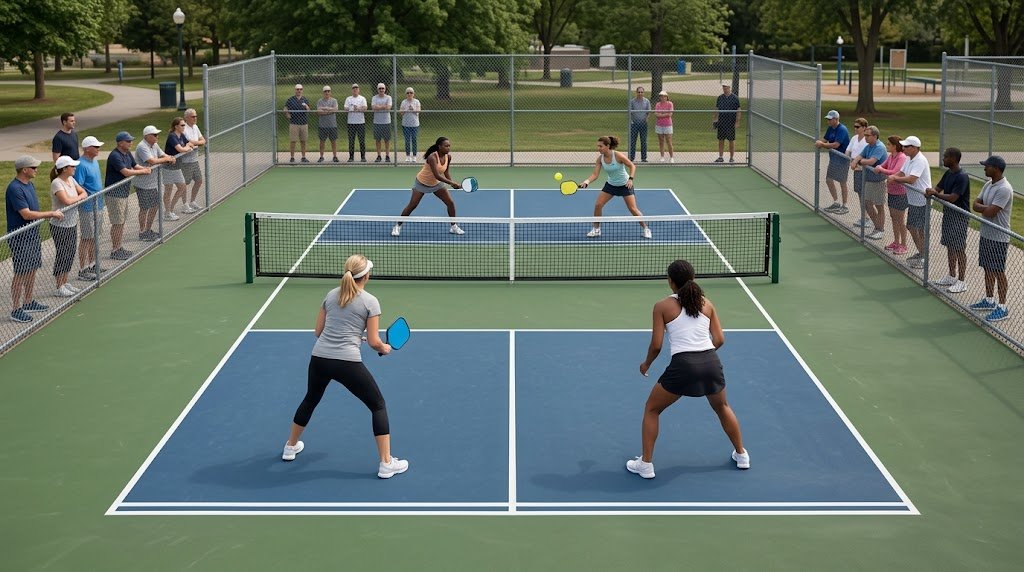


Debbie Beliveau and Barbara Jones made the strongest possible impression in Women’s 4.0-4.49 Doubles, winning 11–4 against Vikki Vander Woude and Gina Ezell on Sept. 20, 2026.
The seven-point margin told the story. Beliveau and Jones produced a straight-game statement win, while Vander Woude and Ezell never let the contest slip into a nail-biter.
Ratings Provide the Backdrop
The pre-match ratings offered useful context, not a forecast. Beliveau entered at 4.11 and Jones at 3.938. Vander Woude was listed at 3.875, with Ezell at 3.575.
Those snapshots framed the matchup without determining it. The court still had to settle the question, and the recorded 11–4 result supplied the answer. Beliveau and Jones controlled the scoreboard; Vander Woude and Ezell left with the challenge of finding more room against a team that never allowed the score to tighten.
The event, Women’s 4.0-4.49 Doubles, put four competitors into the same doubles frame. In that setting, one team’s best sequence can change the temperature quickly, and the winners made sure their side of the ledger did the loudest talking.
What the Numbers Say
There was only one recorded game, so it carried the entire result. Beliveau and Jones won it 11–4, a clean seven-point edge. Vander Woude and Ezell’s four points showed that the match was not empty, but the gap was never close enough to become a tug-of-war.
That is the value of a straight-game win: no second-game subplot, no comeback math and no need to wait for a tiebreaker. The winners simply moved ahead and kept the finish in sight.
Kitchen Positioning, Without the Guesswork
The non-volley line is one of pickleball’s great pressure points. A team that controls that area can compress the court, cut off angles and make its opponents hit upward more often. In general terms, steady hands and smart feet can turn a quiet dink exchange into a chance to take the initiative.
Dinks are not just soft shots; they are positioning shots. A well-placed dink can pull a pair apart or invite a higher return that becomes easier to attack. The risk is that a dink left too central or too high can hand the next shot to the other side.
Control at the non-volley line is not the same as permission to volley from inside the kitchen. Players may not volley while standing in the non-volley zone or touching it during the act of volleying. That rule is separate from simply holding good court position near the line, and no specific violation was recorded here.
Out-of-bounds risk also rises when a team tries to manufacture a winner from a difficult angle or chase extra pace. A shot that misses long or wide can erase a promising exchange, while a conservative target can keep pressure on without surrendering the point. Those are general possibilities, not descriptions of any rally in this match.
The result still lands clearly. Beliveau and Jones turned a promising ratings pairing into a decisive 11–4 win, while Vander Woude and Ezell faced a scoreboard that offered little room to maneuver. In doubles, that is often the difference between a competitive afternoon and a statement: one team finds the rhythm, and the other spends the game searching for the next opening.
For Beliveau and Jones, the afternoon ended with a result as crisp as a clean serve. For Vander Woude and Ezell, the lesson was equally plain. Against a team that controlled the margin, every point had to count—and the winners made sure theirs counted most.