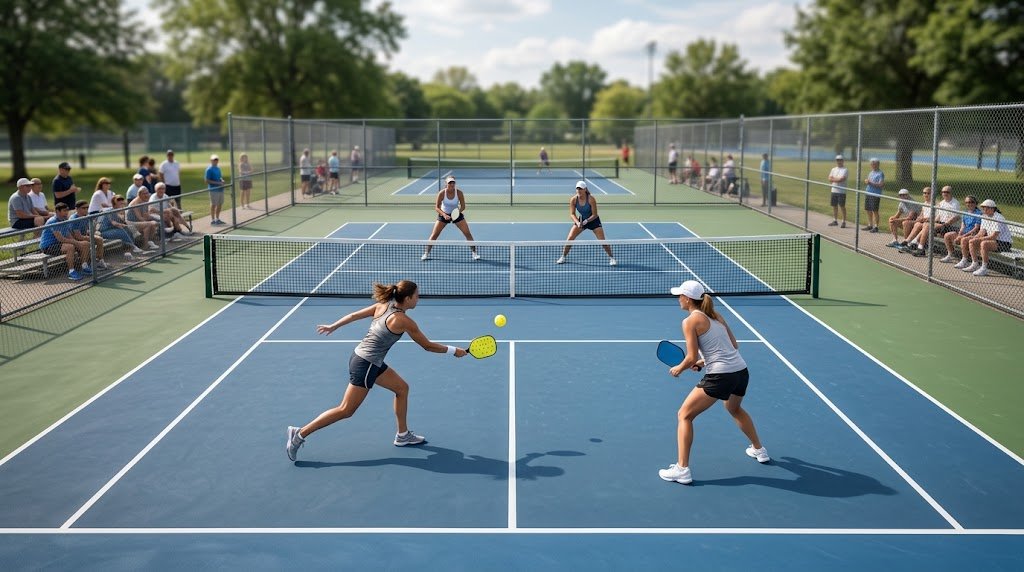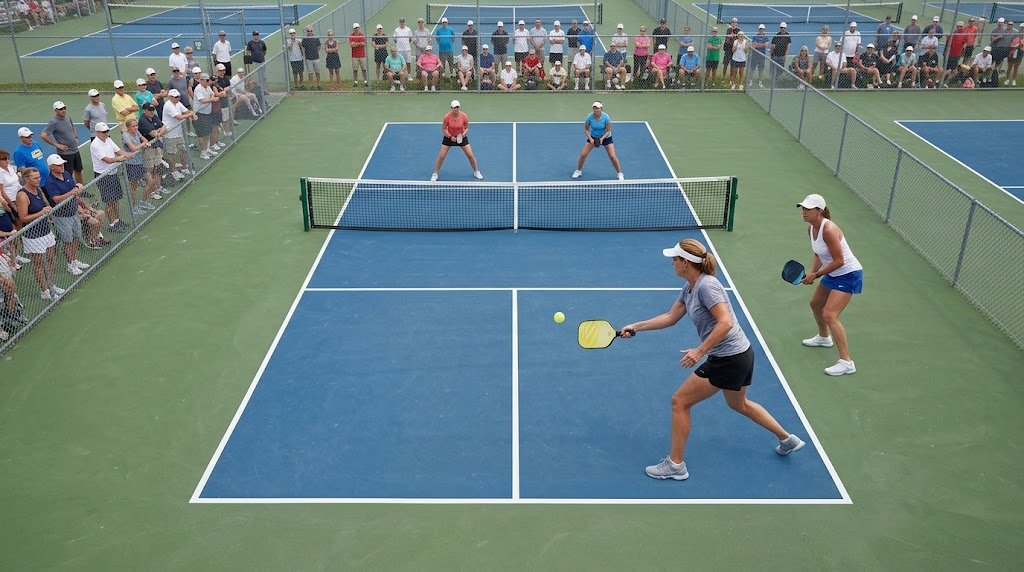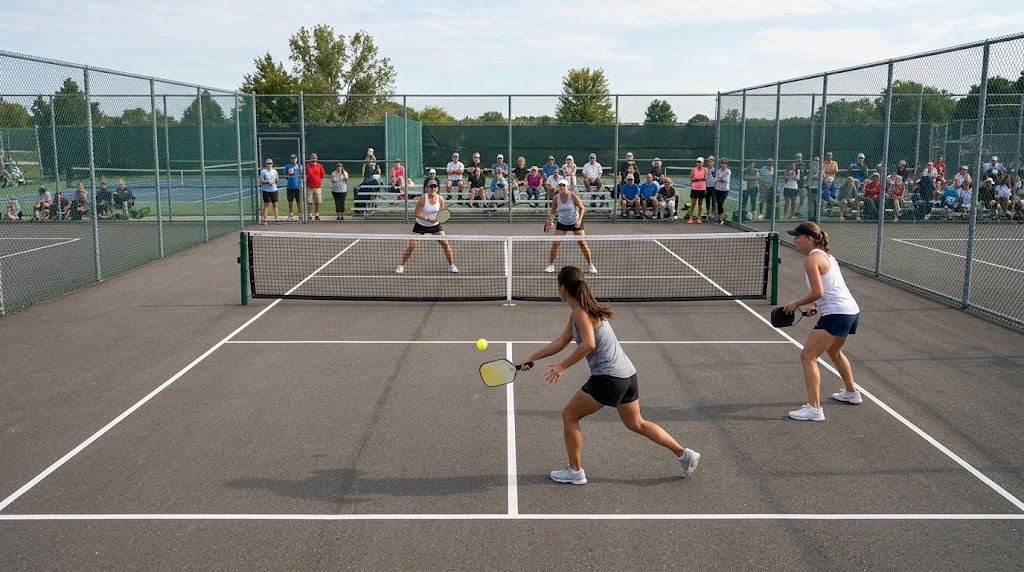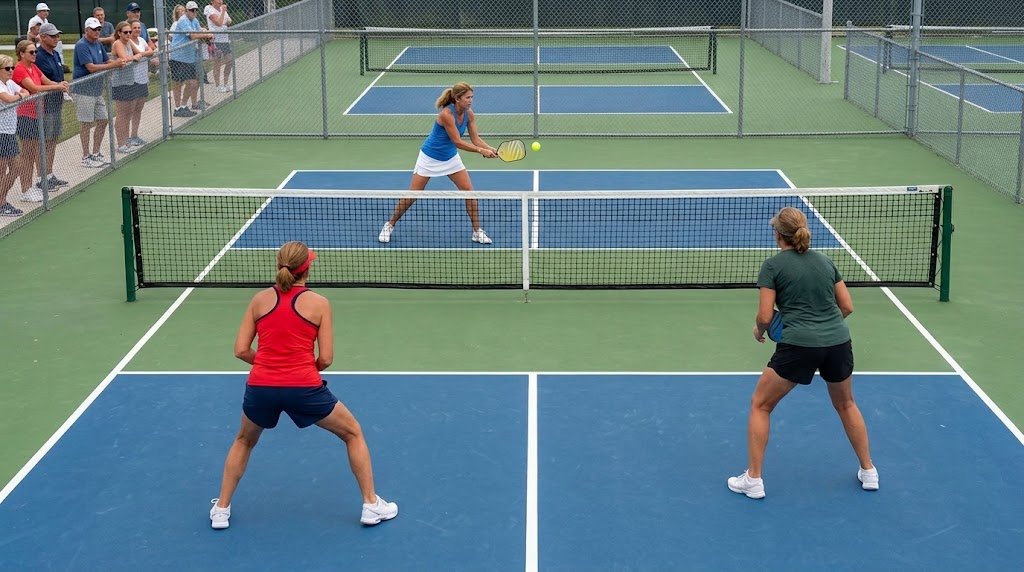


Debbie Beliveau and Barbara Jones turned the Women’s 4.0–4.49 Doubles scoreboard into a clean 11–0 statement.
The winning pairing of Beliveau, rated 4.235 before the match, and Jones, rated 4.032, defeated Kathryn Fitzgerald and Tammy Shaw 11–0. Their pre-match ratings were a snapshot of the teams’ levels at that time, not current marks or a forecast of how the game might unfold afterward.
That gap framed the matchup before the first serve. Beliveau and Jones entered with the higher combined pre-match rating: 8.267 to 7.176 for Fitzgerald and Shaw. The difference was 1.091 points. It was not a verdict, but it did establish a clear hierarchy before the game began.
A Scoreboard With No Give
The recorded result was a one-game, 11–0 win. There was no second game to review, so this was a straight-games victory rather than a two-game sweep.
Eleven points were recorded, not 11 rallies, and the shutout means the opponents were held scoreless in the recorded game. That is a commanding scoreboard result, not a nail-biter. It says the winning side controlled enough of the game to prevent a return on the board.
The margin was exactly 11 points. In pickleball, that is a clean, decisive number, but the score alone does not reveal which shot, serve, return, or point sequence produced it. No rally details were recorded here, so the result should be read as the outcome rather than a play-by-play.
The Kitchen Is a Zone, Not a Weapon
For players studying the result, the most useful lesson is kitchen positioning. The kitchen, or non-volley zone, is the area beside the net where players may stand, provided they do not volley from inside it.
Controlling the non-volley line means taking position near that boundary and using footwork to limit angles. A player can advance after the ball bounces, reset before a volley, or hold position while waiting for the next exchange. The line is a territorial edge, not an invitation to break the rules.
A volley is a hit made before the ball bounces. If a player volleys while touching the kitchen, or commits the associated movement under the rules, it is an illegal net-zone violation. That is different from simply occupying the non-volley zone. Merely standing near the kitchen line is not a fault.
The practical takeaway is balance: be assertive at the line, but keep your feet honest. A player can threaten the net without crossing into a kitchen volley. Good positioning starts with where the feet go, not where the paddle happens to be.
Dinks, Faults, and Out-of-Bounds Risk
The dink is a soft shot that lands in the opponent’s kitchen, usually designed to keep the ball low and extend the exchange. In a doubles match, dinks can create openings by forcing a partner to move, inviting a higher ball, or making the next shot more predictable.
The risk is overcooking the dink. A soft touch that travels too far can become a drive, a pop-up, or a ball that gives the other team a cleaner volley. That is why kitchen control is as much about restraint as it is about aggression.
Faults can come from a kitchen violation, a ball hit into the net, a shot that lands outside the legal court, or a missed return. Out-of-bounds risk is especially important in doubles because a wide ball can turn a patient point into an immediate gift. The remedy is not reckless power; it is controlled pace, clean contact, and a paddle face that knows where the line is.
Beliveau and Jones made the result look decisive, but the broader lesson is about structure. The winning side did enough across the recorded game to keep Fitzgerald and Shaw from adding to their total. Fitzgerald and Shaw, rated 3.419 and 3.757 before the match, were on the other side of a result that left no score for them to work with.
In the end, this was not a mystery thriller or a last-point panic attack. It was a crisp, commanding doubles statement: 11–0, one game, and a clear reminder that in pickleball, control can be the loudest language on the court.